MinuteRead
30 min
Book summary
by Mark Ridley
Premium summary · Opens in the app · 30 min read
Most people think evolution is about survival of the fittest organisms. The strongest lion. The fastest gazelle. The cleverest chimpanzee. This seems obvious. We watch nature documentaries and see animals struggling to survive, competing for food, escaping predators, fighting for mates. The individual animal appears to be the star of the show.
### How a Gene-Centered View of Evolution Changes Everything
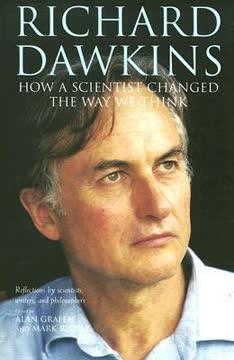
**Author:** Mark Ridley (Editor) **Estimated Reading Time:** 45 minutes
**What You'll Learn:** Why genes, not organisms, are the central players in evolution. How selfish genetic programming produces altruistic behavior. Why cooperation emerges naturally from competition. How ideas spread like viruses through culture. And why understanding evolution matters for how we live.
**Who This Book Is For:** Anyone who wants to understand the elegant logic of evolution. Readers curious about why we behave the way we do. Those seeking a scientific framework for understanding life's complexity. And anyone ready to see the living world through a clearer, more powerful lens.
Most people think evolution is about survival of the fittest organisms. The strongest lion. The fastest gazelle. The cleverest chimpanzee. This seems obvious. We watch nature documentaries and see animals struggling to survive, competing for food, escaping predators, fighting for mates. The individual animal appears to be the star of the show. But this view creates puzzles. Why do worker bees sacrifice their lives to defend the hive, leaving no offspring of their own? Why do birds risk attracting predators by making alarm calls that warn others? Why do humans feel genuine compassion for strangers they will never meet? If evolution favors individuals who maximize their own survival and reproduction, these behaviors make no sense. Richard Dawkins offered a solution to these puzzles, and it changed biology forever. His answer was simple but radical: look at genes, not organisms. When you shift your perspective to the gene's eye view, everything clicks into place. A gene is a replicator. It makes copies of itself. Genes that are good at making copies become more common in the population. Genes that are bad at it disappear. The bodies they build, the behaviors they produce, the societies they create are all strategies for getting copies of themselves into the next generation. We are survival machines. Robot vehicles blindly programmed to preserve the selfish molecules known as genes. This is not a metaphor. This is the literal logic of natural selection. The implications are enormous. Altruism becomes explainable. A gene that programs an organism to help relatives is helping copies of itself sitting inside those relatives. Cooperation becomes a strategy that pays genetic dividends. Even the most complex social behaviors can be understood as the expression of genetic self-interest. But Dawkins went further. He showed that genes influence the world beyond the bodies they inhabit. A beaver's dam is as much an expression of beaver genes as the beaver's tail. A parasite that changes the behavior of its host is expressing its genes through the host's body. The boundary between organism and environment blurs. He also recognized…
Continue reading in the MinuteRead app
Get the complete 30-minute summary of Richard Dawkins
Get the complete summary in the appNatural selection operates primarily on genes, not organisms or species. Genes are the replicators; bodies are the vehic
Genes that promote their own replication spread, even if they harm the organism. This is what "selfish gene" means.
Altruism toward relatives makes genetic sense because relatives share genes. Hamilton's rule quantifies when altruism ev
Cooperation can emerge from self-interest in repeated interactions. Tit-for-tat is a simple, robust strategy for fosteri
Genes influence the world beyond the body. The extended phenotype includes beaver dams, parasite manipulations, and huma
Culture evolves through memes, which are units of information that replicate, vary, and are selected, just like genes.
"Richard Dawkins" is a strong fit if you want practical ideas around science, biography, biology, especially themes like natural selection operates primarily on genes, not organisms or species. genes are the replicators; bodies are the vehic; genes that promote their own replication spread, even if they harm the organism. this is what "selfish gene" means. The MinuteRead summary distills these concepts into a focused read, whether you're deciding whether to buy the book or applying its lessons at work.
Mark Ridley and Alan Grafen are the editors of this book about Richard Dawkins. Both are accomplished scientists in their own right. Ridley is an evolutionary biologist known for his work on sexual selection and the evolution of life cycles. He has authored several books on evolution. Grafen is a theoretical biologist and Professor of Theoretical Biology at Oxford University. His research focuses on evolutionary theory and behavioral ecology. Both have worked closely with Dawkins and are well-po…
View all summaries by Mark RidleyContinue Reading
Access the complete 30-minute summary and thousands more nonfiction books in the MinuteRead app.

Continue reading the complete summary in the MinuteRead app.