MinuteRead
30 min
Every day, you make decisions involving risk. You decide whether to take a medication your doctor recommends. You choose how to invest your savings. You weigh whether that lump you found warrants a doctor's visit. You consider whether to buy insurance, change jobs, or trust a financial advisor.
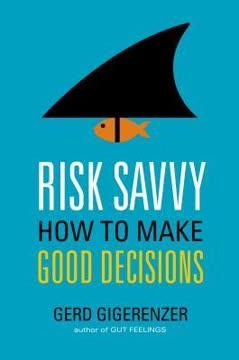
**Author:** Gerd Gigerenzer
**Estimated Reading Time:** 45 minutes
**What You'll Learn:**
- The crucial difference between risk and uncertainty, and why it changes everything - How to interpret medical statistics without being misled - Why simple rules often beat complex analysis - How to recognize defensive decision-making in professionals - Practical tools for making better decisions in health, finance, and life
**Who This Book Is For:**
Anyone who has ever felt confused by a medical diagnosis, overwhelmed by financial advice, or uncertain about how to make important decisions. If you want to understand risk without needing a statistics degree, this book is for you.
Every day, you make decisions involving risk. You decide whether to take a medication your doctor recommends. You choose how to invest your savings. You weigh whether that lump you found warrants a doctor's visit. You consider whether to buy insurance, change jobs, or trust a financial advisor. Most of us believe we are making these decisions rationally. We trust that the information we receive from doctors, financial experts, and other professionals is accurate and complete. We assume that if a test comes back positive, we probably have the disease. We believe that if an investment has performed well in the past, it will likely perform well in the future. Gerd Gigerenzer argues that many of these assumptions are dangerously wrong. The problem is not that people are irrational. The problem is that we live in a world filled with statistics, probabilities, and risk information that most people have never been taught to understand. We are expected to make informed decisions about our health, our money, and our lives, yet we lack the basic tools to interpret the information we are given. Consider a simple question: If a woman tests positive for breast cancer on a mammogram, what is the probability she actually has breast cancer? Most people, including many doctors, answer around 80 or 90 percent. The actual answer, depending on the woman's age and other factors, is often closer to 10 percent. This is not a trivial misunderstanding. It leads to unnecessary anxiety, unnecessary biopsies, and unnecessary treatments. It leads women to make decisions based on fear rather than facts. The same pattern appears in finance. Investors are sold complex products they do not understand, based on forecasts that are little better than chance. They are told that past performance predicts future results, when in reality, the financial world is dominated by uncertainty, not calculable risk. Gigerenzer's central insight is that we need to become risk savvy. This does not mean becoming a statistician or spending hours analyzing every decision. It means understanding a few key concepts that can transform how we interpret information…
Continue reading in the MinuteRead app
Get the complete 30-minute summary of Risk Savvy
Get the complete summary in the appRisk means known odds; uncertainty means unknown odds. Most important decisions involve uncertainty, not risk.
Always ask for absolute risk, not just relative risk. A "50 percent reduction" may mean a tiny absolute change.
Convert probabilities to natural frequencies. "3 out of 10" is easier to understand than "30 percent."
A positive test result does not mean you likely have the disease. The base rate matters.
Early detection is not always beneficial. Overdiagnosis leads to unnecessary treatment.
Defensive decision-making protects professionals at your expense. Ask who benefits from any recommendation.
"Risk Savvy" is a strong fit if you want practical ideas around psychology, business, science, especially themes like risk means known odds; uncertainty means unknown odds. most important decisions involve uncertainty, not risk; always ask for absolute risk, not just relative risk. a "50 percent reduction" may mean a tiny absolute change. The MinuteRead summary distills these concepts into a focused read, whether you're deciding whether to buy the book or applying its lessons at work.
Gerd Gigerenzer is a German psychologist renowned for his work on bounded rationality and heuristics in decision-making. As Director of the Center for Adaptive Behavior and Cognition at the Max Planck Institute for Human Development, he challenges the notion that cognitive biases lead to irrational thinking. Instead, Gigerenzer argues that rationality is an adaptive tool not bound by formal logic or probability calculus. His research focuses on how people make decisions with limited time, inform…
View all summaries by Gerd GigerenzerContinue Reading
Access the complete 30-minute summary and thousands more nonfiction books in the MinuteRead app.

Continue reading the complete summary in the MinuteRead app.