MinuteRead
30 min
Book summary
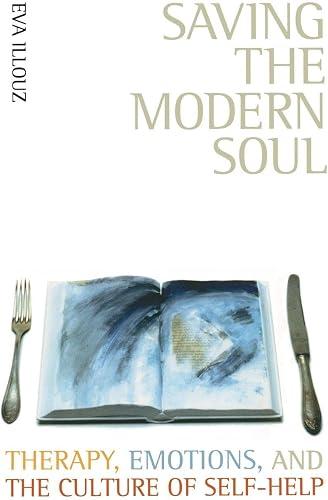
by Eva Illouz
Premium summary · Opens in the app · 30 min read
Something remarkable has happened to the way we understand ourselves. In the span of roughly a century, the language of psychology has moved from the consulting room into nearly every corner of daily life. We speak casually about self-esteem, emotional intelligence, trauma, boundaries, and personal growth. We evaluate our relationships in terms of communication and mutual understanding. We assess our careers through the lens of fulfillment and self-actualization. We narrate our lives as stories
**Author:** Eva Illouz **Estimated Reading Time:** 42 minutes
### What You'll Learn
How therapeutic language became the dominant way we understand ourselves, why emotional intelligence now determines who succeeds and who struggles, and what it means to live in a world where private feelings have become public performances.
### Who This Book Is For
Anyone who has ever wondered why we talk about our feelings so much, why workplaces now value emotional skills as much as technical ones, or how psychology became the lens through which we view nearly every aspect of modern life.
Something remarkable has happened to the way we understand ourselves. In the span of roughly a century, the language of psychology has moved from the consulting room into nearly every corner of daily life. We speak casually about self-esteem, emotional intelligence, trauma, boundaries, and personal growth. We evaluate our relationships in terms of communication and mutual understanding. We assess our careers through the lens of fulfillment and self-actualization. We narrate our lives as stories of overcoming adversity and achieving personal transformation. None of this felt natural or obvious a hundred years ago. The vocabulary we now use to describe our inner lives was invented, refined, and spread through specific historical processes. It emerged from the work of Sigmund Freud and his followers, traveled through American universities and popular magazines, embedded itself in corporations and government agencies, and eventually became the common sense of our time. Eva Illouz, one of the most incisive sociologists of emotion and culture, argues that this transformation represents something far more significant than the popularization of psychology. It represents a fundamental shift in how modern people construct their identities, navigate their relationships, and understand their place in the world. The therapeutic discourse, as she calls it, has become one of the major codes through which we express, shape, and guide selfhood. The problem this book addresses is not whether therapy is good or bad. It is something more subtle and more consequential. Illouz asks us to consider what happens when a particular way of understanding the self becomes so pervasive that we can no longer see it as one option among many. What happens when emotional competence becomes a requirement for social success? What happens when private suffering becomes a public performance? What happens when the logic of the market enters our most intimate relationships? These questions matter because the therapeutic worldview is not neutral. It carries assumptions about what counts as a good life, what constitutes a healthy relationship, and what kinds of people deserve success. It creates new forms of inequality even as it promises liberation. It offers new ways of connecting with others even as it introduces new forms…
Continue reading in the MinuteRead app
Get the complete 30-minute summary of Saving the Modern Soul
Get the complete summary in the appThe therapeutic discourse has become the dominant cultural framework for understanding and expressing selfhood in modern
Freud created a new language for the psyche that transformed how people understand their inner lives and relationships.
Emotional capitalism is the convergence of economic and emotional discourses, treating emotions as assets while emotiona
The therapeutic model of intimacy emphasizes communication and emotional disclosure, democratizing private life but crea
The narrative self frames life as a story of struggle and transformation, sustained by a narrative of suffering.
Emotional intelligence is a form of cultural capital that creates new forms of social stratification.
"Saving the Modern Soul" is a strong fit if you want practical ideas around psychology, sociology, self help, especially themes like the therapeutic discourse has become the dominant cultural framework for understanding and expressing selfhood in modern; freud created a new language for the psyche that transformed how people understand their inner lives and relationships. The MinuteRead summary distills these concepts into a focused read, whether you're deciding whether to buy the book or applying its lessons at work.
Motivated to help readers with the therapeutic discourse has crossed and blurred the compartmentalized spheres of modernity and has come to, Eva Illouz wrote “Saving the Modern Soul” to package those ideas for a fast, focused read. In “Saving the Modern Soul”, Eva Illouz focuses on the therapeutic discourse has crossed and blurred the compartmentalized spheres of modernity and has come to. Through “Saving the Modern Soul”, Eva Illouz distills the core ideas on psychology into lessons readers can…
View all summaries by Eva IllouzContinue Reading
Access the complete 30-minute summary and thousands more nonfiction books in the MinuteRead app.

Continue reading the complete summary in the MinuteRead app.