MinuteRead
30 min
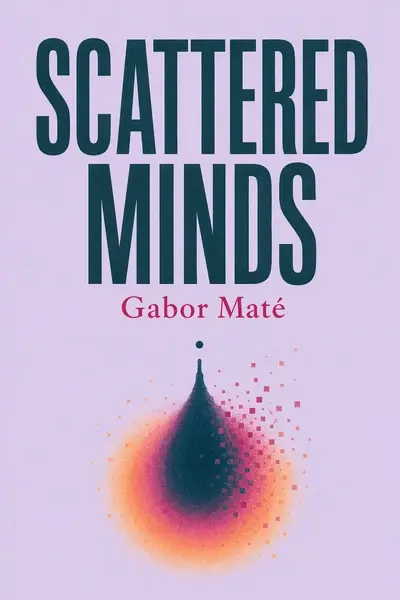
Book summary
by Gabor Maté
Premium summary · Opens in the app · 30 min read
The standard story about Attention Deficit Disorder goes something like this. A child is born with a genetic brain abnormality. As they grow, they cannot focus, cannot sit still, cannot control their impulses. They are disruptive in school, frustrating at home, and eventually diagnosed with a disorder that will follow them for life. Medication helps manage the symptoms. The end.
**Author:** Gabor Maté
**Estimated Reading Time:** 45 minutes
**What You'll Learn:**
- Why ADD is not a genetic disease but a developmental challenge shaped by early experiences - How sensitivity and environment interact to produce the characteristic traits of ADD - The critical role of attachment and attunement in brain development - Why self-regulation, not medication alone, is the path to lasting change - Practical strategies for healing and growth for both children and adults
**Who This Book Is For:**
This book is for anyone whose life has been touched by Attention Deficit Disorder. Parents struggling to understand their child's behavior. Adults who have spent decades feeling scattered, unfocused, and somehow different. Teachers, therapists, and physicians seeking a deeper framework than symptom checklists and medication protocols. And anyone who has ever wondered whether the restlessness, distractibility, and emotional turbulence they experience might have roots they have never explored.
The standard story about Attention Deficit Disorder goes something like this. A child is born with a genetic brain abnormality. As they grow, they cannot focus, cannot sit still, cannot control their impulses. They are disruptive in school, frustrating at home, and eventually diagnosed with a disorder that will follow them for life. Medication helps manage the symptoms. The end. Gabor Maté tells a different story. And it is a story that changes everything. Maté is a physician who spent more than two decades working as a family doctor in Vancouver before moving to the city's Downtown Eastside, where he treated patients with severe addiction, mental illness, and HIV. He is also, by his own account, someone who has lived with ADD his entire life. This dual perspective, as both clinician and patient, gives his work an unusual depth and honesty. His central claim is radical in its simplicity. ADD is not a disease. It is not a genetic defect. It is a developmental delay, a lag in the maturation of certain brain circuits that govern attention, impulse control, and emotional regulation. And like all developmental processes, this maturation depends heavily on the environment in which a child grows. This reframing matters enormously. When we call something a disorder, we imply that something is broken and must be fixed. When we understand something as a developmental challenge, we open the door to growth, healing, and the possibility of change. A child who has not yet learned to read is not broken. A child whose brain circuits for attention have not fully matured is not broken either. Both need the right conditions to develop. Maté's approach draws on cutting-edge neuroscience, developmental psychology, and attachment theory. But it is grounded in something more personal. He knows what it feels like to be the child…
Continue reading in the MinuteRead app
Get the complete 30-minute summary of Scattered Minds
Get the complete summary in the appADD is a developmental challenge, not a genetic disease. It results from the interaction between a sensitive nervous sys
The brain develops through relationship. The quality of attachment between child and caregiver shapes the architecture o
Sensitivity is not a weakness. It is a biological reality that can become a gift or a vulnerability depending on the env
Attunement, the caregiver's ability to read and respond to emotional states, is the key mechanism of brain development.
Counterwill is the automatic resistance to perceived control. Reducing pressure reduces resistance.
The ADD brain is underactive in the prefrontal cortex, which affects attention, impulse control, and emotional regulatio
"Scattered Minds" is a strong fit if you want practical ideas around psychology, adhd, self help, especially themes like add is a developmental challenge, not a genetic disease. it results from the interaction between a sensitive nervous sys; the brain develops through relationship. the quality of attachment between child and caregiver shapes the architecture o. The MinuteRead summary distills these concepts into a focused read, whether you're deciding whether to buy the book or applying its lessons at work.
Dr. Gabor Maté is a Hungarian-born Canadian physician specializing in addiction treatment and Attention Deficit Disorder. A Holocaust survivor, he emigrated to Canada in 1957. After teaching English, he pursued medicine, fulfilling a childhood dream. Maté practiced family medicine in Vancouver for over 20 years and worked in palliative care. He currently treats patients with mental illness, drug addiction, and HIV in Vancouver's Downtown Eastside. Maté has written about his experiences with addi…
View all summaries by Gabor MatéContinue Reading
Access the complete 30-minute summary and thousands more nonfiction books in the MinuteRead app.

Continue reading the complete summary in the MinuteRead app.