MinuteRead
30 min
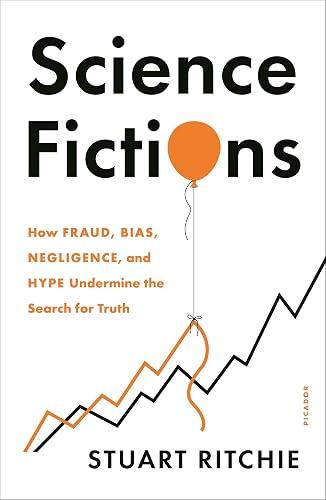
Book summary
by Stuart Ritchie
Premium summary · Opens in the app · 30 min read
Science occupies a peculiar position in modern life. We trust it to tell us which medicines work, which behaviors harm us, which policies will succeed, and which technologies will shape our future. We defer to scientific authority in courtrooms, hospitals, classrooms, and parliaments. We treat peer-reviewed studies as a kind of gold standard, a mark of truth that separates reliable knowledge from mere opinion.
**Author:** Stuart Ritchie
**Estimated Reading Time:** 45 minutes
**What You'll Learn:**
- Why so much published scientific research turns out to be wrong - How fraud, bias, negligence, and hype distort what we think we know - The hidden incentives that push good scientists toward bad practices - What the replication crisis means for medicine, psychology, and everyday life - Practical reforms that could restore science's credibility
**Who This Book Is For:**
Anyone who has ever read a headline about a miracle cure, a breakthrough study, or a shocking psychological finding and wondered whether to believe it. This book is for the curious skeptic, the student entering research, the professional who relies on scientific evidence, and the citizen who wants to understand why science sometimes fails and what can be done about it.
Science occupies a peculiar position in modern life. We trust it to tell us which medicines work, which behaviors harm us, which policies will succeed, and which technologies will shape our future. We defer to scientific authority in courtrooms, hospitals, classrooms, and parliaments. We treat peer-reviewed studies as a kind of gold standard, a mark of truth that separates reliable knowledge from mere opinion. Yet science is also a human activity, carried out by people with ambitions, biases, blind spots, and pressures. Scientists are not dispassionate robots mechanically accumulating facts. They are social creatures working within institutions that reward certain behaviors and punish others. They compete for grants, chase prestigious publications, build reputations, and sometimes cut corners. The scientific literature is not a pristine record of nature's truths. It is a sprawling, messy, often unreliable archive of human attempts to understand the world, attempts that frequently go wrong. Stuart Ritchie knows this from the inside. A psychologist by training, he spent years conducting research, publishing papers, and navigating the academic system. He believed in the process. Then he began to notice cracks. Studies he tried to replicate failed to produce the same results. Papers he read contained errors that peer review should have caught. Colleagues admitted to practices that inflated their chances of finding significant results. The more he looked, the more he realized that the problems were not isolated incidents but systemic features of how modern science operates. The replication crisis, as it has come to be known, erupted into public view in the 2010s. Large-scale efforts to repeat published studies found that a shocking proportion could not be reproduced. In psychology, one landmark project attempted to replicate one hundred studies and found that fewer than half produced the same results. In biomedicine, researchers estimated that a majority of preclinical cancer studies could not be replicated. In economics, similar problems emerged. The crisis was not confined…
Continue reading in the MinuteRead app
Get the complete 30-minute summary of Science Fictions
Get the complete summary in the appScience is a human institution, and like all human institutions, it is fallible.
The replication crisis revealed that many published findings cannot be reproduced.
Publication bias hides negative results and distorts the scientific record.
P-hacking inflates false positives by exploiting flexible data analysis.
Many studies are too small to reliably detect the effects they claim to find.
Hype exaggerates scientific findings at every stage of communication.
"Science Fictions" is a strong fit if you want practical ideas around science, psychology, sociology, especially themes like science is a human institution, and like all human institutions, it is fallible; the replication crisis revealed that many published findings cannot be reproduced. The MinuteRead summary distills these concepts into a focused read, whether you're deciding whether to buy the book or applying its lessons at work.
Motivated to help readers with issues undermining scientific research by Scottish psychologist Stuart J, Stuart Ritchie wrote “Science Fictions” as a practical guide drawn from years of experience and research. In “Science Fictions”, Stuart Ritchie focuses on 1) Science is a social construct. Through “Science Fictions”, Stuart Ritchie distills the core ideas on science into lessons readers can absorb in a single short sitting. Readers turn to this work when they want Stuart Ritchie's perspective…
Continue Reading
Access the complete 30-minute summary and thousands more nonfiction books in the MinuteRead app.

Continue reading the complete summary in the MinuteRead app.