MinuteRead
30 min
Every day, people face challenges. A student encounters a difficult math problem. An athlete confronts a stronger opponent. An employee receives critical feedback. A child struggles to learn a new skill. In these moments, something invisible but powerful determines what happens next. Some people lean in, try harder, and find new strategies. Others pull back, make excuses, or give up entirely.
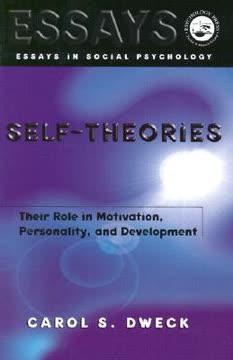
**Author:** Carol S. Dweck, Ph.D.
**Estimated Reading Time:** 45 minutes
**What You'll Learn:**
- Why two students with identical abilities can respond completely differently to the same challenge - How beliefs about intelligence shape motivation, achievement, and resilience - Why praising children for being smart often backfires - How to cultivate a mindset that leads to greater learning and fulfillment - Practical strategies for applying these insights in education, parenting, and personal growth
**Who This Book Is For:**
This book is for anyone who has ever wondered why some people thrive on challenges while others crumble. It is for parents who want to raise resilient children, teachers who want to unlock student potential, managers who want to build adaptive teams, and individuals who want to understand the hidden beliefs driving their own behavior. If you have ever felt stuck, afraid of failure, or uncertain about your abilities, this book will help you understand why and show you a different path.
Every day, people face challenges. A student encounters a difficult math problem. An athlete confronts a stronger opponent. An employee receives critical feedback. A child struggles to learn a new skill. In these moments, something invisible but powerful determines what happens next. Some people lean in, try harder, and find new strategies. Others pull back, make excuses, or give up entirely. For decades, psychologists assumed these differences came from ability, personality, or circumstance. Smarter people succeeded. Less talented people struggled. Confidence mattered. Environment played a role. These explanations seemed reasonable, but they failed to explain a puzzling observation: people with equal ability often respond to the same situation in dramatically different ways. Carol Dweck spent her career investigating this puzzle. Her research led her to a surprising conclusion. The critical factor is not how much ability someone has. It is what they believe about their ability. These beliefs, which Dweck calls self-theories, create entirely different psychological worlds. They shape what people want, how they interpret events, and what they do when things go wrong. The book you are about to read distills decades of rigorous research into a clear and practical framework. It explains how self-theories form, how they operate, and how they can be changed. The findings are not abstract academic theories. They are grounded in experiments with thousands of students, from preschoolers to college undergraduates. They have been tested in classrooms, laboratories, and real-world settings. The central insight is both simple and profound. Some people believe their intelligence and personal qualities are fixed traits. You either have them or you do not. Dweck calls this the entity theory. Others believe these qualities can be developed through effort, learning, and persistence. Dweck calls this the incremental theory. These two…
Continue reading in the MinuteRead app
Get the complete 30-minute summary of Self-theories
Get the complete summary in the appPeople hold either entity theories or incremental theories about intelligence. Entity theorists see ability as fixed. In
These theories shape goals. Entity theorists pursue performance goals. Incremental theorists pursue learning goals.
These theories shape responses to failure. Entity theorists show helpless responses. Incremental theorists show mastery-
Response patterns are not determined by actual ability. Very skilled students can show helpless responses, and less skil
Praising intelligence backfires. It teaches children that ability is fixed and makes them afraid of challenges.
Praising effort, strategies, and progress fosters resilience. It teaches children that ability is developable and encour
"Self-theories" is a strong fit if you want practical ideas around psychology, self help, education, especially themes like people hold either entity theories or incremental theories about intelligence. entity theorists see ability as fixed. in; these theories shape goals. entity theorists pursue performance goals. incremental theorists pursue learning goals. The MinuteRead summary distills these concepts into a focused read, whether you're deciding whether to buy the book or applying its lessons at work.
Carol S. Dweck, Ph.D. is a renowned motivation researcher and Stanford University's Lewis and Virginia Eaton Professor of Psychology. Her work focuses on success and its cultivation, with a particular emphasis on mindsets and their role in personal development. Dweck has held prestigious positions at Columbia and Harvard Universities and is recognized globally for her contributions to the field. Her book "Self-Theories" received accolades from the World Education Federation. Dweck's research has…
View all summaries by Carol S. DweckContinue Reading
Access the complete 30-minute summary and thousands more nonfiction books in the MinuteRead app.

Continue reading the complete summary in the MinuteRead app.