MinuteRead
30 min
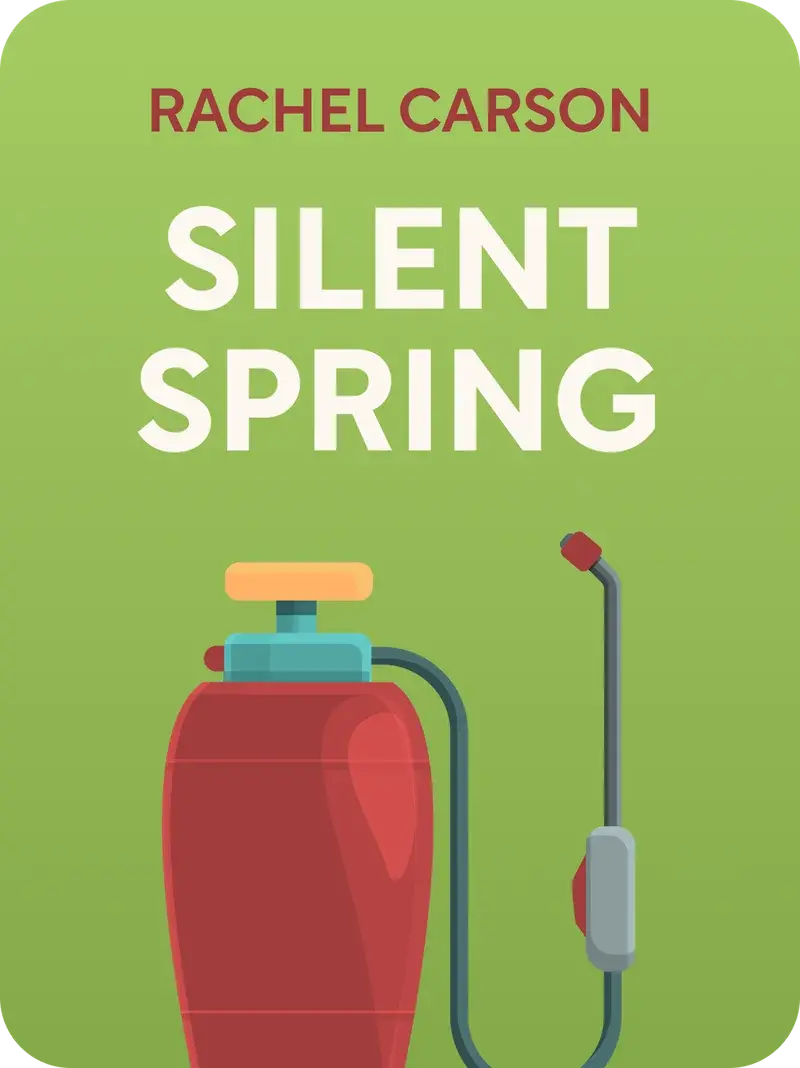
Silent Spring is the story that sparked the global grassroots environmental movement in 1962, explaining how chemical pesticides work, what their drawbacks are, and how we can protect crops in better, more sustainable ways.
Silent Spring is the story that sparked the global grassroots environmental movement in 1962, explaining how chemical pesticides work, what their drawbacks are, and how we can protect crops in better, more sustainable ways.
Humanity “inherited” pesticides from World War II. During the war, scientists involved in chemical warfare discovered many substances with which to kill enemies.
When the war ended, upon observation, those same substances were lethal not only to humans – but also, to insects and some other agricultural pests. So, at first, using chemicals seemed like a great way to protect crops.
But since pesticides became more widely used, many studies were carried out which proved that most of the chemical substances had numerous destructive side effects. These effects are the main focus of Carson’s book.
The huge disadvantage of chemical pesticides is that they virtually never target unwanted pests selectively. Once they are distributed into the environment, they get easily transmitted through water, as well as passed on in the food chain. This causes a whole variety of species to ingest chemicals.
This has far-fetched consequences, as it easily disrupts the delicate balance of whole ecosystems. In the end, pesticides usually create more problems than they solve. A perfect example of the dangers brought by mindless use of pesticides is the US Forest Service’s mass-use of DDT for combating the spruce budworm in 1956.
Spraying the pesticide over 885,000 acres of woodland, they ended up exterminating not just the spruce budworm – but also natural predators of the spider mite. As a consequence, the latter bred beyond control – and became a worldwide pest in the following years.
Quite a big price to pay for an inconsiderate use of some chemicals.
Even if you don’t care much about other living organisms on the planet, it would certainly be concerning to learn that pesticides found a way into your own body. But how is this possible? – you may ask. If you are not a farmer or experience other forms of direct exposure to the chemicals, you may think that you are safe. Even if it’s a big environmental problem, at least this doesn’t affect your health, right? The problem is, this is not how it works. Pesticides – the deadly dangerous DDT in particular – transmit easily through the food chain. This means that even though you don’t come in direct contact with the DDT, your body may still contain an amount that is potentially health- or even life-threatening. For example, one group of people who never came in direct contact with DDT had between 5.3 and 7.4 particles of DTT per million in their system. This may not sound like a lot – but experiments…
Continue reading in the MinuteRead app
Get the complete 5-minute summary of Silent Spring
Get the complete summary in the appPesticides destroy not just the particular pests, but whole ecosystems.
Once DDT enters the food chain, it affects all the species involved.
The two main solutions to the harmful effect of pesticides are education and biological alternatives to deal with pests.
"Silent Spring" is a strong fit if you want practical ideas around culture, environment, future, especially themes like pesticides destroy not just the particular pests, but whole ecosystems; once ddt enters the food chain, it affects all the species involved. The MinuteRead summary distills these concepts into a focused read, whether you're deciding whether to buy the book or applying its lessons at work.
Rachel Carson (1907-1964) spent most of her professional life as a marine biologist with the U.S. Fish and Wildlife Service. By the late 1950s, she had written three lyrical, popular books about the sea, including the bestselling The Sea Around Us, and had become the most respected science writer in America. She completed Silent Spring against formidable personal odds, and with it shaped a powerful social movement that has altered the course of history.
View all summaries by Rachel CarsonContinue Reading
Access the complete 5-minute summary and thousands more nonfiction books in the MinuteRead app.

Continue reading the complete summary in the MinuteRead app.