MinuteRead
30 min
We live in an age of information abundance. Every day, the average person encounters more data than a medieval scholar would have seen in a lifetime. Emails pile up. News feeds refresh endlessly. Reports, articles, social media posts, and notifications compete for our attention. The challenge is no longer finding information. The challenge is knowing what to do with it.
**Author:** Edward de Bono
**Estimated Reading Time:** 45 minutes
**What You'll Learn:** - A systematic method for extracting maximum value from any information you encounter - Six distinct lenses for examining information with clarity and purpose - How to overcome information overload and confusion - Practical techniques for better decision-making in work and life
**Who This Book Is For:** Anyone who feels overwhelmed by the constant flood of information in modern life. Whether you are a business leader making high-stakes decisions, a professional navigating complex reports, a student trying to learn effectively, or simply someone who wants to think more clearly, this book offers a practical framework for turning raw information into genuine understanding.
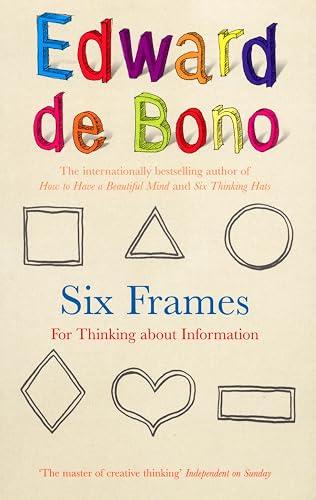
We live in an age of information abundance. Every day, the average person encounters more data than a medieval scholar would have seen in a lifetime. Emails pile up. News feeds refresh endlessly. Reports, articles, social media posts, and notifications compete for our attention. The challenge is no longer finding information. The challenge is knowing what to do with it. This creates a peculiar problem. We have more information than ever before, yet we often feel less informed. We have more data, but not necessarily more understanding. We have more access, but not necessarily more insight. The sheer volume of information creates confusion, and confusion, as Edward de Bono points out, is the great enemy of good thinking. Most people approach information passively. They read something, react to it emotionally, and move on to the next thing. They may remember a striking headline or an unusual fact, but they rarely extract the full value from what they encounter. They notice what grabs their attention, not what actually matters. De Bono argues that attention itself is the key. We pay very little attention to attention. We assume it just happens. Something catches our eye, and we focus on it. But attention can be directed. It can be trained. It can be structured. This is where the Six Frames come in. The Six Frames are a method for directing attention deliberately when examining information. Each frame represents a different way of looking at the same material. By moving through the frames systematically, you ensure that you examine information from every important angle. You notice what you might otherwise miss. You extract value that would otherwise remain hidden. The frames are simple enough to remember: a triangle for purpose, a circle for accuracy, a square for point of view, a heart for interest, a diamond for value, and a slab for outcome. Each shape serves as a visual reminder of a different aspect of information to examine. This simplicity is deliberate. De Bono believed that thinking tools must be…
Continue reading in the MinuteRead app
Get the complete 30-minute summary of Six Frames
Get the complete summary in the appInformation is only as valuable as the attention you bring to it.
Before engaging with information, clarify your purpose using the Triangle Frame.
Check the accuracy of information using the Circle Frame, especially when decisions depend on it.
Recognize the point of view behind information using the Square Frame.
Notice what is interesting using the Heart Frame. Interest is a signal, not a distraction.
Evaluate the value of information using the Diamond Frame. Consider multiple types of value.
"Six Frames" is a strong fit if you want practical ideas around psychology, self help, business, especially themes like information is only as valuable as the attention you bring to it; before engaging with information, clarify your purpose using the triangle frame. The MinuteRead summary distills these concepts into a focused read, whether you're deciding whether to buy the book or applying its lessons at work.
Motivated to help readers with "The Six Frames provide a method for extracting more value from information, Edward de Bono wrote “Six Frames” to package those ideas for a fast, focused read. In “Six Frames”, Edward de Bono focuses on "The Six Frames provide a method for extracting more value from information. Through “Six Frames”, Edward de Bono distills the core ideas on psychology into lessons readers can absorb in a single short sitting. Readers turn to this work when they want Edward de Bono…
View all summaries by Edward de BonoContinue Reading
Access the complete 30-minute summary and thousands more nonfiction books in the MinuteRead app.

Continue reading the complete summary in the MinuteRead app.