MinuteRead
30 min
Book summary
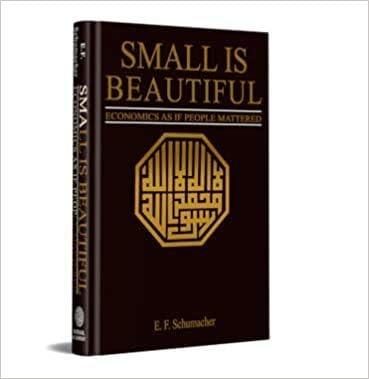
by Ernst F. Schumacher
Premium summary · Opens in the app · 30 min read
In the early 1970s, as the postwar economic boom reached its peak, a quiet but devastating critique emerged from an unexpected source. Ernst Friedrich Schumacher was not a radical activist or an anti-capitalist revolutionary. He was a distinguished economist who had studied at Oxford and Columbia, worked as a business consultant, and served for two decades as the chief economic advisor to Britain's National Coal Board. He understood the machinery of modern economies from the inside. And from tha
**By Ernst F. Schumacher**
**Estimated Reading Time:** 45 minutes
**What You'll Learn:**
- Why modern economics has lost sight of its true purpose - How smaller-scale technologies and organizations can serve people better - What Buddhist economics offers that Western economics cannot - Why endless growth is neither possible nor desirable - How to build an economy that respects both human dignity and planetary limits
**Who This Book Is For:**
This book is for anyone who has sensed that something is deeply wrong with the way modern economies operate. It is for readers who suspect that measuring progress through GDP alone misses what matters most. It is for those who want to understand why technological advancement has not delivered the widespread flourishing it promised. And it is for anyone seeking a coherent alternative to the dominant economic paradigm that treats infinite growth as both possible and desirable on a finite planet.
In the early 1970s, as the postwar economic boom reached its peak, a quiet but devastating critique emerged from an unexpected source. Ernst Friedrich Schumacher was not a radical activist or an anti-capitalist revolutionary. He was a distinguished economist who had studied at Oxford and Columbia, worked as a business consultant, and served for two decades as the chief economic advisor to Britain's National Coal Board. He understood the machinery of modern economies from the inside. And from that vantage point, he concluded that the machinery was fundamentally misdirected. Schumacher's book, published in 1973, arrived at a moment when faith in economic growth was nearly universal. The industrialized nations had experienced decades of unprecedented expansion. Technology seemed capable of solving any problem. The future appeared to belong to ever-larger factories, ever-more-sophisticated machinery, and ever-greater consumption. Into this atmosphere of technological optimism, Schumacher introduced a different set of questions. What is the economy actually for? What does it mean for people to live well? And what happens when the pursuit of growth collides with the limits of the natural world? The book's title captured its central provocation. In an age that worshipped scale, Schumacher argued that smallness was not a compromise or a limitation. It was often a virtue. Human beings are small creatures. They thrive in communities where they can know their neighbors, understand their work, and see the consequences of their actions. An economy built to serve human beings should therefore be built at a human scale. The obsession with bigness, Schumacher argued, had inverted the proper relationship. Instead of the economy serving people, people had become servants of the economy. The problems Schumacher identified have only grown more acute in the decades since his book appeared. Climate change has validated his warnings about resource depletion and environmental…
Continue reading in the MinuteRead app
Get the complete 30-minute summary of Small is Beautiful
Get the complete summary in the appThe economy exists to serve people, not the other way around.
The problem of production has not been solved; it has been postponed through the depletion of non-renewable resources.
Technology should be appropriate to the context in which it is used, not merely efficient in theory.
Work should serve three functions: developing faculties, connecting people in common purpose, and producing needed goods
Endless growth is neither possible nor desirable on a finite planet.
Education must transmit values as well as technical knowledge.
"Small is Beautiful" is a strong fit if you want practical ideas around economics, philosophy, politics, especially themes like the economy exists to serve people, not the other way around; the problem of production has not been solved; it has been postponed through the depletion of non-renewable resources. The MinuteRead summary distills these concepts into a focused read, whether you're deciding whether to buy the book or applying its lessons at work.
Motivated to help readers with "The religion of economics promotes an idolatry of rapid change, Ernst F. Schumacher wrote “Small is Beautiful” to package those ideas for a fast, focused read. In “Small is Beautiful”, Ernst F. Schumacher focuses on "The religion of economics promotes an idolatry of rapid change. Through “Small is Beautiful”, Ernst F. Schumacher distills the core ideas on economics into lessons readers can absorb in a single short sitting. Readers turn to this work when they want …
Continue Reading
Access the complete 30-minute summary and thousands more nonfiction books in the MinuteRead app.

Continue reading the complete summary in the MinuteRead app.