MinuteRead
30 min
Book summary
Premium summary · Opens in the app · 30 min read
Lisa Allen was thirty-four years old when she decided to change her life. She had been smoking since she was sixteen and drinking since her early twenties. She was overweight, deeply in debt, and had spent years bouncing between dead-end jobs. Her husband had just left her for another woman, and she was living in a motel room, wondering how everything had fallen apart.
**Author:** Charles Duhigg
**Estimated Reading Time:** 45 minutes
**What You'll Learn:** How habits form at the neurological level, why they persist even when we want to change, and the practical frameworks for transforming individual habits, organizational routines, and societal behaviors.
**Who This Book Is For:** Anyone who has struggled to break a bad habit or build a good one. Leaders who want to understand why their organizations resist change. Curious minds who want to understand the hidden mechanics driving everyday behavior.
Lisa Allen was thirty-four years old when she decided to change her life. She had been smoking since she was sixteen and drinking since her early twenties. She was overweight, deeply in debt, and had spent years bouncing between dead-end jobs. Her husband had just left her for another woman, and she was living in a motel room, wondering how everything had fallen apart. When researchers met Lisa as part of a study on the long-term effects of smoking, they expected to document another story of decline. Instead, they found something remarkable. Lisa had quit smoking. She had stopped drinking. She had lost sixty pounds. She had paid off her debts, started exercising regularly, and landed a job at a graphic design firm. She was, by every measure, a different person. The researchers were stunned. They asked Lisa what had triggered such a dramatic transformation. Her answer surprised them. It had started, she said, with a decision to quit smoking. But the real change began when she decided to run a marathon. Lisa had never been athletic. But she started running small distances, then longer ones. She began paying attention to what she ate because she noticed that certain foods made her runs easier. She started sleeping better because she wanted to feel rested before her morning jogs. She began saving money because running gave her something to do besides shopping and drinking. One small change had cascaded into a complete life overhaul. What Lisa experienced was not a miracle. It was the power of habits. This book is about how habits work, why they exist, and how they can be changed. It draws on hundreds of scientific studies, interviews with researchers and executives, and stories from companies, communities, and individuals who have transformed themselves by understanding the mechanics of behavior. The central insight is simple but profound: habits are not destiny. They are patterns encoded in our brains that can be understood, reshaped, and replaced. Once you understand how the loop works, you gain a kind of control that most people never realize they have. The problem is that most of us go through life unaware of the habits driving our behavior. We think we are making conscious…
Continue reading in the MinuteRead app
Get the complete 30-minute summary of Smarter Faster Better, The Power of Habit
Get the complete summary in the appEvery habit follows a three-step loop: cue, routine, and reward.
Habits are powered by cravings, the anticipation of the reward.
To change a habit, keep the cue and reward but insert a new routine.
Belief is essential for lasting change, and community fosters belief.
Keystone habits trigger cascades of other positive changes.
Willpower is a muscle that gets tired but can be strengthened.
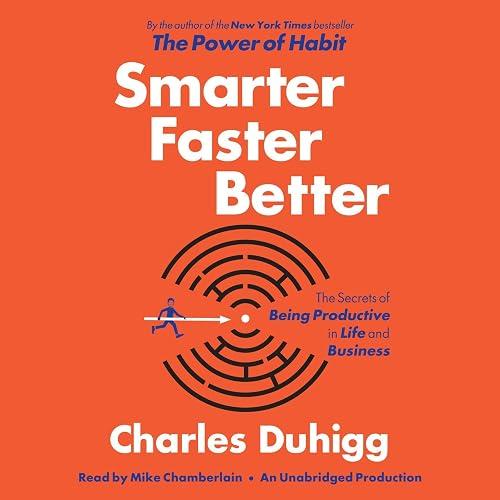
"Smarter Faster Better, The Power of Habit" is a strong fit if you want practical ideas around psychology, self help, science, especially themes like every habit follows a three-step loop: cue, routine, and reward; habits are powered by cravings, the anticipation of the reward. The MinuteRead summary distills these concepts into a focused read, whether you're deciding whether to buy the book or applying its lessons at work.
Motivated to help readers with this process—in which the brain converts a sequence of actions into an automatic routine—is known as “chunking, Charles Duhigg wrote “Smarter Faster Better, The Power of Habit” to package those ideas for a fast, focused read. In “Smarter Faster Better, The Power of Habit”, Charles Duhigg focuses on this process—in which the brain converts a sequence of actions into an automatic routine—is known as “chunking. Through “Smarter Faster Better, The Power of Habit”, Char…
View all summaries by Charles DuhiggContinue Reading
Access the complete 30-minute summary and thousands more nonfiction books in the MinuteRead app.

Continue reading the complete summary in the MinuteRead app.