MinuteRead
30 min
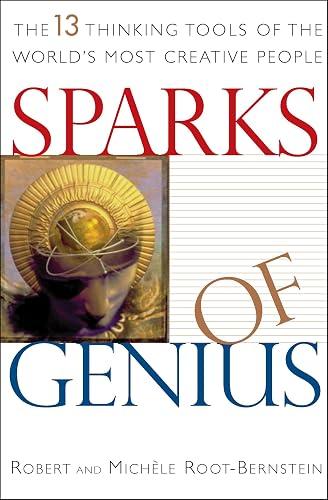
Book summary
by Michele Root-Bernstein
Premium summary · Opens in the app · 30 min read
Every culture celebrates its creative geniuses. We tell stories about Archimedes leaping from his bath, Newton watching an apple fall, Einstein riding a beam of light. These stories have become so familiar that they obscure a deeper mystery. What actually happened in those minds? What cognitive processes produced those world-changing insights?
**Author:** Michele Root-Bernstein and Robert Root-Bernstein
**Estimated Reading Time:** 45 minutes
**What You'll Learn:**
- Why the most creative people in history think in images, feelings, and bodily sensations before they ever use words - The thirteen cognitive tools that underlie breakthrough thinking across science, art, music, and invention - How to develop your own capacity for creative insight using methods practiced by Nobel laureates, great composers, and pioneering scientists - Why modern education systematically neglects the very skills that produce innovation - How to integrate analytical and imaginative thinking to solve problems in any domain
**Who This Book Is For:**
This book is for anyone who has ever felt that their creative potential remains untapped. It is for scientists who suspect that data alone cannot produce discovery, for artists who want to understand the cognitive foundations of their craft, for educators who wish to nurture genuine creativity rather than rote performance, and for curious readers who want to understand how the mind actually generates new ideas. If you have ever wondered what happens in the moment before an insight arrives, this book will show you.
Every culture celebrates its creative geniuses. We tell stories about Archimedes leaping from his bath, Newton watching an apple fall, Einstein riding a beam of light. These stories have become so familiar that they obscure a deeper mystery. What actually happened in those minds? What cognitive processes produced those world-changing insights? The standard answer has always been that creative people think better, faster, or more logically than everyone else. We imagine genius as a kind of supercharged rationality. The genius, in this view, simply performs the same mental operations as ordinary people but with greater speed and precision. Michele and Robert Root-Bernstein spent years studying the notebooks, letters, and self-reports of history's most innovative thinkers. What they found contradicts the conventional wisdom entirely. Creative thinking does not begin with words. It does not begin with logic. It does not begin with the kind of sequential, verbal reasoning that schools spend years cultivating. Instead, breakthrough ideas emerge from a preverbal realm of images, bodily sensations, emotions, and patterns. The words come later, after the insight has already taken shape. Consider Albert Einstein's famous description of his own thought process. "The words of the language, as they are written or spoken, do not seem to play any role in my mechanism of thought," he wrote. Instead, he described thinking in terms of "certain signs and more or less clear images" that he could "voluntarily reproduce and combine." Only after this imagistic play produced something interesting did he undertake the laborious task of translating it into mathematical symbols and verbal propositions. Einstein was not unusual. The Root-Bernsteins…
Continue reading in the MinuteRead app
Get the complete 30-minute summary of Sparks of Genius
Get the complete summary in the appCreative thinking begins before words. Ideas emerge from images, sensations, emotions, and intuitions before they are tr
Observation is the foundation of all creative thinking. The quality of your creative work depends on the quality of your
Imaging is the mind's eye at work. Creative people think in images before they think in words or symbols.
Analogy is the engine of innovation. It transfers knowledge from familiar to unfamiliar domains.
The body is deeply involved in cognition. Bodily intuitions often contain valuable information that verbal reasoning mis
Empathy provides internal understanding that external observation cannot. Creative people understand their subjects from
"Sparks of Genius" is a strong fit if you want practical ideas around psychology, self help, education, especially themes like creative thinking begins before words. ideas emerge from images, sensations, emotions, and intuitions before they are tr; observation is the foundation of all creative thinking. the quality of your creative work depends on the quality of your. The MinuteRead summary distills these concepts into a focused read, whether you're deciding whether to buy the book or applying its lessons at work.
Motivated to help readers with the words of the language, Michele Root-Bernstein wrote “Sparks of Genius” to package those ideas for a fast, focused read. In “Sparks of Genius”, Michele Root-Bernstein focuses on the words of the language. Through “Sparks of Genius”, Michele Root-Bernstein distills the core ideas on psychology into lessons readers can absorb in a single short sitting. Readers turn to this work when they want Michele Root-Bernstein's perspective on the subject without working thro…
Continue Reading
Access the complete 30-minute summary and thousands more nonfiction books in the MinuteRead app.

Continue reading the complete summary in the MinuteRead app.