MinuteRead
30 min
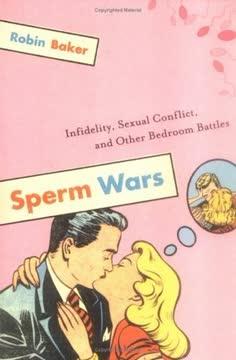
Book summary
by Robin Baker
Premium summary · Opens in the app · 30 min read
Every day, millions of people make sexual decisions they cannot fully explain. A married man risks everything for a brief affair with a coworker. A woman finds herself inexplicably drawn to a stranger during the most fertile days of her cycle. A couple that swore they were finished having children suddenly decides to try for another.
**Author:** Robin Baker **Estimated Reading Time:** 3 hours 15 minutes
**What You'll Learn**
Why human sexual behavior follows patterns shaped by millions of years of evolution. How sperm competition influences everything from penis shape to female orgasm. Why infidelity can be an adaptive strategy for both sexes. What unconscious calculations drive mate selection, jealousy, and sexual desire. How understanding our evolutionary programming can help us make better conscious decisions.
**Who This Book Is For**
Anyone curious about the hidden biological forces driving human sexuality. Readers who want to understand why people so often act against their stated intentions in matters of sex and relationships. Those seeking a scientific framework for making sense of desire, attraction, and reproductive behavior.
Every day, millions of people make sexual decisions they cannot fully explain. A married man risks everything for a brief affair with a coworker. A woman finds herself inexplicably drawn to a stranger during the most fertile days of her cycle. A couple that swore they were finished having children suddenly decides to try for another. We tell ourselves stories about these choices. We attribute them to love, to weakness, to circumstance. But beneath our conscious explanations runs a deeper current, a set of evolutionary programs shaped over millions of generations. These programs do not care about our happiness, our marriages, or our carefully constructed life plans. They care about one thing: getting our genes into the next generation. Robin Baker's work confronts this uncomfortable reality directly. He argues that human sexuality cannot be understood through the lens of culture, psychology, or personal preference alone. It must be understood as a biological system optimized for reproductive success in an ancestral environment that no longer exists. The central insight is both simple and disturbing. Much of what we think, feel, and do sexually is not the product of conscious choice but of evolutionary strategies operating below the level of awareness. Men are not simply attracted to youth and beauty because of cultural conditioning. They are responding to ancient cues of fertility. Women do not experience jealousy merely because of insecurity. Their emotional systems are guarding against the diversion of resources away from their own children. This perspective does not excuse harmful behavior. Understanding the evolutionary roots of rape, for instance, does not make rape acceptable. But it does offer a clearer picture of why certain patterns persist across cultures and throughout history. It explains why contraception has not eliminated the desire for children, why pornography follows predictable themes, and why sexual jealousy remains one of the most powerful and destructive human emotions. The book's title refers to a phenomenon that Baker places at the center of human reproductive biology. When a woman has…
Continue reading in the MinuteRead app
Get the complete 30-minute summary of Sperm Wars
Get the complete summary in the appYour sexual psychology operates largely below conscious awareness. You are not the rational author of your desires that
Sperm competition has shaped human anatomy and behavior. The penis, the orgasm, and ejaculate composition all reflect ad
Female orgasm is functional, not accidental. It influences which sperm succeed and when.
Infidelity can be reproductively advantageous for both sexes. Understanding this does not excuse it, but it explains why
Mate selection requires trade-offs. You cannot have everything in one partner. Recognizing this reduces chronic dissatis
Jealousy is an evolved mate-guarding mechanism. It is not a sign of love or a character flaw. It is a biological respons
"Sperm Wars" is a strong fit if you want practical ideas around science, psychology, biology, especially themes like your sexual psychology operates largely below conscious awareness. you are not the rational author of your desires that; sperm competition has shaped human anatomy and behavior. the penis, the orgasm, and ejaculate composition all reflect ad. The MinuteRead summary distills these concepts into a focused read, whether you're deciding whether to buy the book or applying its lessons at work.
Robin Baker is a British biologist, novelist, and popular science writer born in 1944. He studied at the University of Bristol and has a background in evolutionary biology. Baker's research focuses primarily on sexual biology and human reproductive behavior. He gained prominence with the publication of Sperm Wars in 1996, which became controversial for its theories on human sexuality. Baker has authored numerous books and scientific papers throughout his career, exploring topics such as sperm co…
View all summaries by Robin BakerContinue Reading
Access the complete 30-minute summary and thousands more nonfiction books in the MinuteRead app.

Continue reading the complete summary in the MinuteRead app.