MinuteRead
30 min
Book summary
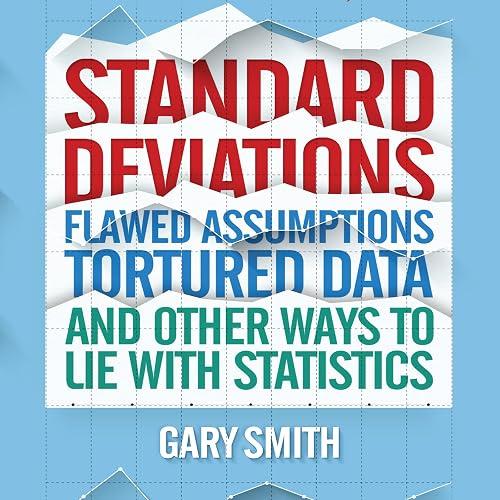
by Gary Smith
Premium summary · Opens in the app · 30 min read
We live in an age of data. Every day, we encounter claims backed by numbers. A new study shows that a certain food prevents cancer. A financial analyst explains why a stock is undervalued. A politician cites statistics proving that a policy works. A coach describes a player as being on a hot streak. A marketing executive presents a graph showing that sales are soaring.
### By Gary Smith
**Estimated Reading Time:** 2 hours 15 minutes
**What You'll Learn**
Why your brain is wired to find patterns that do not exist. How data can be manipulated, distorted, and misunderstood even by experts. Why common sense matters more than statistical sophistication. How to spot misleading comparisons, deceptive graphs, and the seductive illusion of hot streaks. What regression to the mean really means and why it explains so much of what looks like success or failure.
**Who This Book Is For**
Anyone who reads the news, makes financial decisions, evaluates medical claims, follows sports, or simply wants to think more clearly about the numbers that surround us every day. You do not need a background in statistics. You need curiosity and a willingness to question what you are told.
We live in an age of data. Every day, we encounter claims backed by numbers. A new study shows that a certain food prevents cancer. A financial analyst explains why a stock is undervalued. A politician cites statistics proving that a policy works. A coach describes a player as being on a hot streak. A marketing executive presents a graph showing that sales are soaring. The numbers feel authoritative. They feel objective. They feel like truth. But numbers do not speak for themselves. They are collected by people, organized by people, interpreted by people, and presented by people. At every step of that process, errors can creep in. Assumptions can go unexamined. Comparisons can mislead. Graphs can distort. Patterns can appear where none exist. Gary Smith wrote *Standard Deviations* because he kept noticing something troubling. Smart people, educated people, experienced people were being fooled by data. Not because they were unintelligent, but because they trusted the numbers too much and questioned them too little. The problem is not that statistics are inherently deceptive. The problem is that we are not naturally equipped to think statistically. Our brains evolved to spot patterns quickly, to make snap judgments, to find meaning in randomness. That was useful when our ancestors needed to recognize a predator in the grass or decide whether a rustling sound meant danger. But in the modern world, where data is abundant and complex, those same instincts often lead us astray. Consider a simple example. You flip a coin ten times and get ten heads in a row. Is the coin rigged? Maybe. But maybe not. In a long enough series of coin flips, ten heads in a row will happen eventually. It is not a miracle. It is not even particularly unlikely if you flip enough coins. Yet our intuition tells us that ten heads in a row must mean something. It feels too unusual to be…
Continue reading in the MinuteRead app
Get the complete 30-minute summary of Standard Deviations
Get the complete summary in the appWe are pattern-seeking creatures living in a world full of randomness, and this mismatch causes us to see meaning where
Randomness is more streaky than we expect, so streaks are not necessarily evidence of skill or causation.
Computers are only as good as the data they are given. Garbage in, gospel out.
Correlation does not imply causation. Always consider confounding factors.
Experts make mistakes. Respect expertise, but do not worship it.
Graphs can lie. Always examine axes and scales before trusting a graph.
"Standard Deviations" is a strong fit if you want practical ideas around science, mathematics, economics, especially themes like we are pattern-seeking creatures living in a world full of randomness, and this mismatch causes us to see meaning where; randomness is more streaky than we expect, so streaks are not necessarily evidence of skill or causation. The MinuteRead summary distills these concepts into a focused read, whether you're deciding whether to buy the book or applying its lessons at work.
Motivated to help readers with we are too quick to assume that meaningless patterns are meaningful when they are presented as evidence of, Gary Smith wrote “Standard Deviations” to package those ideas for a fast, focused read. In “Standard Deviations”, Gary Smith focuses on we are too quick to assume that meaningless patterns are meaningful when they are presented as evidence of. Through “Standard Deviations”, Gary Smith distills the core ideas on science into lessons readers can absorb in a sin…
Continue Reading
Access the complete 30-minute summary and thousands more nonfiction books in the MinuteRead app.

Continue reading the complete summary in the MinuteRead app.