MinuteRead
30 min
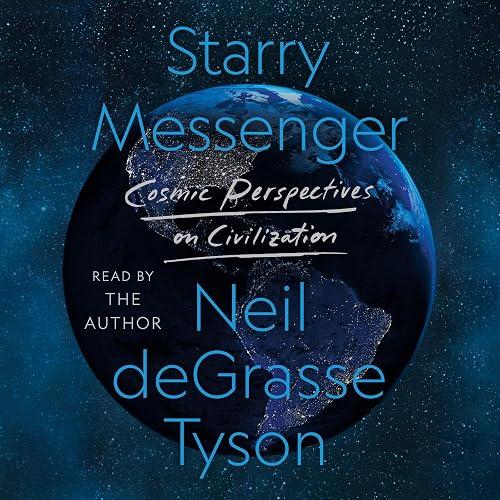
Starry Messenger looks at the big, human debates of our time — from gender and race to beauty and truth to religion, politics, and war — from a cosmic, scientific angle, bringing the context of the universe to our greatest problems, thus showing us how, with perspective, insight, and empathy, we can solve them together.
Starry Messenger looks at the big, human debates of our time — from gender and race to beauty and truth to religion, politics, and war — from a cosmic, scientific angle, bringing the context of the universe to our greatest problems, thus showing us how, with perspective, insight, and empathy, we can solve them together.
A sunrise is always marvelous to look at, but have you ever seen an earthrise? Don’t worry, few people have — because in order to do so, you’ll need to go to space. On Christmas Eve, 1968, astronaut William Anders took an iconic photograph of the Earth “rising” beyond the moon’s horizon.
That’s quite a literal way of “zooming out” and getting some cosmic perspective. “You develop an instant global consciousness, a people orientation, an intense dissatisfaction with the state of the world, and a compulsion to do something about it,” Apollo 14 crew member Edgar Mitchell said. “From out there on the Moon, international politics look so petty. You want to grab a politician by the scruff of the neck and drag him a quarter of a million miles out and say, ‘Look at that, you son of a bitch.'”
Well, back then, politicians did look — at least at Earthrise, Anders’ photograph — because after that picture, a slew of environmental legislation was passed to protect our planet. From banning DDT, a harmful pesticide, to regulating emissions, to Earth Day, the Clean Air and Water Acts, and more, that’s when environmentalism really picked up steam.
Books like Silent Spring had pointed to environmental problems before, but it took some literal cosmic perspective for humans to realize there was “no planet B” and jump into action.
It’s ironic that environmentalism’s massive success can partially be traced back to an event as “ecologically wasteful” as the moon mission. Rockets use tons of fuel and cause huge emissions. Modern activists with their sometimes extreme calls for sustainability would probably have argued against exploring the moon, and their movement might never have taken off! But exploration and discovery are important not just because they give us perspective and rally us around a common cause, Tyson suggests. They are necessary tools in keeping up with life’s exponential pace. In other words, if we don’t keep pushing the boundaries of what we know and what’s technologically possible, sooner or later, nature will eat us alive! Imagine the covid-19 pandemic without instant global communication, mass-produced protective equipment, and quickly developed vaccines. How many more than might have died? Unfortunately, the human brain is bad at grasping exponential growth, from understanding compound interest to estimating distances to internalizing the unfavorable odds of the lottery. As a postdoc at Princeton in 1995,…
Continue reading in the MinuteRead app
Get the complete 5-minute summary of Starry Messenger
Get the complete summary in the appIf we hadn’t landed on the moon, environmentalism might be years behind where it is now.
Exploration and discovery are necessary tools for humans to keep up with life’s hard-to-grasp, exponential pace.
Exponentiality can show us how precious and special life is — especially our own.
"Starry Messenger" is a strong fit if you want practical ideas around culture, education, environment, especially themes like if we hadn’t landed on the moon, environmentalism might be years behind where it is now; exploration and discovery are necessary tools for humans to keep up with life’s hard-to-grasp, exponential pace. The MinuteRead summary distills these concepts into a focused read, whether you're deciding whether to buy the book or applying its lessons at work.
THE LATEST BOOK - adapted from the Prologue I'm Neil deGrasse Tyson, an astrophysicist and servant of those who are cosmically curious. My latest book is "Take Me To Your Leader: Perspectives on Your first Alien Encounter." When a space Alien demands, “Take me to your leader!” what should you do? We presume it wants to meet the person in charge: The President. The Prime Minister. The Monarch. The Pope. Eavesdropping on our cultural norms, the Aliens might instead conclude that pop culture icons…
View all summaries by Neil deGrasse TysonContinue Reading
Access the complete 5-minute summary and thousands more nonfiction books in the MinuteRead app.

Continue reading the complete summary in the MinuteRead app.