MinuteRead
30 min
Book summary
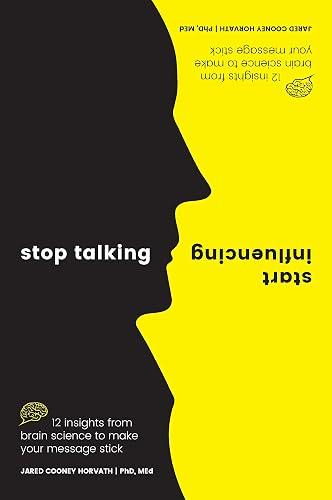
by Jared Cooney Horvath
Premium summary · Opens in the app · 30 min read
Imagine standing in front of a room full of people. You have prepared for weeks. Your slides are polished, your talking points are clear, and your message is important. You speak with confidence. People nod. They seem engaged. But when you follow up a week later, almost no one remembers what you said. What went wrong?
**Author:** Jared Cooney Horvath
**Estimated Reading Time:** 45 minutes
**What You'll Learn:**
- Why reading and listening at the same time is neurologically impossible - How to design presentations that actually work with the brain - Why where you learn matters as much as what you learn - How to use errors, stories, and stress to deepen learning - Practical techniques to make your message stick
**Who This Book Is For:**
Anyone who teaches, presents, leads, or communicates. Whether you are an educator standing in front of a classroom, a manager pitching to stakeholders, a trainer designing workshops, or a parent helping a child learn, this book will change how you think about influence. If you have ever wondered why your carefully crafted PowerPoint slides failed to land, why your training sessions did not stick, or why people seem to forget what you told them within days, this book provides the neurological answers and the practical solutions.
The central idea of this book is both simple and profound: effective communication is not about what you say, but about how the brain receives what you say. To influence others, you must work with the brain's natural processes, not against them. Most of us approach communication from the perspective of the sender. We think about what we want to say, how we want to say it, and what materials we want to use. We focus on our own performance. But Horvath argues that this perspective is backwards. The only thing that matters is what happens in the minds of the audience. If their brains cannot process the information, no amount of speaking skill will help. The brain is not a passive receiver of information. It is an active constructor of meaning. It takes in sensory input, filters it through existing knowledge, makes predictions, and builds understanding. This process has specific requirements and limitations. When communication aligns with these requirements, learning happens naturally. When it conflicts with them, learning fails. One of the most important limitations is what Horvath calls the Broca/Wernicke bottleneck. This is the discovery that the brain can only process one stream of linguistic information at a time. You cannot read and listen simultaneously. When you try, your brain rapidly switches between the two streams, losing information from both. This single insight has massive implications for how we design presentations, create materials, and conduct meetings. Another core principle is that the brain learns through prediction and error. We are constantly making predictions about what will happen next, based on our mental models of the world. When reality matches our predictions, we feel comfortable but learn little. When reality diverges from our predictions, an error signal fires in the brain, triggering…
Continue reading in the MinuteRead app
Get the complete 30-minute summary of Stop Talking, Start Influencing
Get the complete summary in the appNever put text on slides while speaking. Your audience cannot read and listen at the same time.
Use relevant images to support your spoken message. This can boost retention by up to 20 percent.
Practice in the environment where you will perform. Context is part of memory.
Do not multitask. Focus on one task at a time to protect time, accuracy, and memory.
Embrace errors. They are the signal that learning is needed.
Test yourself instead of reviewing. Retrieval strengthens memories.
"Stop Talking, Start Influencing" is a strong fit if you want practical ideas around psychology, self help, science, especially themes like never put text on slides while speaking. your audience cannot read and listen at the same time; use relevant images to support your spoken message. this can boost retention by up to 20 percent. The MinuteRead summary distills these concepts into a focused read, whether you're deciding whether to buy the book or applying its lessons at work.
Motivated to help readers with "It is impossible to understand something you are reading while simultaneously trying to understand a voice, Jared Cooney Horvath wrote “Stop Talking, Start Influencing” to package those ideas for a fast, focused read. In “Stop Talking, Start Influencing”, Jared Cooney Horvath focuses on "It is impossible to understand something you are reading while simultaneously trying to understand a voice. Through “Stop Talking, Start Influencing”, Jared Cooney Horvath distill…
Continue Reading
Access the complete 30-minute summary and thousands more nonfiction books in the MinuteRead app.

Continue reading the complete summary in the MinuteRead app.