MinuteRead
30 min
Book summary
Premium summary · Opens in the app · 30 min read
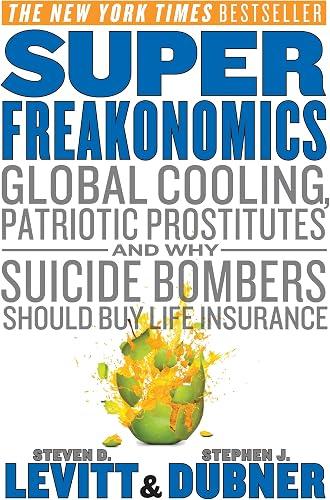
The world is full of mysteries that most people never think to question. Why do sumo wrestlers, who compete in a sport steeped in honor and tradition, sometimes throw matches? Why did a program that paid people to donate blood actually reduce donations? Why might a cheap solution to a massive problem be ignored simply because it is cheap?
**Author:** Steven D. Levitt & Stephen J. Dubner
**Estimated Reading Time:** 45 minutes
**What You'll Learn:**
* Why people respond to incentives in ways that defy conventional expectations * How simple solutions often outperform complex interventions * Why experts and conventional wisdom frequently get things wrong * What data reveals about hidden truths in everyday life * How economic thinking can solve problems far beyond the marketplace
**Who This Book Is For:**
This book is for anyone who has ever wondered why well-intentioned policies fail, why people behave in ways that seem irrational, or how the world actually works beneath the surface of assumptions. If you enjoy having your beliefs challenged by evidence rather than opinion, this book will reward your curiosity.
The world is full of mysteries that most people never think to question. Why do sumo wrestlers, who compete in a sport steeped in honor and tradition, sometimes throw matches? Why did a program that paid people to donate blood actually reduce donations? Why might a cheap solution to a massive problem be ignored simply because it is cheap? Most of us walk through life accepting the explanations we are given. We trust that experts know what they are doing. We assume that policies are designed with our best interests in mind. We believe that the stories we hear about the world are accurate reflections of reality. SuperFreakonomics exists to challenge those assumptions. Steven Levitt and Stephen Dubner approach the world with a simple but powerful tool: the lens of economics. Not economics in the sense of stock markets and interest rates, but economics as a way of understanding human behavior. At its core, economics is the study of how people make choices when faced with scarcity. And people, it turns out, make choices in ways that are often surprising, sometimes troubling, and always revealing. The first Freakonomics book demonstrated that this approach could uncover hidden truths about cheating teachers, drug dealers living with their mothers, and the unexpected causes of falling crime rates. SuperFreakonomics extends that exploration into new territory: prostitution, terrorism, healthcare, global warming, and the strange economics of altruism. What makes this book different from other books that claim to reveal hidden truths is its commitment to data. Levitt and Dubner do not simply offer opinions or anecdotes. They dig into the numbers, design natural experiments, and follow the evidence wherever it leads, even when it leads to uncomfortable conclusions. The result is a book that will make you question what you think you know. It will show you that people are neither inherently good nor inherently bad. People are people, and they respond to incentives. Once you understand that simple truth, the world becomes…
Continue reading in the MinuteRead app
Get the complete 30-minute summary of SuperFreakonomics
Get the complete summary in the appPeople respond to incentives, and the incentives that matter are often not the ones you expect.
Simple solutions often outperform complex interventions.
Conventional wisdom is frequently wrong, and data can reveal the truth.
Well-intentioned policies often have unintended consequences.
Experts are subject to biases, groupthink, and conflicts of interest.
Most altruism is impure altruism, motivated by a mix of genuine concern and self-interest.
"SuperFreakonomics" is a strong fit if you want practical ideas around economics, business, psychology, especially themes like people respond to incentives, and the incentives that matter are often not the ones you expect; simple solutions often outperform complex interventions. The MinuteRead summary distills these concepts into a focused read, whether you're deciding whether to buy the book or applying its lessons at work.
Motivated to help readers with people aren't "good" or "bad." People are people, Steven D. Levitt wrote “SuperFreakonomics” to package those ideas for a fast, focused read. In “SuperFreakonomics”, Steven D. Levitt focuses on people aren't "good" or "bad." People are people. Through “SuperFreakonomics”, Steven D. Levitt distills the core ideas on economics into lessons readers can absorb in a single short sitting. Readers turn to this work when they want Steven D. Levitt's perspective on the subj…
View all summaries by Steven D. LevittContinue Reading
Access the complete 30-minute summary and thousands more nonfiction books in the MinuteRead app.

Continue reading the complete summary in the MinuteRead app.