MinuteRead
30 min
Book summary
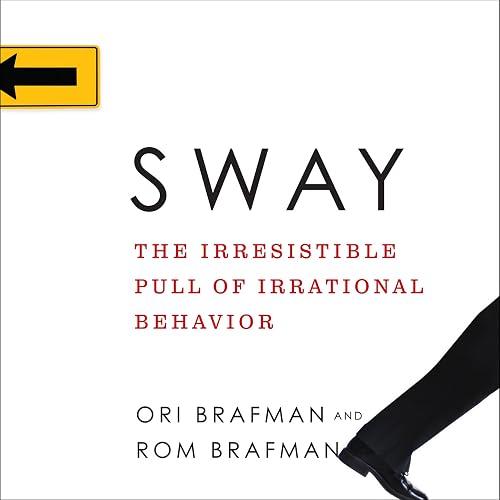
by Ori Brafman
Premium summary · Opens in the app · 30 min read
In the spring of 1977, two Boeing 747s sat on a foggy runway in the Canary Islands. One carried 248 passengers. The other carried 335. Within minutes, both would be engulfed in flames, and 583 people would be dead. The cause was not mechanical failure or terrorism. It was a series of decisions made by experienced pilots who should have known better.
**Author:** Ori Brafman and Rom Brafman
**Estimated Reading Time:** 45 minutes
**What You'll Learn:**
Why perfectly rational people make spectacularly irrational decisions. You'll discover the hidden psychological forces that derail your judgment, the situations that trigger them, and practical strategies to reclaim control over your choices.
**Who This Book Is For:**
Anyone who has ever held onto a losing investment, stayed in a failing relationship, hired the wrong person, or wondered why smart people do dumb things. This book is for leaders, investors, negotiators, and anyone who wants to understand the invisible forces shaping their decisions.
In the spring of 1977, two Boeing 747s sat on a foggy runway in the Canary Islands. One carried 248 passengers. The other carried 335. Within minutes, both would be engulfed in flames, and 583 people would be dead. The cause was not mechanical failure or terrorism. It was a series of decisions made by experienced pilots who should have known better. The captain of the KLM flight was one of the most respected pilots in the world. He had trained other pilots. His face appeared in airline advertisements. Yet on that foggy afternoon, he made a choice so baffling that investigators struggled to explain it. He took off without clearance, directly into the path of another jumbo jet. Why would a man with decades of experience, with hundreds of lives in his hands, make such a catastrophic error? The answer lies not in his skill as a pilot but in the hidden forces that sway all of us. We like to believe we are rational creatures. We weigh evidence, consider alternatives, and make logical choices. But the truth is far more complicated. Beneath our conscious reasoning lies a complex web of psychological forces that can push us toward decisions that defy logic, harm our interests, and sometimes lead to disaster. These forces are not rare anomalies. They affect everyone. They influence the stocks we buy, the people we hire, the relationships we pursue, and the risks we take. They operate silently, often without our awareness, and they can turn intelligent people into irrational actors. Consider a simple experiment. Researchers gave participants a choice: they could receive a guaranteed $50, or they could flip a coin for a chance to win $100. Rationally, both options have the same expected value. Yet most people chose the guaranteed $50. The fear of losing outweighed the possibility of gaining. Now consider another scenario. Researchers asked homeowners whether they would accept a nuclear waste facility in their community. Some were offered no compensation. Others were offered a substantial payment. The result was counterintuitive: those offered money were less likely to accept. The financial incentive actually reduced willingness to…
Continue reading in the MinuteRead app
Get the complete 30-minute summary of Sway
Get the complete summary in the app**Loss aversion:** We feel losses about twice as intensely as equivalent gains, which drives us to make irrational choic
**Commitment bias:** The more we invest in something, the harder it is to walk away, even when the evidence says we shou
**Value attribution:** We judge people and things based on superficial qualities rather than objective merit.
**Diagnosis bias:** Once we label someone, we filter all subsequent information through that label.
**The fairness factor:** Our sense of justice can override rational self-interest, leading us to reject beneficial deals
**The paradox of incentives:** Financial rewards can sometimes reduce motivation rather than increase it.
"Sway" is a strong fit if you want practical ideas around psychology, business, science, especially themes like **loss aversion:** we feel losses about twice as intensely as equivalent gains, which drives us to make irrational choic; **commitment bias:** the more we invest in something, the harder it is to walk away, even when the evidence says we shou. The MinuteRead summary distills these concepts into a focused read, whether you're deciding whether to buy the book or applying its lessons at work.
Motivated to help readers with sensing a loss as a result of the high price, Ori Brafman wrote “Sway” to package those ideas for a fast, focused read. In “Sway”, Ori Brafman focuses on sensing a loss as a result of the high price. Through “Sway”, Ori Brafman distills the core ideas on psychology into lessons readers can absorb in a single short sitting. Readers turn to this work when they want Ori Brafman's perspective on the subject without working through the entire original volume. Ori Brafma…
View all summaries by Ori BrafmanContinue Reading
Access the complete 30-minute summary and thousands more nonfiction books in the MinuteRead app.

Continue reading the complete summary in the MinuteRead app.