MinuteRead
30 min
Book summary
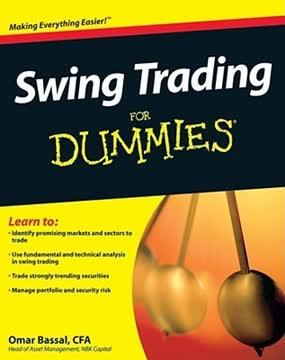
by Omar Bassal
Premium summary · Opens in the app · 30 min read
Most people approach the stock market with one of two strategies. They either buy stocks and hold them for years, hoping that time in the market will smooth out the bumps, or they try to day trade, frantically buying and selling within minutes or hours while glued to a screen. Both approaches have serious drawbacks for the average person.
**Author:** Omar Bassal
**Estimated Reading Time:** 45 minutes
**What You'll Learn:**
- How swing trading differs from day trading and long-term investing - The technical and fundamental analysis tools that drive short-term trading decisions - How to manage risk so a single bad trade never devastates your portfolio - The order types that give you precision control over entries and exits - A complete framework for finding, executing, and evaluating swing trades - The most common mistakes that destroy swing trading accounts and how to avoid them
**Who This Book Is For:**
This book is for anyone who wants to profit from short-term market movements without staring at a screen all day. If you have a full-time job but want to grow your wealth more actively than buy-and-hold investing allows, swing trading offers a middle path. If you are new to trading and find day trading overwhelming, the slower pace of swing trading gives you time to think. If you already invest but feel frustrated by watching gains evaporate during market downturns, swing trading teaches you how to capture profits when they appear and protect yourself when conditions turn. No prior trading experience is required, but a willingness to learn, plan, and exercise discipline is essential.
Most people approach the stock market with one of two strategies. They either buy stocks and hold them for years, hoping that time in the market will smooth out the bumps, or they try to day trade, frantically buying and selling within minutes or hours while glued to a screen. Both approaches have serious drawbacks for the average person. Buy-and-hold investing requires you to endure gut-wrenching drawdowns. You watch your portfolio climb for months, only to give back all those gains during a correction. You tell yourself that over decades it all works out, and historically that has been true. But watching a 30 percent decline in your account is psychologically brutal, and many people sell at exactly the wrong moment because they cannot stomach the pain. Day trading sits at the other extreme. It demands constant attention, lightning-fast decisions, and a tolerance for stress that most people simply do not have. Day traders compete against institutional algorithms and high-frequency trading firms with superior technology and information. The odds are stacked against the individual, and the time commitment makes it impossible for anyone with a regular job. Swing trading offers a third path. It sits between these two extremes, holding positions for a few days to a few weeks, sometimes up to a month or two. The goal is not to capture decades of compound growth or minutes of price movement. The goal is to capture the natural swings that occur in every stock,…
Continue reading in the MinuteRead app
Get the complete 30-minute summary of Swing Trading for Dummies
Get the complete summary in the appSwing trading captures short-term price swings over days to weeks, not minutes or years.
Technical analysis reads price and volume to understand market psychology and anticipate future moves.
Fundamental analysis identifies catalysts that drive short-term price changes.
Risk management is more important than finding good trades.
Risk no more than 1 to 2 percent of your account on any single trade.
Set stop loss orders before entering a trade and never move them further away.
"Swing Trading for Dummies" is a strong fit if you want practical ideas around finance, business, economics, especially themes like swing trading captures short-term price swings over days to weeks, not minutes or years; technical analysis reads price and volume to understand market psychology and anticipate future moves. The MinuteRead summary distills these concepts into a focused read, whether you're deciding whether to buy the book or applying its lessons at work.
Omar Bassal is the author of Swing Trading for Dummies , a book that aims to introduce readers to the concept of swing trading in financial markets. Bassal's work is recognized for its comprehensive approach to explaining swing trading fundamentals, including technical and fundamental analysis techniques, money management, and timeframes. His writing style is generally described as clear and accessible, making complex trading concepts understandable for beginners. Bassal's expertise in financial…
View all summaries by Omar BassalContinue Reading
Access the complete 30-minute summary and thousands more nonfiction books in the MinuteRead app.

Continue reading the complete summary in the MinuteRead app.