MinuteRead
30 min
Book summary
by Bruce Lee
Premium summary · Opens in the app · 30 min read
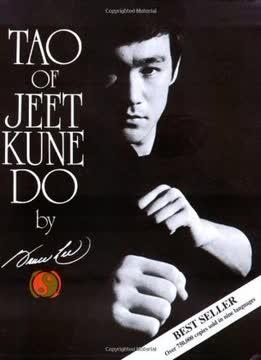
Bruce Lee died before he could finish this book. The manuscript, assembled from thousands of notes, sketches, and philosophical fragments, was published posthumously in 1975. What remains is not a polished manual but something rarer: a window into the mind of a man who spent his short life pursuing a single question. What does it mean to express yourself honestly in combat?
**Author:** Bruce Lee
**Estimated Reading Time:** 42 minutes
**What You'll Learn:**
- Why Bruce Lee believed traditional martial arts had become trapped by their own rules - The philosophical foundations that made Jeet Kune Do more than a fighting system - How to develop the physical qualities that create effective movement - The strategic principles behind timing, distance, and deception in combat - Why true mastery requires abandoning technique altogether
**Who This Book Is For:**
This book is for anyone who has ever felt constrained by rigid systems, whether in martial arts, creative work, or daily life. It speaks to practitioners seeking deeper understanding beyond memorized forms, to thinkers interested in the intersection of Eastern philosophy and practical action, and to anyone who suspects that true freedom lies not in accumulating more knowledge but in stripping away what obscures direct experience.
Bruce Lee died before he could finish this book. The manuscript, assembled from thousands of notes, sketches, and philosophical fragments, was published posthumously in 1975. What remains is not a polished manual but something rarer: a window into the mind of a man who spent his short life pursuing a single question. What does it mean to express yourself honestly in combat? Lee began his martial arts journey at age thirteen, studying Wing Chun under the legendary Ip Man in Hong Kong. He was a natural fighter, quick and aggressive, but also a thinker. He questioned everything. Why must a punch travel along this exact path? Why must a stance look this particular way? Why do we spend years perfecting forms that may never work against a real opponent? These questions got him into trouble. In Hong Kong's traditional martial arts community, questioning your teacher was nearly unthinkable. Lee's refusal to accept doctrine without examination eventually led to a famous challenge match with another martial artist. Lee won, but the victory felt hollow. He realized that his training had not prepared him for the chaos of a real fight. His opponent had not followed the rules of engagement Lee had practiced against. The fight had been messy, unpredictable, and exhausting. This experience planted the seed that would become Jeet Kune Do. After moving to America in 1959, Lee began teaching martial arts in Seattle, then Oakland, and eventually Los Angeles. He attracted students from all backgrounds, including practitioners of boxing, wrestling, fencing, and other martial arts. Lee studied everything. He read philosophy, psychology, and military strategy. He watched Muhammad Ali's footwork frame by frame. He analyzed fencing manuals for insights into timing and distance. He incorporated Western boxing's hand techniques, fencing's footwork, and wrestling's grappling principles. What emerged was not a new style but an anti-style. Jeet Kune Do,…
Continue reading in the MinuteRead app
Get the complete 30-minute summary of Tao of Jeet Kune Do
Get the complete summary in the appEmpty your mind of preconceptions to perceive reality directly.
True mastery is the ability to respond spontaneously to any situation.
Styles impose limitations that combat does not respect.
Focus on principles, not techniques.
The whole body is the weapon, not just the striking limb.
Timing matters more than raw speed.
"Tao of Jeet Kune Do" is a strong fit if you want practical ideas around health & fitness, martial arts, philosophy, especially themes like empty your mind of preconceptions to perceive reality directly; true mastery is the ability to respond spontaneously to any situation. The MinuteRead summary distills these concepts into a focused read, whether you're deciding whether to buy the book or applying its lessons at work.
Bruce Lee was a renowned martial artist, actor, and philosopher born in America. He developed Jeet Kune Do, a revolutionary martial arts system that emphasized practicality and individual expression. Lee's influence extended beyond martial arts into popular culture, making him a cultural icon of the 20th century. His approach to martial arts broke traditional boundaries, incorporating elements from various fighting styles. Lee's philosophy emphasized personal growth, adaptability, and the elimin…
View all summaries by Bruce LeeContinue Reading
Access the complete 30-minute summary and thousands more nonfiction books in the MinuteRead app.

Continue reading the complete summary in the MinuteRead app.