MinuteRead
30 min
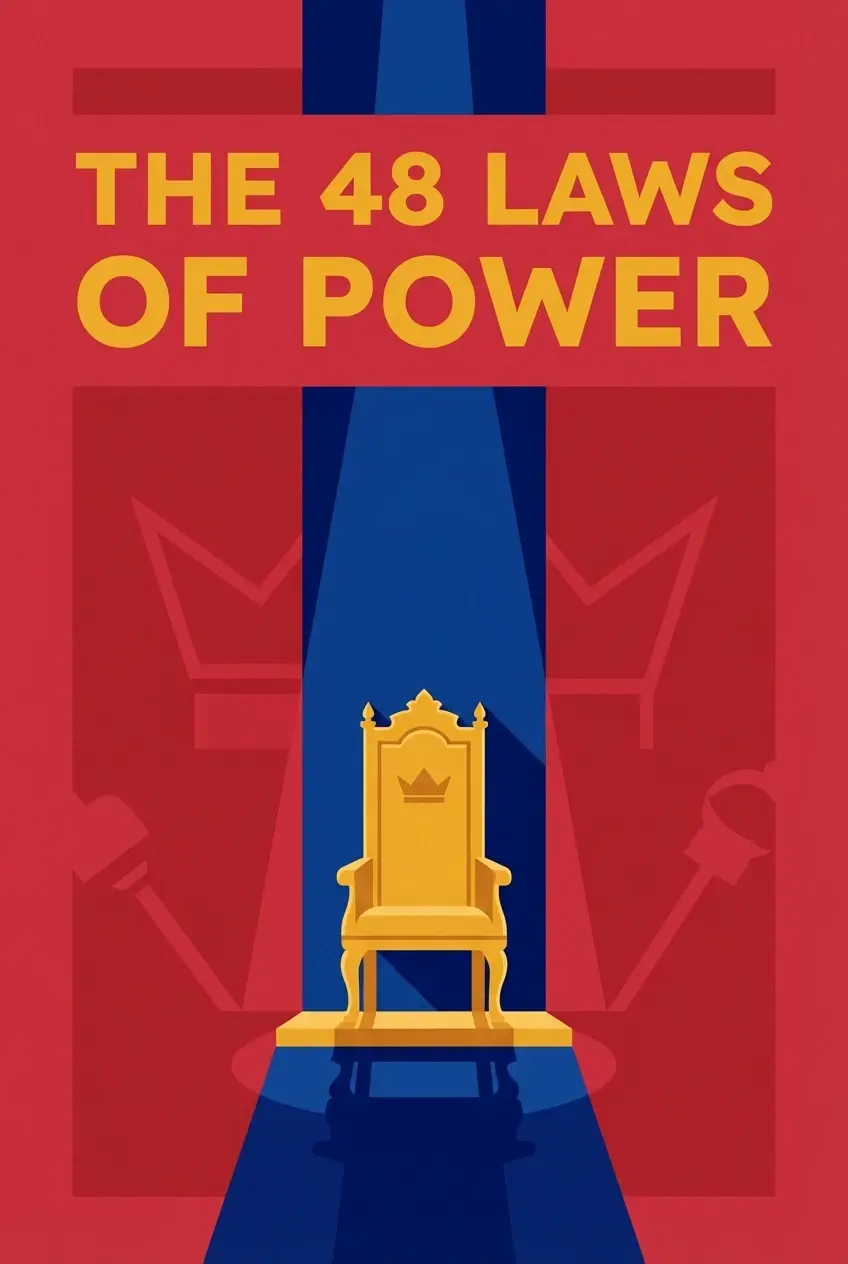
The 48 Laws Of Power draws on many of history’s most famous power quarrels to show you what power looks like, how you can get it, what to do to defend yourself against the power of others and, most importantly, how to use it well and keep it.
The 48 Laws Of Power draws on many of history’s most famous power quarrels to show you what power looks like, how you can get it, what to do to defend yourself against the power of others and, most importantly, how to use it well and keep it.
Here’s one surefire way how to not get promoted: When your boss comes across a problem she can’t solve on her computer, go to her, and, as you fix it, say: “Seeeeee? That’s how you do it. No problem, I’m happy to help!”
The one thing people in a position of power don’t want is to look powerless. But when you flaunt your skills right in front of them, that’s exactly what happens. The French minister of finance under King Louis XIV, Nicolas Fouquet, paid for that lesson with a life in prison. When he threw an excessive party at his chateau in favor of the king, the king accused him of stealing, for no one man could legally be that wealthy, and threw him into prison.
So instead of showing off how good you are, make your boss look like she’s the smartest person in the room, even if you know she isn’t. Give away credit and you’ll be given responsibility in return.
For example, when Galileo Galilei discovered the four moons of Jupiter, he could’ve taken all that credit. Instead, he named them after the Grand Duke, Cosimo II de’ Medici, and his brothers. As a result Cosimo appointed him as his official philosopher and mathematician, securing Galileo’s funding for his research for years to come.
Sometimes the competition seems to always be one step ahead of you. That’s likely because they’ve invested time and energy into researching you and finding out your behavior patterns. When that happens, your best move is to act unpredictably. Do the opposite of what you think people expect, make a mistake on purpose, or just disappear for a while. Erroneous behavior throws people off their analysis game, and while they’re busy trying to figure out your new pattern and explaining your behavior, you have the chance to strike back. This is one of the first lessons good poker players learn. If you only play hands when you’ve hit at least a pair or above, the other players will quickly be on to you and fold every time you bet. But throw in a bluff or two, which you commit to and ride out, even if you end up losing those hands, and your opponents can’t be so sure anymore. Bobby Fischer used this exact strategy to confuse Boris Spassky in their match for the 1972 world championship title in chess. He made a beginner’s…
Continue reading in the MinuteRead app
Get the complete 5-minute summary of The 48 Laws Of Power
Get the complete summary in the appAlways make superiors look smarter than you.
Make errors on purpose to confuse your competition.
Seduce others into voluntarily doing what you want them to, instead of forcing them.
"The 48 Laws Of Power" is a strong fit if you want practical ideas around culture, business, history, especially themes like always make superiors look smarter than you; make errors on purpose to confuse your competition. The MinuteRead summary distills these concepts into a focused read, whether you're deciding whether to buy the book or applying its lessons at work.
Robert Greene is the author of the New York Times bestsellers The 48 Laws of Power, The Art of Seduction, The 33 Strategies of War, and The 50th Law. His highly anticipated fifth book, Mastery, examines the lives of great historical figures such as Charles Darwin, Mozart, Paul Graham and Henry Ford and distills the traits and universal ingredients that made them masters. In addition to having a strong following within the business world and a deep following in Washington, DC, Greene’s books are …
View all summaries by Robert GreeneContinue Reading
Access the complete 5-minute summary and thousands more nonfiction books in the MinuteRead app.

Continue reading the complete summary in the MinuteRead app.