MinuteRead
30 min
Book summary
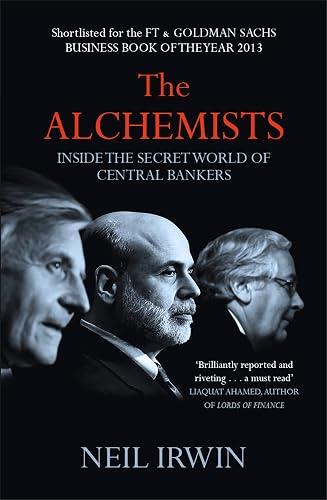
by Neil Irwin
Premium summary · Opens in the app · 30 min read
In the autumn of 2008, the world economy nearly stopped. Banks stopped lending to one another. Businesses could not get the short-term loans they needed to make payroll. Money market funds, long considered as safe as cash, faced runs by panicked investors. The global financial system, a vast and intricate web of trust and obligation, came within hours of complete collapse.
**Author:** Neil Irwin
**Estimated Reading Time:** 3 hours 45 minutes
**What You'll Learn:** - How central bankers became the most powerful economic actors in the modern world - Why the 2008 financial crisis was a turning point in the history of money - What happens when the people who control money get it wrong - How the Federal Reserve, European Central Bank, and other institutions actually operate - Why the decisions of a handful of unelected officials affect your job, your savings, and your future
**Who This Book Is For:** Anyone who wants to understand the hidden machinery of the global economy. If you have ever wondered why interest rates change, what a central bank actually does, or how a financial crisis unfolds, this book will give you the answers in clear, human terms. No economics degree required.
In the autumn of 2008, the world economy nearly stopped. Banks stopped lending to one another. Businesses could not get the short-term loans they needed to make payroll. Money market funds, long considered as safe as cash, faced runs by panicked investors. The global financial system, a vast and intricate web of trust and obligation, came within hours of complete collapse. What happened next surprised almost everyone. A small group of unelected officials, most of them unknown to the general public, stepped into the breach. They created trillions of dollars out of thin air. They guaranteed debts, bought assets, and lent money to institutions that had no other source of funds. They did things that had never been done before, on a scale that had never been imagined. These people were central bankers. And in the space of a few weeks, they transformed themselves from obscure technocrats into the most powerful economic actors on the planet. Neil Irwin's book tells the story of these people and the institutions they lead. It is a story that spans three centuries and four continents. It begins with a Swedish banker in the 1660s who issued the first paper money backed by a central institution. It continues through the panics of Victorian London, the hyperinflation of Weimar Germany, the Great Depression, the inflationary spiral of the 1970s, and the long boom that followed. It culminates in the crisis of 2008 and the painful, contentious years that followed. The central bankers at the heart of this story are not superheroes. They are economists, lawyers, and former bankers. They are products of particular political systems, answerable to presidents and parliaments, constrained by laws and traditions. They make mistakes. They disagree with one another. They are sometimes too cautious and sometimes too bold. But their decisions shape the lives of billions of people. The title of this book comes…
Continue reading in the MinuteRead app
Get the complete 30-minute summary of The Alchemists
Get the complete summary in the appCentral banks create money from nothing. Their power is based on trust.
In a crisis, lend freely, against good collateral, at a penalty rate.
The Federal Reserve is a political compromise, not a pure economic institution.
Printing money to finance deficits causes hyperinflation.
Tightening policy during a downturn deepens recessions.
Breaking inflation requires painful measures and central bank independence.
"The Alchemists" is a strong fit if you want practical ideas around economics, finance, history, especially themes like central banks create money from nothing. their power is based on trust; in a crisis, lend freely, against good collateral, at a penalty rate. The MinuteRead summary distills these concepts into a focused read, whether you're deciding whether to buy the book or applying its lessons at work.
Motivated to help readers with as surely as electric utilities and sewer systems make modern cities possible, Neil Irwin wrote “The Alchemists” to package those ideas for a fast, focused read. In “The Alchemists”, Neil Irwin focuses on as surely as electric utilities and sewer systems make modern cities possible. Through “The Alchemists”, Neil Irwin distills the core ideas on economics into lessons readers can absorb in a single short sitting. Readers turn to this work when they want Neil Irwin'…
Continue Reading
Access the complete 30-minute summary and thousands more nonfiction books in the MinuteRead app.

Continue reading the complete summary in the MinuteRead app.