MinuteRead
16 min
Book summary
Premium summary · Opens in the app · 30 min read
We live in an age of data. Every day, newspapers report the latest health studies. Politicians cite economic figures to justify policies. Social media feeds us personalized recommendations. Algorithms decide who gets a loan, who gets interviewed, and who gets shown which advertisement. Numbers are everywhere, and they shape decisions that affect our lives in profound ways.
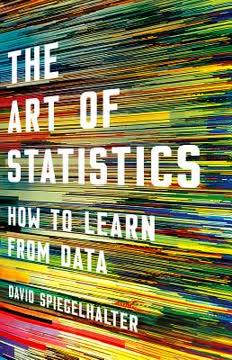
By David Spiegelhalter
**Estimated Reading Time:** 45 minutes
**What You'll Learn**
How to think clearly about data, probability, and uncertainty. How to spot misleading claims. Why correlation does not imply causation. What p-values actually mean. How Bayesian thinking updates beliefs. And why the numbers never speak for themselves.
**Who This Book Is For**
Anyone who encounters statistics in the news, at work, or in daily life and wants to understand what the numbers really mean. You do not need a mathematics background. You need curiosity about how we learn from data and a willingness to question what you are told.
We live in an age of data. Every day, newspapers report the latest health studies. Politicians cite economic figures to justify policies. Social media feeds us personalized recommendations. Algorithms decide who gets a loan, who gets interviewed, and who gets shown which advertisement. Numbers are everywhere, and they shape decisions that affect our lives in profound ways. Yet most people feel unequipped to engage with this world. Statistics can seem like a foreign language, a black box that produces authoritative-sounding conclusions without revealing how it reached them. Many of us respond by either accepting statistical claims uncritically or dismissing them entirely. Neither response serves us well. David Spiegelhalter has spent his career at the intersection of statistics and public understanding. As Winton Professor of Public Understanding of Risk at Cambridge University, he has advised governments, contributed to major public inquiries, and developed methods that statisticians use worldwide. But his most important contribution may be his ability to explain statistical thinking to people who never thought they could understand it. This book exists because statistical literacy is no longer optional. The COVID-19 pandemic showed how urgently citizens need to interpret case counts, risk estimates, and vaccine efficacy numbers. Climate change debates hinge on understanding trends, uncertainty, and model projections. Personal finance decisions require weighing probabilities and expected outcomes. The list goes on. The problem is not that people lack intelligence. The problem is that statistics is often taught poorly, as a collection of formulas rather than a way of thinking. Spiegelhalter takes a different approach. He treats statistics as an art, a set of tools for learning from data while remaining aware of the limitations and pitfalls that accompany every analysis. His central message is simple but profound: the numbers have no way of speaking for themselves. We speak for them. We choose what to measure, how to measure it, what questions to ask, and how to interpret the answers. Statistical analysis is never purely objective. It always involves human judgment, and that judgment can be wise or foolish, honest or deceptive, careful or sloppy. Understanding this transforms how you encounter…
Continue reading in the MinuteRead app
Get the complete 30-minute summary of The Art of Statistics
Get the complete summary in the appData does not speak for itself. Every number reflects human choices.
Correlation is not causation. Always ask what else could explain an association.
A p-value is not the probability that the null hypothesis is true. It is the probability of the data, assuming the null.
P-hacking destroys the reliability of published research. One significant result is not enough.
Bayesian thinking means updating prior beliefs with new evidence. What you believed before matters.
Base rates are essential. A positive test for a rare condition usually means you do not have it.
"The Art of Statistics" is a strong fit if you want practical ideas around science, mathematics, business—especially themes like data does not speak for itself. every number reflects human choices; correlation is not causation. always ask what else could explain an association. The MinuteRead summary distills these concepts into a focused read, whether you're deciding whether to buy the book or applying its lessons at work.
Sir David Spiegelhalter is a distinguished statistician and academic. As Winton Professor of Public Understanding of Risk at Cambridge University, he focuses on communicating statistical concepts to the public. His background is in medical statistics, particularly Bayesian methods. Spiegelhalter developed the BUGS software for Bayesian analysis and has worked on clinical trials and drug safety. He has consulted for pharmaceutical companies and contributed to health technology assessment methods.…
View all summaries by David SpiegelhalterContinue Reading
Access the complete 30-minute summary and thousands more nonfiction books in the MinuteRead app.

Continue reading the complete summary in the MinuteRead app.