MinuteRead
30 min
Book summary
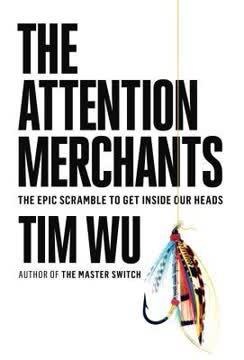
by Tim Wu
Premium summary · Opens in the app · 30 min read
There is a war being waged for something you cannot see, cannot hold, and cannot easily measure. The battlefield is your mind. The prize is your attention. And the combatants are the most sophisticated organizations ever assembled for the purpose of capturing human consciousness.
**Author:** Tim Wu **Estimated Reading Time:** 45 minutes
**What You'll Learn**
How human attention became a commodity worth trillions of dollars. The hidden history of the industry that captures, harvests, and resells our consciousness. The techniques attention merchants use to keep us engaged against our will. And what reclaiming our mental freedom actually requires.
**Who This Book Is For**
Anyone who has ever wondered why they opened their phone to check one thing and emerged forty minutes later having checked everything. Anyone who feels their attention is no longer entirely their own. Anyone who wants to understand the invisible forces shaping what they think about, care about, and desire.
There is a war being waged for something you cannot see, cannot hold, and cannot easily measure. The battlefield is your mind. The prize is your attention. And the combatants are the most sophisticated organizations ever assembled for the purpose of capturing human consciousness. This war did not begin with the internet. It did not begin with smartphones or social media or streaming services. It began nearly two centuries ago, when a young printer in New York City realized something that would change the course of human civilization: that attention itself could be bought, sold, and resold at a profit. Tim Wu's *The Attention Merchants* tells the story of this industry, the business of harvesting human awareness and converting it into revenue. It is a story that touches nearly every aspect of modern life, from the advertisements that interrupt our entertainment to the apps that demand our constant engagement. It explains why our media is free, why our feeds are infinite, and why we feel perpetually distracted even when we desperately want to focus. The central insight is simple but profound. When a service is free, you are not the customer. You are the product. Your attention is what is being sold. This book traces how that arrangement came to dominate our lives. It begins in the 1830s with the first penny newspapers, which discovered that selling readers' attention to advertisers could subsidize cheap content. It follows the story through the rise of radio and television, which perfected the art of capturing mass audiences. It examines how the internet promised liberation but ultimately delivered a more sophisticated form of capture. And it ends with the smartphone, a device that has made attention harvesting a constant, ambient feature of daily existence. The story is not simply one of corporate greed or technological inevitability. It is a story about human psychology, about our vulnerabilities and desires, about the tension between convenience and autonomy. The attention merchants did not force their products upon us. They offered us something we wanted: free content, connection, entertainment,…
Continue reading in the MinuteRead app
Get the complete 30-minute summary of The Attention Merchants
Get the complete summary in the appHuman attention is a commodity that has been harvested and resold for nearly two centuries.
When a service is free, you are the product being sold.
The attention merchant's model is consistent across all media: lure, harvest, sell.
Attention capture techniques exploit psychological vulnerabilities that operate below conscious awareness.
The internet did not liberate us from attention merchants. It made their techniques more sophisticated.
Smartphones made attention capture constant, colonizing spaces once reserved for reflection.
"The Attention Merchants" is a strong fit if you want practical ideas around psychology, technology, business, especially themes like human attention is a commodity that has been harvested and resold for nearly two centuries; when a service is free, you are the product being sold. The MinuteRead summary distills these concepts into a focused read, whether you're deciding whether to buy the book or applying its lessons at work.
Tim Wu is a prominent legal scholar and author specializing in technology and media. As a professor at Columbia Law School and a contributing writer for the New York Times, Wu has established himself as a leading voice in discussions about the intersection of law, technology, and society. He is credited with coining the term "net neutrality," which has become a central concept in debates about internet regulation. Wu's work extends beyond academia, as he has written extensively on technology-rel…
View all summaries by Tim WuContinue Reading
Access the complete 30-minute summary and thousands more nonfiction books in the MinuteRead app.

Continue reading the complete summary in the MinuteRead app.