MinuteRead
30 min
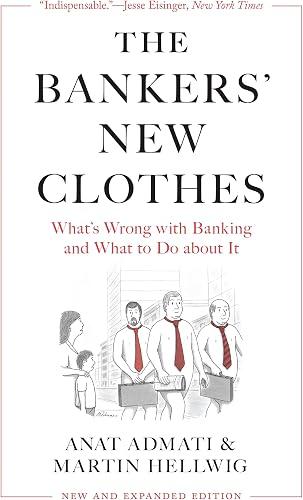
Book summary
by Anat Admati
Premium summary · Opens in the app · 30 min read
In the summer of 2007, the global financial system began to tremble. By the autumn of 2008, it had collapsed into the worst crisis since the Great Depression. Banks that had seemed invincible just months earlier were suddenly unable to meet their obligations. Governments around the world rushed to provide trillions of dollars in guarantees, loans, and bailouts. Millions of people lost their jobs, their homes, and their savings. The economic damage was measured not in billions but in trillions of
**Author:** Anat Admati (with Martin Hellwig)
**Estimated Reading Time:** 45 minutes
**What You'll Learn:**
- Why banks are far more fragile than most people realize - How the banking system's structure creates hidden subsidies and dangerous incentives - Why the most common arguments against banking reform collapse under scrutiny - What a genuinely safer financial system would look like - How ordinary citizens can understand and engage with banking policy
**Who This Book Is For:**
Anyone who wants to understand why financial crises keep happening, why the reforms after 2008 failed to address the root problem, and how a remarkably simple change could make the entire system dramatically safer. No finance background required.
In the summer of 2007, the global financial system began to tremble. By the autumn of 2008, it had collapsed into the worst crisis since the Great Depression. Banks that had seemed invincible just months earlier were suddenly unable to meet their obligations. Governments around the world rushed to provide trillions of dollars in guarantees, loans, and bailouts. Millions of people lost their jobs, their homes, and their savings. The economic damage was measured not in billions but in trillions of dollars, and the social costs were incalculable. The most remarkable thing about the 2008 crisis is not that it happened. It is that the fundamental conditions that caused it remain largely in place today. After the crisis, politicians promised sweeping reform. Regulators imposed new rules. Banks paid fines totaling hundreds of billions of dollars. The public was assured that the system had been made safer. Yet the core structural problem that made the crisis possible was never addressed. Banks today are funded in essentially the same way they were before the crisis. They remain extraordinarily fragile. And the implicit guarantee that taxpayers will rescue them if things go wrong remains firmly in place. This book exists because the public conversation about banking is broken. The language used to discuss bank regulation is deliberately obscure. The arguments made by the banking industry are often misleading. The reforms that were implemented after the crisis were designed to appear substantial while leaving the fundamental problem untouched. As a result, most people believe the financial system was fixed when it was merely patched. Anat Admati and Martin Hellwig wrote The Bankers' New Clothes to cut through the confusion. Their central argument is remarkably simple: banks are dangerously undercapitalized. They borrow too much and hold too little equity. This makes them fragile, creates dangerous incentives, and imposes enormous costs on society. The solution is equally simple: require banks to fund themselves with significantly more equity and less debt. The authors are not outsiders throwing stones at a system they do not…
Continue reading in the MinuteRead app
Get the complete 30-minute summary of The Bankers' New Clothes
Get the complete summary in the appBanks are dangerously undercapitalized, with equity levels far below what is needed for stability.
The claim that equity is expensive is false. The total cost of funding does not increase when equity replaces debt.
Large banks enjoy an implicit subsidy from taxpayers worth tens of billions of dollars per year.
Return on equity is a flawed metric that encourages excessive risk-taking.
Liquidity problems are often caused by solvency problems. Liquidity support does not fix insolvency.
Complex financial instruments increase systemic risk by creating hidden leverage and opacity.
"The Bankers' New Clothes" is a strong fit if you want practical ideas around economics, finance, business, especially themes like banks are dangerously undercapitalized, with equity levels far below what is needed for stability; the claim that equity is expensive is false. the total cost of funding does not increase when equity replaces debt. The MinuteRead summary distills these concepts into a focused read, whether you're deciding whether to buy the book or applying its lessons at work.
Motivated to help readers with when banks borrow too much and take too much risk, Anat Admati wrote “The Bankers' New Clothes” to package those ideas for a fast, focused read. In “The Bankers' New Clothes”, Anat Admati focuses on when banks borrow too much and take too much risk. Through “The Bankers' New Clothes”, Anat Admati distills the core ideas on economics into lessons readers can absorb in a single short sitting. Readers turn to this work when they want Anat Admati's perspective on the s…
Continue Reading
Access the complete 30-minute summary and thousands more nonfiction books in the MinuteRead app.

Continue reading the complete summary in the MinuteRead app.