MinuteRead
30 min
Book summary
Premium summary · Opens in the app · 30 min read
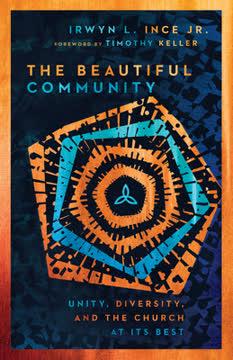
Most books about diversity in the church begin with a problem. Segregated Sundays. Racial tension. The scandal of a divided body of Christ. These are real problems, and they deserve our attention. But Irwyn Ince begins somewhere else entirely. He begins with beauty.
**Author:** Irwyn L. Ince Jr. **Estimated Reading Time:** 45 minutes
### What You'll Learn
Why the church remains deeply divided along racial and cultural lines despite its theology of reconciliation. How the very nature of God as Trinity provides the pattern and power for genuine unity across human difference. What it actually costs to build communities where diverse people truly belong to one another.
### Who This Book Is For
Pastors wondering why their churches stay homogeneous despite good intentions. Christians exhausted by surface-level diversity conversations that go nowhere. Anyone who suspects that the beauty of God has something to do with how different kinds of people learn to love each other.
Most books about diversity in the church begin with a problem. Segregated Sundays. Racial tension. The scandal of a divided body of Christ. These are real problems, and they deserve our attention. But Irwyn Ince begins somewhere else entirely. He begins with beauty. The church is not merely a collection of individuals who happen to share theological convictions. The church is meant to be a beautiful community, a living display of something glorious about the character of God. When people from every tribe, tongue, and nation gather in mutual love and honor, something becomes visible that cannot be seen any other way. The beauty of God himself. This is not a book about diversity management or multicultural programming. It is a book about theology in the deepest sense, about who God is and what that means for who we must become together. Ince writes from the conviction that our divisions are not primarily political problems or sociological problems. They are theological problems. We have forgotten who God is. And because we have forgotten who God is, we have lost sight of what his people are supposed to look like. The book emerges from Ince's own life and ministry. As a Black pastor in the Presbyterian Church in America, a predominantly white denomination, he has spent decades navigating the tensions and possibilities of cross-cultural Christian community. He leads a multi-ethnic church in Washington, DC. He became the first Black moderator of the PCA General Assembly in 2018. He writes not as a theorist but as a practitioner who has counted the cost and tasted the joy of pursuing beautiful community. The argument is straightforward but profound. God exists eternally as Father, Son, and Holy Spirit, three distinct persons in perfect, loving, mutually glorifying community. This trinitarian reality is the source and pattern for all human community, especially the church. Unity in diversity is not a modern value we import into Christianity. It is the very shape of reality at its deepest level. The church is called to reflect that…
Continue reading in the MinuteRead app
Get the complete 30-minute summary of The Beautiful Community
Get the complete summary in the appGod is beautiful community. The Father, Son, and Spirit exist in eternal, mutually glorifying relationship. This is the
The image of God is fully displayed only in the collective diversity of humanity. We need each other to reflect who God
Cultural ghettos are real and they shape us. We all inhabit them. The question is whether we are willing to venture out.
The gospel reconciles people to God and to one another. These two dimensions cannot be separated.
Unity in diversity is not optional. It is a gospel imperative and a mark of the true church.
Building beautiful community requires examining our cultural preferences and being willing to set them aside for the sak
"The Beautiful Community" is a strong fit if you want practical ideas around theology, christian, race, especially themes like god is beautiful community. the father, son, and spirit exist in eternal, mutually glorifying relationship. this is the; the image of god is fully displayed only in the collective diversity of humanity. we need each other to reflect who god. The MinuteRead summary distills these concepts into a focused read, whether you're deciding whether to buy the book or applying its lessons at work.
Irwyn L. Ince Jr. is a pastor and author with extensive experience in fostering multicultural church communities. He serves in the Presbyterian Church of America (PCA) and leads a multi-ethnic pastoral team in urban Washington, DC. Ince is the executive director of the Grace DC Institute for Cross-Cultural Mission and made history as the first Black moderator of the PCA General Assembly in 2018. His work focuses on racial reconciliation, diversity in churches, and applying Reformed theology to c…
View all summaries by Irwyn L. Ince Jr.Continue Reading
Access the complete 30-minute summary and thousands more nonfiction books in the MinuteRead app.

Continue reading the complete summary in the MinuteRead app.