MinuteRead
30 min
Book summary
by Rose George
Premium summary · Opens in the app · 5 min read
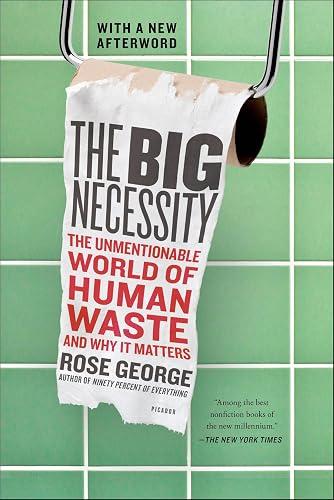
The Big Necessity makes you smarter about feces by explaining how sanitation works, the damage it causes when it’s not done properly, and what we can do to improve it around the world.
The Big Necessity makes you smarter about feces by explaining how sanitation works, the damage it causes when it’s not done properly, and what we can do to improve it around the world.
Did you know diarrhea takes an estimated 2.2 million lives a year? By just properly disposing of human feces, we can reduce diarrhea in developing countries by an astounding 40 percent. Havard scientist Gary Ruvkun suggested that access to a toilet is the biggest factor in living a long, healthy life. He believed it could add an estimated 20 years to a person’s lifespan.
Having good sanitation makes an immense difference both medically and economically. Bad sanitation means people get sick more often, taking them out of work and giving them costs of medical care. It’s hard to estimate just how significant the economic impact would be if we could dispose of waste effectively.
But one thing is for sure: you will always spend more to fix the problem of poor sanitation than you will to put it in place in the first place. It would cost about $95 billion to fix sanitation worldwide. It might sound like a lot until you realize it would save $660 billion in the end.
Take Peru, for example. A 1991 cholera outbreak cost $1 billion to contain. Cholera is the result of bad sanitation and contaminated water. The changes that needed to be made to prevent the problem would have cost just $100 million and would’ve been a lasting investment in the water system.
Once we flush the toilet, we just don’t really want to talk about what happens after that. Even when talking about poop-related disease, we say things like “water-related diseases.” And then there’s “bathroom” and “water closet.” This taboo even appears in world charity groups like USAID, who spend 90 percent of their budget on clean water, which reduces diarrhea by 20 percent, instead of clean sanitation, which would reduce it by 40 percent. Each day in India, roughly 155,000 truckloads of feces are deposited in open public areas. People in the slums and poorer areas walkthrough and live around human waste daily. Groups have tried to help with this open-defecation problem in India by providing latrines. But it has come down to a problem of habit as millions of these have been misused or unused. George explains that if we are going to tackle this problem, people need to be educated of the dangers of human feces, as many people may not realize the danger. In 1991, WaterAid consultant Kamal Kar actually went to villages to talk to the people in person about stopping open-defecation practices. The non-profit had been building latrines in Bangladesh for years,…
Continue reading in the MinuteRead app
Get the complete 5-minute summary of The Big Necessity
Get the complete summary in the appAdequate sanitation saves tons of money as well as lives.
In order to fix the problem, we need to get rid of the taboo and work to change sanitation habits.
Though it presents many problems, there are also uses for human waste.
"The Big Necessity" is a strong fit if you want practical ideas around culture, health, history, especially themes like adequate sanitation saves tons of money as well as lives; in order to fix the problem, we need to get rid of the taboo and work to change sanitation habits. The MinuteRead summary distills these concepts into a focused read, whether you're deciding whether to buy the book or applying its lessons at work.
Motivated to help readers with the Big Necessity makes you smarter about feces by explaining how sanitation works, Rose George wrote “The Big Necessity” to package those ideas for a fast, focused read. In “The Big Necessity”, Rose George focuses on the Big Necessity makes you smarter about feces by explaining how sanitation works. Through “The Big Necessity”, Rose George distills the core ideas on health into lessons readers can absorb in a single short sitting. Readers turn to this work when th…
View all summaries by Rose GeorgeContinue Reading
Access the complete 5-minute summary and thousands more nonfiction books in the MinuteRead app.

Continue reading the complete summary in the MinuteRead app.