MinuteRead
30 min
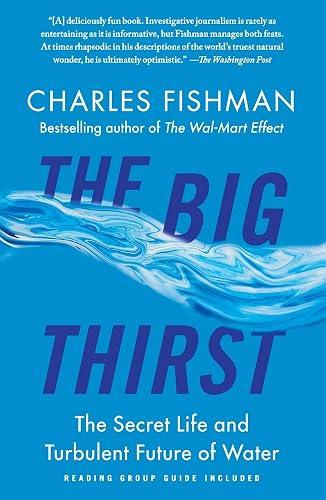
Book summary
by Charles Fishman
Premium summary · Opens in the app · 30 min read
Every morning, billions of people around the world perform a small miracle without recognizing it. They turn a handle or press a lever, and clean, safe water flows out. They use it to brush their teeth, make coffee, shower, flush toilets, and wash dishes. Then they go about their day without giving that water another thought.
**Author:** Charles Fishman
**Estimated Reading Time:** 45 minutes
**What You'll Learn:**
- Why water scarcity is already a crisis in both developing and developed nations - How the twentieth century created a "golden age of water" that made us complacent - Why our relationship with water must fundamentally change - What innovative solutions are emerging around the world - How individuals, businesses, and communities can build a sustainable water future
**Who This Book Is For:**
Anyone who turns on a tap without thinking. Anyone who assumes water will always be there. Anyone who wants to understand one of the most important and least discussed challenges of our time. If you drink water, bathe in water, eat food grown with water, or use electricity generated with water, this book is about you.
Every morning, billions of people around the world perform a small miracle without recognizing it. They turn a handle or press a lever, and clean, safe water flows out. They use it to brush their teeth, make coffee, shower, flush toilets, and wash dishes. Then they go about their day without giving that water another thought. This simple act, repeated billions of times daily, represents one of the greatest achievements in human history. It is also one of the most fragile. Charles Fishman spent years investigating water for this book, and what he discovered surprised him. Water is not the simple, abundant resource most of us imagine. It is a complex, expensive, energy-intensive system that delivers a product essential to every aspect of modern life. And that system is under strain in ways most people never consider. The problem is not just drought in faraway places. It is not just children in developing nations walking miles to fetch dirty water. Those are real and urgent problems, but they are only part of the story. The deeper problem is that even in wealthy nations with sophisticated infrastructure, water systems are aging, underfunded, and increasingly vulnerable. Cities like Atlanta nearly ran out of water during a drought in 2007. Las Vegas has spent billions securing water supplies that remain precarious. Australia's major cities came within months of running dry during the Millennium Drought. Meanwhile, in the developing world, the situation is far more dire. In India, rapid economic growth is colliding with water scarcity that threatens to derail the country's progress. In China, rivers are so polluted they cannot be used for agriculture or drinking. In sub-Saharan Africa, hundreds of millions of people still lack access to safe water, and the consequences ripple through every aspect of life: health, education, economic opportunity, and human dignity. Fishman argues that we are living through a fundamental shift in our relationship with water. For…
Continue reading in the MinuteRead app
Get the complete 30-minute summary of The Big Thirst
Get the complete summary in the appWater is the most important substance in our lives, and we treat it as if it were worthless.
The golden age of water, when clean water became abundant and cheap, was a deliberate achievement that required massive
That golden age is ending. Communities around the world are facing water scarcity, even in places with abundant rainfall
Water scarcity is often a management problem, not a physical one. We have the water; we just do not manage it well.
Water is systematically underpriced. The price we pay does not reflect its true cost, leading to waste and underinvestme
The solutions to water scarcity are not primarily technological. The barriers are cultural, political, and economic.
"The Big Thirst" is a strong fit if you want practical ideas around science, environment, nature, especially themes like water is the most important substance in our lives, and we treat it as if it were worthless; the golden age of water, when clean water became abundant and cheap, was a deliberate achievement that required massive. The MinuteRead summary distills these concepts into a focused read, whether you're deciding whether to buy the book or applying its lessons at work.
Motivated to help readers with "We are in the middle of a water crisis already, Charles Fishman wrote “The Big Thirst” to package those ideas for a fast, focused read. In “The Big Thirst”, Charles Fishman focuses on "We are in the middle of a water crisis already. Through “The Big Thirst”, Charles Fishman distills the core ideas on science into lessons readers can absorb in a single short sitting. Readers turn to this work when they want Charles Fishman's perspective on the subject without worki…
Continue Reading
Access the complete 30-minute summary and thousands more nonfiction books in the MinuteRead app.

Continue reading the complete summary in the MinuteRead app.