MinuteRead
30 min
Book summary
Premium summary · Opens in the app · 30 min read
Every day, you interact with people who smile when they are angry, agree when they disagree, and promise things they have no intention of delivering. You watch colleagues sabotage themselves despite obvious talent. You see friends repeat the same destructive relationship patterns. You observe leaders make decisions driven by ego rather than evidence. And if you are honest, you recognize some of these patterns in yourself.
**Estimated Reading Time:** 45 minutes
**What You'll Learn:** How to recognize the hidden forces driving human behavior, master your own emotional responses, read others with greater accuracy, and transform destructive impulses into sources of strength.
**Who This Book Is For:** Anyone who has ever felt confused by another person's actions, blindsided by their own emotional reactions, or frustrated by the gap between what people say and what they actually do.
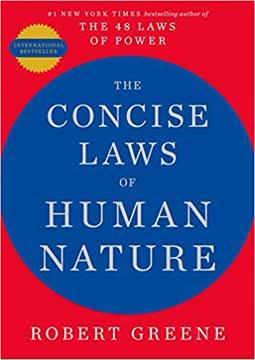
Every day, you interact with people who smile when they are angry, agree when they disagree, and promise things they have no intention of delivering. You watch colleagues sabotage themselves despite obvious talent. You see friends repeat the same destructive relationship patterns. You observe leaders make decisions driven by ego rather than evidence. And if you are honest, you recognize some of these patterns in yourself. The problem is not that people are irrational. The problem is that we pretend they are not. We build systems, organizations, and relationships on the assumption that humans are fundamentally reasonable creatures who respond to logic and facts. Then we are shocked when emotions override reason, when hidden agendas surface, when carefully laid plans collapse because someone felt disrespected or threatened. Robert Greene's work on human nature addresses this gap between how we imagine people behave and how they actually behave. Drawing on centuries of observation from philosophers, psychologists, historians, and strategists, he argues that the most important knowledge you can possess is not technical expertise or industry insight. It is the ability to understand why people do what they do. The stakes are high. Misreading others leads to failed negotiations, broken partnerships, and missed opportunities. Misreading yourself leads to repeated mistakes, unexplained frustrations, and a life that feels directed by forces you cannot control. The person who understands human nature holds an advantage in every domain: business, politics, relationships, creative work, and personal development. Greene's approach is distinctive because he refuses to offer comforting illusions. He does not suggest that people are fundamentally good and simply need encouragement. He does not pretend that positive thinking will resolve deep-seated emotional patterns. Instead, he examines human nature as it is: complex, contradictory, driven by forces we barely understand, and capable of both remarkable achievement and spectacular self-destruction. This condensed edition distills the essential insights from Greene's exploration of human nature. It will introduce you to the emotional forces that shape behavior, the masks people wear, the role of narcissism and envy, the power of empathy and self-awareness, and the practical skills of timing and resilience. A word of caution before we begin. This knowledge cuts both ways. Understanding human nature gives you the ability to influence others, and that power can be used ethically or…
Continue reading in the MinuteRead app
Get the complete 30-minute summary of Concise Laws Of Human Nature
Get the complete summary in the appYour emotional self is powerful and charismatic, but unmanaged emotions become your greatest liability.
Everyone has narcissistic tendencies; recognizing your own builds empathy for others.
People constantly signal their true feelings through nonverbal channels; learn to read them.
Your body language shapes both others' perceptions and your own emotional state.
Empathy is cognitive understanding, not agreement; it is a tool for influence.
Envy is information about your own desires; channel it into motivation rather than resentment.
"Concise Laws Of Human Nature" is a strong fit if you want practical ideas around psychology, self help, philosophy, especially themes like your emotional self is powerful and charismatic, but unmanaged emotions become your greatest liability; everyone has narcissistic tendencies; recognizing your own builds empathy for others. The MinuteRead summary distills these concepts into a focused read, whether you're deciding whether to buy the book or applying its lessons at work.
Robert Greene is a best-selling author and public speaker known for his books on power, strategy, and human nature. Born in Los Angeles, he studied classical studies at U.C. Berkeley and the University of Wisconsin-Madison. Greene has worked as an editor, writer, and story developer in various locations, including New York, Hollywood, and Europe. His breakthrough came with "The 48 Laws of Power" in 1998, co-created with Joost Elffers. Greene's books, including "The Art of Seduction" and "The 33 …
View all summaries by Robert GreeneContinue Reading
Access the complete 30-minute summary and thousands more nonfiction books in the MinuteRead app.

Continue reading the complete summary in the MinuteRead app.