MinuteRead
30 min
Book summary
Premium summary · Opens in the app · 30 min read
Most people think economics is about money. They picture stock tickers, Federal Reserve meetings, and complicated equations scrawled across chalkboards. But economics is really about something far more fundamental: how people make choices when resources are limited. Every day, you make economic decisions without realizing it. You decide whether to drive or take the train. You choose between saving for retirement or buying a new phone. You weigh the cost of living in a good school district agains
**Author:** Robert H. Frank
**Estimated Reading Time:** 45 minutes
**What You'll Learn:**
- Why the top 1 percent captured nearly 80 percent of all earnings growth since 1979 - How social context shapes your spending decisions more than you realize - Why market-based environmental policies outperform rigid regulations - What behavioral economics reveals about your financial choices - How to apply economic thinking to improve your daily life
**Who This Book Is For:**
This book is for anyone who has ever wondered why the rich keep getting richer, why we buy things we don't need, why traffic congestion seems impossible to solve, or why smart people make foolish financial decisions. It is for readers who want to understand the hidden economic forces shaping modern life without wading through dense academic textbooks. If you are curious about how the world actually works, this book will change how you see everything from housing prices to carbon taxes.
Most people think economics is about money. They picture stock tickers, Federal Reserve meetings, and complicated equations scrawled across chalkboards. But economics is really about something far more fundamental: how people make choices when resources are limited. Every day, you make economic decisions without realizing it. You decide whether to drive or take the train. You choose between saving for retirement or buying a new phone. You weigh the cost of living in a good school district against a longer commute. These choices, multiplied across millions of people, create the world we live in. Robert H. Frank has spent decades exploring these everyday economic puzzles. He calls himself an economic naturalist, someone who observes the world the way a biologist observes nature, looking for the hidden logic behind ordinary phenomena. Why do top executives earn hundreds of times more than their employees? Why do Americans buy ever-larger houses even as family sizes shrink? Why does traffic get worse when we build more roads? These questions seem unrelated, but they all connect to fundamental economic principles that shape modern life. The problem is that most people never learn to see these connections. They experience economic forces as mysterious and uncontrollable, like weather patterns. They feel frustrated by rising inequality but cannot explain its causes. They worry about climate change but resist carbon taxes. They struggle with credit card debt but cannot understand why saving feels so difficult. This book exists to bridge that gap, to give readers the tools to understand the economic forces shaping their lives and the policy debates happening around them. The stakes are high. Since 1979, the top 1 percent of earners have captured almost 80 percent of all earnings growth. This staggering statistic is not just a number. It represents a…
Continue reading in the MinuteRead app
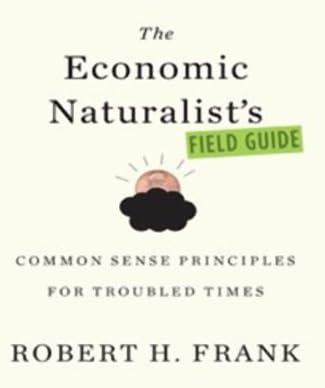
Get the complete 30-minute summary of The Economic Naturalist's Field Guide
Get the complete summary in the appEconomic inequality has risen dramatically because market forces and policy choices have favored those at the top.
Your satisfaction depends on how your consumption compares to others, not just on what you have in absolute terms.
When prices do not reflect true costs, waste and inefficiency result. Getting prices right can create win-win outcomes.
Market-based environmental policies like carbon taxes and cap-and-trade achieve goals more efficiently than rigid regula
Winner-take-all markets are expanding, concentrating rewards at the top and contributing to inequality.
Behavioral biases like present bias and mental accounting lead people to make financial decisions that conflict with the
"The Economic Naturalist's Field Guide" is a strong fit if you want practical ideas around economics, psychology, business, especially themes like economic inequality has risen dramatically because market forces and policy choices have favored those at the top; your satisfaction depends on how your consumption compares to others, not just on what you have in absolute terms. The MinuteRead summary distills these concepts into a focused read, whether you're deciding whether to buy the book or applying its lessons at work.
Motivated to help readers with by one measure, Robert H. Frank wrote “The Economic Naturalist's Field Guide” to package those ideas for a fast, focused read. In “The Economic Naturalist's Field Guide”, Robert H. Frank focuses on by one measure. Through “The Economic Naturalist's Field Guide”, Robert H. Frank distills the core ideas on economics into lessons readers can absorb in a single short sitting. Readers turn to this work when they want Robert H. Frank's perspective on the subject without …
View all summaries by Robert H. FrankContinue Reading
Access the complete 30-minute summary and thousands more nonfiction books in the MinuteRead app.

Continue reading the complete summary in the MinuteRead app.