MinuteRead
30 min
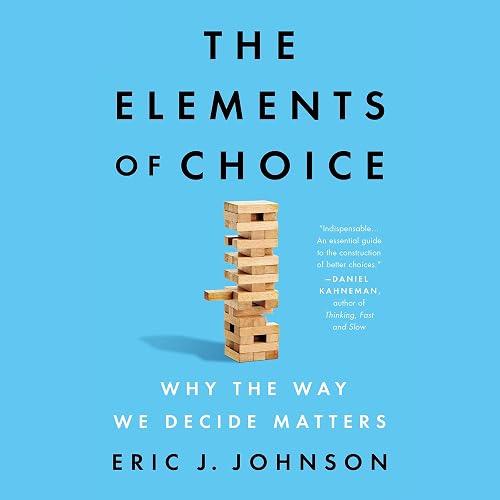
Book summary
by Eric J. Johnson
Premium summary · Opens in the app · 30 min read
Every day, you make thousands of decisions. Some feel deliberate: which route to take to work, what to eat for lunch, whether to respond to that email now or later. Others happen so quickly you barely notice them: which cereal box to grab from the shelf, which link to click first, which number to enter when a website asks how much you want to contribute.
**Author:** Eric J. Johnson
**Estimated Reading Time:** 45 minutes
**What You'll Learn:**
- Why every decision you make is shaped by invisible forces - How the presentation of options changes what you choose - What defaults, ordering, and descriptions do to your judgment - How to design better choices for yourself and others - Why ignoring choice architecture harms the most vulnerable
**Who This Book Is For:**
Anyone who makes decisions, which is everyone. But especially useful for product designers, policymakers, managers, parents, teachers, and anyone who wants to understand why they choose what they choose and how to help others choose better.
Every day, you make thousands of decisions. Some feel deliberate: which route to take to work, what to eat for lunch, whether to respond to that email now or later. Others happen so quickly you barely notice them: which cereal box to grab from the shelf, which link to click first, which number to enter when a website asks how much you want to contribute. You probably believe these choices are yours alone. You weigh options. You consult preferences. You decide. But what if every one of those decisions has a hidden partner? Consider a simple example. In many European countries, more than 90 percent of citizens are registered organ donors. In the United States, the number hovers around 50 percent. Why? Are Europeans simply more altruistic? Not particularly. The difference comes down to a single design choice: in many European countries, you are automatically registered as a donor unless you opt out. In the United States, you must actively choose to opt in. Same options. Same people. Radically different outcomes. This is choice architecture at work. The term describes how the design of a decision environment, the way options are presented, ordered, described, and defaulted, shapes what people choose. It operates whether anyone intends it to or not. There is no neutral way to present a choice. Every arrangement influences the outcome. Eric J. Johnson has spent decades studying this phenomenon. As a professor at Columbia Business School and a pioneer in behavioral economics, he has worked alongside figures like Daniel Kahneman and Richard Thaler to understand how decisions actually work, not how economists imagine they work. His research reveals something both unsettling and empowering: we are far more influenced by our decision environments than we realize, and far more capable of designing better ones than we think. The problem is that most people do not see the influence. When asked, they insist their choices reflect their true preferences. They acknowledge that other people are swayed by defaults or ordering or wording, but they believe themselves immune. This blind spot makes them vulnerable. It allows designers,…
Continue reading in the MinuteRead app
Get the complete 30-minute summary of The Elements of Choice
Get the complete summary in the appChoice architecture is unavoidable. Every presentation of options influences choices.
People follow plausible paths, strategies that determine what they pay attention to and what they ignore.
Preferences are assembled at the moment of choice from accessible memories.
Good choice architecture balances fluency and accuracy.
Defaults are powerful. They work through ease, endorsement, and endowment.
Order matters. The first option often has an advantage in simultaneous presentations.
"The Elements of Choice" is a strong fit if you want practical ideas around psychology, business, science, especially themes like choice architecture is unavoidable. every presentation of options influences choices; people follow plausible paths, strategies that determine what they pay attention to and what they ignore. The MinuteRead summary distills these concepts into a focused read, whether you're deciding whether to buy the book or applying its lessons at work.
Motivated to help readers with you may not realize it, Eric J. Johnson wrote “The Elements of Choice” to package those ideas for a fast, focused read. In “The Elements of Choice”, Eric J. Johnson focuses on you may not realize it. Through “The Elements of Choice”, Eric J. Johnson distills the core ideas on psychology into lessons readers can absorb in a single short sitting. Readers turn to this work when they want Eric J. Johnson's perspective on the subject without working through the entire o…
Continue Reading
Access the complete 30-minute summary and thousands more nonfiction books in the MinuteRead app.

Continue reading the complete summary in the MinuteRead app.