MinuteRead
30 min
Book summary
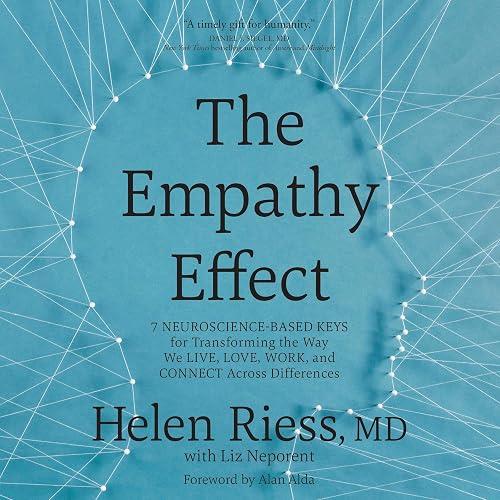
by Helen Riess
Premium summary · Opens in the app · 30 min read
Every day, you encounter people whose inner worlds remain invisible to you. The barista who hands you coffee may be grieving a loss. The colleague who seems distracted may be caring for an aging parent. The patient sitting across from a doctor may be terrified but unable to articulate it. Most of us move through life catching only fragments of what others feel, and we often miss even those.
**Author:** Helen Riess, MD
**Estimated Reading Time:** 45 minutes
**What You'll Learn:**
- Why empathy is not a fixed trait but a trainable skill rooted in brain science - The seven keys of the E.M.P.A.T.H.Y. framework for reading and responding to others - How empathy develops from infancy and why early experiences shape our capacity to connect - The hidden forces that limit empathy, including in-group bias and digital communication habits - Practical strategies for applying empathy in healthcare, leadership, education, and personal relationships - How self-empathy protects against burnout and deepens your ability to care for others
**Who This Book Is For:**
This book is for anyone who wants to understand the science behind human connection and learn practical skills for improving it. Healthcare professionals seeking better patient outcomes, leaders aiming to build trust, educators hoping to reach students more effectively, parents wanting to raise emotionally intelligent children, and individuals looking to strengthen their relationships will all find actionable insights grounded in neuroscience and clinical experience.
Every day, you encounter people whose inner worlds remain invisible to you. The barista who hands you coffee may be grieving a loss. The colleague who seems distracted may be caring for an aging parent. The patient sitting across from a doctor may be terrified but unable to articulate it. Most of us move through life catching only fragments of what others feel, and we often miss even those. This is not a moral failing. It is a design feature of the human brain, which must filter an overwhelming amount of information to function. But it is also a limitation we can overcome. Helen Riess, a psychiatrist and associate clinical professor at Harvard Medical School, has spent her career studying how empathy works at the level of neurons, facial muscles, hormones, and heartbeats. Her research reveals something both surprising and hopeful: empathy is not a mystical quality that some people possess and others lack. It is a measurable, trainable capacity built into the architecture of the human brain. The problem is that most of us never receive formal training in how to use it. We learn to read, write, and calculate. We are taught history, science, and mathematics. But we are rarely taught how to accurately perceive what another person is feeling, how to regulate our own emotional responses, or how to communicate understanding in ways that build trust. These skills are left to chance, absorbed haphazardly from family, culture, and experience. The result is widespread empathic failure: miscommunication in marriages, disconnection between doctors and patients, toxic workplace cultures, and social divisions that seem impossible to bridge. Riess argues that this does not have to be the case. Drawing on decades of research…
Continue reading in the MinuteRead app
Get the complete 30-minute summary of The Empathy Effect
Get the complete summary in the appEmpathy has emotional and cognitive components, both rooted in shared neural circuits.
The seven keys of empathy are Eye contact, Muscles of facial expression, Posture, Affect, Tone of voice, Hearing the who
Empathy is a trainable skill, not a fixed trait.
Early childhood experiences shape empathic development, but the brain remains plastic throughout life.
In-group bias limits empathy for those perceived as different, but exposure and perspective-taking can overcome it.
Digital communication erodes empathy by stripping away nonverbal signals, but mindful use can preserve connection.
"The Empathy Effect" is a strong fit if you want practical ideas around psychology, self help, science, especially themes like empathy has emotional and cognitive components, both rooted in shared neural circuits; the seven keys of empathy are eye contact, muscles of facial expression, posture, affect, tone of voice, hearing the who. The MinuteRead summary distills these concepts into a focused read, whether you're deciding whether to buy the book or applying its lessons at work.
Motivated to help readers with empathy has both emotional (affective) and cognitive (thinking) parts, Helen Riess wrote “The Empathy Effect” to package those ideas for a fast, focused read. In “The Empathy Effect”, Helen Riess focuses on empathy has both emotional (affective) and cognitive (thinking) parts. Through “The Empathy Effect”, Helen Riess distills the core ideas on psychology into lessons readers can absorb in a single short sitting. Readers turn to this work when they want Helen Riess…
Continue Reading
Access the complete 30-minute summary and thousands more nonfiction books in the MinuteRead app.

Continue reading the complete summary in the MinuteRead app.