MinuteRead
30 min
Book summary
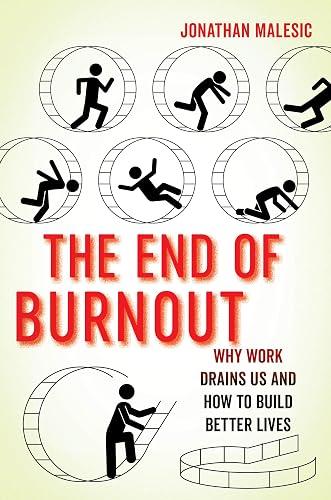
by Jonathan Malesic
Premium summary · Opens in the app · 30 min read
Jonathan Malesic was a successful academic. He had earned a PhD in theology, secured a tenured professorship, and built a career doing work that mattered to him. By every external measure, he had arrived. Yet in 2011, he found himself sitting in his office, unable to work, consumed by a bone-deep exhaustion that no amount of sleep could touch. He had stopped caring about students he once enjoyed teaching. He had begun to doubt whether his research meant anything at all. He was, by his own accoun
**Author:** Jonathan Malesic
**Estimated Reading Time:** 45 minutes
**What You'll Learn:** Why burnout has become a defining affliction of modern work, how our culture's obsession with work creates the conditions for exhaustion, and what alternative models exist for building a more humane relationship with labor.
**Who This Book Is For:** Anyone who has ever felt drained by their job, questioned whether their work matters, or wondered why rest feels so elusive. This book is for the exhausted professional, the disillusioned idealist, the person scrolling job listings at midnight, and anyone curious about how we arrived at a moment where "I'm so busy" became a badge of honor.
Jonathan Malesic was a successful academic. He had earned a PhD in theology, secured a tenured professorship, and built a career doing work that mattered to him. By every external measure, he had arrived. Yet in 2011, he found himself sitting in his office, unable to work, consumed by a bone-deep exhaustion that no amount of sleep could touch. He had stopped caring about students he once enjoyed teaching. He had begun to doubt whether his research meant anything at all. He was, by his own account, burned out. What makes his story remarkable is not that he burned out. Plenty of people do. What makes it remarkable is what he did next: he left. He walked away from tenure, from the career he had spent a decade building, and set out to understand what had happened to him. The result is a book that is part memoir, part history, part cultural criticism, and part philosophical inquiry into the nature of work and its grip on the modern psyche. The problem Malesic identifies is both simple and profound. We live in a culture that has made work the primary source of meaning, identity, and moral worth. We tell ourselves that hard work leads to success, that success leads to fulfillment, and that fulfillment is the point of life. When work fails to deliver on these promises, when it becomes a source of exhaustion rather than meaning, we tend to blame ourselves. We assume we are not working hard enough, not disciplined enough, not passionate enough. We double down. We push harder. And we burn out. This cycle is not an accident. It is the logical outcome of a set of beliefs about work that have been building for centuries, reaching their most intense expression in the modern era. The Protestant work ethic taught generations that labor is a moral duty. Industrial capitalism made work the organizing principle of daily life. The decline of traditional communities left work as one of the few remaining sources of identity. The result is what the philosopher Josef…
Continue reading in the MinuteRead app
Get the complete 30-minute summary of The End of Burnout
Get the complete summary in the appBurnout is the gap between what you expected work to be and what it actually is.
Burnout has three dimensions: exhaustion, cynicism, and ineffectiveness.
Burnout is not a personal failure. It is a cultural symptom.
The Protestant work ethic and total work mentality create the conditions for burnout.
The fissured workplace has made work more precarious and less rewarding since the 1970s.
Human dignity is inherent, not earned through work.
"The End of Burnout" is a strong fit if you want practical ideas around psychology, sociology, business, especially themes like burnout is the gap between what you expected work to be and what it actually is; burnout has three dimensions: exhaustion, cynicism, and ineffectiveness. The MinuteRead summary distills these concepts into a focused read, whether you're deciding whether to buy the book or applying its lessons at work.
Motivated to help readers with "If almost everyone suffers from burnout, Jonathan Malesic wrote “The End of Burnout” to package those ideas for a fast, focused read. In “The End of Burnout”, Jonathan Malesic focuses on "If almost everyone suffers from burnout. Through “The End of Burnout”, Jonathan Malesic distills the core ideas on psychology into lessons readers can absorb in a single short sitting. Readers turn to this work when they want Jonathan Malesic's perspective on the subject without …
Continue Reading
Access the complete 30-minute summary and thousands more nonfiction books in the MinuteRead app.

Continue reading the complete summary in the MinuteRead app.