MinuteRead
30 min
Book summary
Premium summary · Opens in the app · 30 min read
For decades, the prevailing belief was that attention deficit hyperactivity disorder was a childhood condition. Children grew out of it, the thinking went, like they grew out of sneakers. The hyperactive boy who could not sit still would eventually calm down. The daydreaming girl who lost her homework would eventually get organized. Adulthood would resolve what childhood had created.
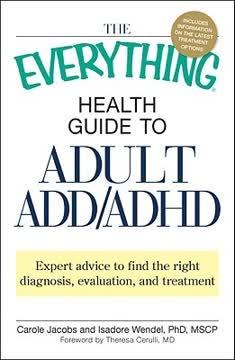
**Author:** Carole Jacobs
**Estimated Reading Time:** 42 minutes
**What You'll Learn:** How adult ADHD is a legitimate neurobiological condition, not a character flaw. You will learn how symptoms evolve from childhood, how to navigate the complex diagnostic process, what treatment options exist, and how to build a life that works with your brain rather than against it.
**Who This Book Is For:** Adults who suspect they may have ADHD, those recently diagnosed, partners and family members who want to understand, and anyone who has spent years feeling scattered, overwhelmed, or unable to meet their potential despite genuine effort.
For decades, the prevailing belief was that attention deficit hyperactivity disorder was a childhood condition. Children grew out of it, the thinking went, like they grew out of sneakers. The hyperactive boy who could not sit still would eventually calm down. The daydreaming girl who lost her homework would eventually get organized. Adulthood would resolve what childhood had created. This belief was wrong. Today, experts understand that while ADHD begins in childhood, a substantial number of people carry the disorder into adulthood. Approximately four percent of the adult population lives with ADHD. Millions of people have spent years struggling with focus, organization, impulsivity, and emotional regulation without understanding why. They have been called lazy, scattered, unreliable, or unmotivated. They have called themselves these things too. The shift in understanding represents more than a clinical update. It represents a profound change in how we interpret human behavior. The adult who cannot keep a tidy home, who bounces from job to job, who interrupts conversations, who forgets important dates, who makes impulsive purchases, who struggles to complete projects is not morally failing. That adult may have a neurobiological condition that affects the brain's executive functions. This book exists because that understanding changes everything. When you know you have ADHD, you stop asking "What is wrong with me?" and start asking "How does my brain work, and how can I work with it?" The first question leads to shame. The second leads to strategy. The problem this book addresses is not just the symptoms of ADHD. It is the accumulated damage of living with an unrecognized condition. It is the career setbacks, the relationship fractures, the financial chaos, the eroded self-esteem. It is the exhausting daily effort of trying to function in a world designed for neurotypical brains while your own brain operates differently. Why do people struggle with this challenge? Because ADHD is invisible. Unlike a broken leg, it does not show up on an X-ray. Unlike many medical conditions, it does not have a single definitive test. Its symptoms overlap with anxiety, depression, bipolar disorder, and even normal human variation. Many adults with…
Continue reading in the MinuteRead app
Get the complete 30-minute summary of The Everything Health Guide to Adult ADD/ADHD
Get the complete summary in the appAdult ADHD is real, neurobiological, and affects approximately four percent of adults.
The core symptoms are inattention, hyperactivity, and impulsivity, but they manifest differently in adults than in child
ADHD is highly heritable. If you have it, your children are at increased risk.
Diagnosis requires comprehensive evaluation by an experienced professional. There is no single test.
Stimulant medication is often effective and safe when properly prescribed and monitored.
Therapy builds practical skills and addresses the emotional consequences of living with ADHD.
"The Everything Health Guide to Adult ADD/ADHD" is a strong fit if you want practical ideas around adhd, psychology, self help, especially themes like adult adhd is real, neurobiological, and affects approximately four percent of adults; the core symptoms are inattention, hyperactivity, and impulsivity, but they manifest differently in adults than in child. The MinuteRead summary distills these concepts into a focused read, whether you're deciding whether to buy the book or applying its lessons at work.
Carole Jacobs es una autora que ha escrito sobre el TDAH en adultos. Aunque no se dispone de información específica sobre su formación y experiencia, ha aportado al campo de la literatura sobre el TDAH con su libro "La guía completa de salud para el TDAH en adultos". Esta obra busca ofrecer una visión integral del TDAH en la adultez, abarcando síntomas, diagnóstico, opciones de tratamiento y estrategias para sobrellevarlo. El enfoque de Jacobs parece orientado a brindar consejos prácticos e info…
View all summaries by Carole JacobsContinue Reading
Access the complete 30-minute summary and thousands more nonfiction books in the MinuteRead app.

Continue reading the complete summary in the MinuteRead app.