MinuteRead
30 min
Book summary
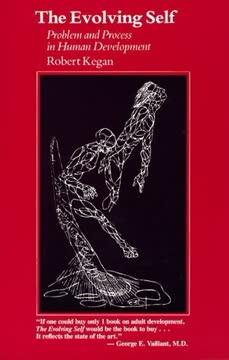
by Robert Kegan
Premium summary · Opens in the app · 30 min read
Most of us carry an unexamined assumption about growing up. We believe that psychological development follows a predictable arc: childhood is when the big changes happen, adolescence is turbulent, and by early adulthood the basic shape of who we are is set. After that, we may accumulate experience, knowledge, and skills, but the fundamental way we make sense of ourselves and the world remains stable.
**Author:** Robert Kegan
**Estimated Reading Time:** 45 minutes
**What You'll Learn:**
- Why psychological development continues throughout adulthood, not just childhood - How the "subject-object" shift explains every meaningful leap in human consciousness - What six distinct stages of meaning-making look like in real life - How relationships and social environments either accelerate or block growth - Why the most powerful therapy often happens outside a therapist's office - How to recognize your own developmental edge and support growth in others
**Who This Book Is For:**
Anyone who has ever wondered why people think so differently from one another. Anyone who wants to understand why some relationships feel stuck while others feel alive. Anyone who suspects that becoming an adult is not a single event but a lifelong process of transformation. This book is for leaders, parents, partners, educators, and anyone curious about the hidden architecture of human understanding.
Most of us carry an unexamined assumption about growing up. We believe that psychological development follows a predictable arc: childhood is when the big changes happen, adolescence is turbulent, and by early adulthood the basic shape of who we are is set. After that, we may accumulate experience, knowledge, and skills, but the fundamental way we make sense of ourselves and the world remains stable. Robert Kegan's The Evolving Self challenges this assumption at its root. Drawing on decades of research in developmental psychology, Kegan argues that human beings are designed to keep growing, not just in childhood but across the entire lifespan. The way we construct meaning, the way we understand ourselves, the way we relate to others, all of this continues to evolve through qualitatively distinct stages well into adulthood. And most of us, he suggests, have not yet reached the later stages of this journey. This matters far more than it might initially seem. The problems that plague modern life, broken relationships, workplace dysfunction, political polarization, the quiet desperation of feeling stuck, are often not failures of character or intelligence. They are failures of development. People are not simply being difficult or unreasonable. They are operating from different meaning-making systems, different ways of understanding what is real, what is valuable, and what is possible. Kegan's central insight is both simple and profound. At every stage of life, we are embedded in a particular way of knowing. We cannot see this way of knowing because we are inside it. It is the lens through which we view everything else. Growth happens when something challenges this embeddedness, when we begin to see what we were previously unable to see. What was once invisible becomes visible. What was once subject, the thing we are, becomes object, the thing we can reflect…
Continue reading in the MinuteRead app
Get the complete 30-minute summary of The Evolving Self
Get the complete summary in the appDevelopment continues throughout life. It does not end in adulthood.
The core of development is the subject-object shift: what we are becomes what we have.
There are six stages of meaning-making: incorporative, impulsive, imperial, interpersonal, institutional, and interindiv
Each stage is an evolutionary truce, a temporary balance that will eventually be challenged.
Growth requires disequilibrium. Comfort is the enemy of development.
We grow in holding environments that confirm us, challenge us, and stay with us.
"The Evolving Self" is a strong fit if you want practical ideas around psychology, philosophy, self help, especially themes like development continues throughout life. it does not end in adulthood; the core of development is the subject-object shift: what we are becomes what we have. The MinuteRead summary distills these concepts into a focused read, whether you're deciding whether to buy the book or applying its lessons at work.
Robert Kegan is a renowned developmental psychologist who taught at Harvard University for 40 years until 2016. His research focuses on adult development, learning, and organizational development. Kegan's work has significantly contributed to the understanding that psychological development continues beyond adolescence, a concept crucial for navigating modern life. His influential books, including The Evolving Self and In Over Our Heads, have been translated into multiple languages and are widel…
View all summaries by Robert KeganContinue Reading
Access the complete 30-minute summary and thousands more nonfiction books in the MinuteRead app.

Continue reading the complete summary in the MinuteRead app.