MinuteRead
30 min
Book summary
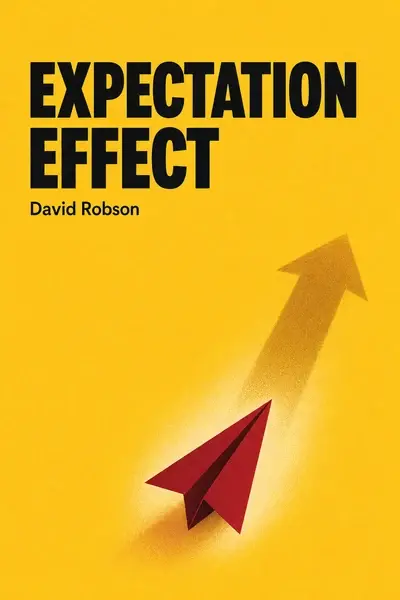
by David Robson
Premium summary · Opens in the app · 30 min read
For most of human history, we have operated under a simple assumption about how our minds work. The brain, we believed, is a passive receiver. Information comes in through the senses. The brain processes it. We respond. Reality happens first. Perception follows.
**Author:** David Robson
**Estimated Reading Time:** 45 minutes
**What You'll Learn:**
How your brain functions as a prediction machine, constantly shaping your reality based on what you expect to happen. You will discover why placebos work, how stress can become your ally, why your beliefs about aging determine how you age, and how to harness these mechanisms to improve your health, performance, and happiness.
**Who This Book Is For:**
Anyone who has ever felt limited by their own assumptions. Anyone curious about the hidden power of the mind. Anyone who wants to understand why two people can experience the same event so differently, and how to use that knowledge to live better.
For most of human history, we have operated under a simple assumption about how our minds work. The brain, we believed, is a passive receiver. Information comes in through the senses. The brain processes it. We respond. Reality happens first. Perception follows. This model feels obviously true. You burn your hand on a stove. You feel pain. The pain is a direct response to the physical damage. You eat a delicious meal. You taste the flavors. The taste is a direct response to the ingredients. You face a stressful deadline. Your heart races. The stress is a direct response to the pressure. But what if this model is fundamentally incomplete? What if your brain is not merely receiving reality, but actively constructing it? David Robson's The Expectation Effect presents a compelling case that our expectations are not passive predictions about what will happen. They are active forces that shape what actually happens. The brain is not a camera recording the world. It is a prediction machine, constantly generating hypotheses about what comes next, then filtering incoming information to match those hypotheses. This is not a book about positive thinking in the superficial sense. It is not about repeating affirmations until your problems disappear. The expectation effect is far more fascinating and far more practical than that. It is a scientifically grounded exploration of how our beliefs, assumptions, and predictions alter our physiology, our perception, and our behavior in ways we rarely recognize. Consider a few findings from the research Robson explores. People who believe stress is harmful are 43 percent more likely to die prematurely than those who experience the same levels of stress but view it as a natural response to challenge. Hotel workers who are told their daily work counts as exercise lose weight and show improved health markers, even though their actual activity levels remain unchanged. People who hold positive beliefs about aging live an average of 7.5 years longer than those with negative views, a larger effect than quitting smoking. These are not trivial…
Continue reading in the MinuteRead app
Get the complete 30-minute summary of The Expectation Effect
Get the complete summary in the appYour brain is a prediction machine. It does not passively receive reality. It actively constructs it based on expectatio
Expectations shape physiology. What you believe about your body changes how your body functions.
The placebo effect is real. Positive expectations produce real physiological changes.
The nocebo effect is equally real. Negative expectations produce negative outcomes.
Stress is not the enemy. Your perception of stress determines whether it helps or hurts you.
Your beliefs about aging shape how you age. Positive age beliefs are associated with longer life.
"The Expectation Effect" is a strong fit if you want practical ideas around psychology, self help, science, especially themes like your brain is a prediction machine. it does not passively receive reality. it actively constructs it based on expectatio; expectations shape physiology. what you believe about your body changes how your body functions. The MinuteRead summary distills these concepts into a focused read, whether you're deciding whether to buy the book or applying its lessons at work.
David Robson is an award-winning science writer specializing in the extremes of human cognition, physiology, and behavior. His first book, The Intelligence Trap, examined why smart people make poor decisions. The Expectation Effect, his second book, delves into how mindset influences health, fitness, happiness, and longevity. Robson's work is known for its in-depth exploration of complex topics, backed by scientific research and presented in an accessible manner. He has a website, davidrobson.me…
View all summaries by David RobsonContinue Reading
Access the complete 30-minute summary and thousands more nonfiction books in the MinuteRead app.

Continue reading the complete summary in the MinuteRead app.