MinuteRead
30 min
Book summary
Premium summary · Opens in the app · 30 min read
In the late 1950s, Betty Friedan noticed something strange happening among her college classmates. Fifteen years after graduating from Smith College, she surveyed her fellow alumnae and found a pattern that disturbed her deeply. These women had everything the culture told them they should want. They had husbands who earned good livings. They had houses in the suburbs. They had children. They had washing machines, electric mixers, and all the conveniences of modern life.
**Estimated Reading Time:** 90 minutes
**What You'll Learn:**
Why millions of educated, comfortable American women felt empty and unfulfilled in the 1950s and early 1960s. You will discover how a powerful social ideology called the feminine mystique convinced women that their only path to happiness lay in marriage, motherhood, and domesticity. You will learn how this ideology damaged women, their children, their marriages, and American society. Most importantly, you will understand what Betty Friedan proposed as the way forward: a life of meaningful work, intellectual growth, and full human identity for women.
**Who This Book Is For:**
This book is for anyone who wants to understand the roots of modern feminism. It is for readers curious about how social expectations shape individual lives. It is for women who have felt the quiet pull of dissatisfaction despite having everything society told them they should want. It is for men who want to understand the experiences of their mothers, grandmothers, wives, and daughters. It is for anyone who believes that human potential should not be limited by gender.
In the late 1950s, Betty Friedan noticed something strange happening among her college classmates. Fifteen years after graduating from Smith College, she surveyed her fellow alumnae and found a pattern that disturbed her deeply. These women had everything the culture told them they should want. They had husbands who earned good livings. They had houses in the suburbs. They had children. They had washing machines, electric mixers, and all the conveniences of modern life. And yet, many of them were desperately unhappy. They could not name the source of their unhappiness. They felt guilty for feeling unhappy at all. After all, what right did a woman with a beautiful home and healthy children have to feel empty? What was wrong with her if she could not find complete satisfaction in waxing the kitchen floor or driving her children to school? Friedan called this phenomenon "the problem that has no name." It was a strange stirring, a sense of dissatisfaction, a yearning that women suffered in the middle of the twentieth century in the United States. Each woman thought she was alone in her unhappiness. Each woman assumed the problem was her own personal failing. If she felt empty, it must be because she was not trying hard enough to be a good wife and mother. If she felt restless, it must be because something was wrong with her femininity. But Friedan discovered that the problem was not personal. It was social. It was political. It was the result of a powerful ideology that she named "the feminine mystique." The feminine mystique was the belief that women could find complete fulfillment exclusively through their roles…
Continue reading in the MinuteRead app
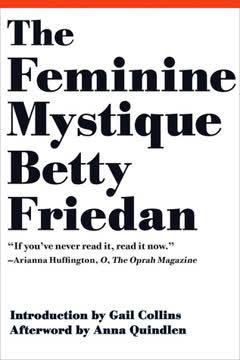
Get the complete 30-minute summary of The Feminine Mystique
Get the complete summary in the appThe problem that has no name was a widespread sense of emptiness and dissatisfaction among American housewives in the 19
The feminine mystique was a social ideology that told women their fulfillment should come exclusively from being wives a
The mystique was constructed deliberately by a culture that had grown uncomfortable with women's independence.
Advertisers exploited women's discontent to sell products, creating a cycle of dissatisfaction and consumption.
Housework, when it is a woman's sole occupation, is dehumanizing because it isolates, bores, and fails to provide intell
The feminine mystique created a crisis in women's identity by defining them exclusively in terms of their relationships.
"The Feminine Mystique" is a strong fit if you want practical ideas around feminism, classics, history, especially themes like the problem that has no name was a widespread sense of emptiness and dissatisfaction among american housewives in the 19; the feminine mystique was a social ideology that told women their fulfillment should come exclusively from being wives a. The MinuteRead summary distills these concepts into a focused read, whether you're deciding whether to buy the book or applying its lessons at work.
Betty Naomi Friedan was an American feminist writer and activist born in 1921. She wrote The Feminine Mystique in 1963, which is credited with sparking the second wave of feminism in the United States. The book explored the widespread unhappiness of American housewives and challenged the idea that women could only find fulfillment through homemaking and child-rearing. Friedan co-founded the National Organization for Women (NOW) in 1966, which became a major force in advocating for women's rights…
View all summaries by Betty FriedanContinue Reading
Access the complete 30-minute summary and thousands more nonfiction books in the MinuteRead app.

Continue reading the complete summary in the MinuteRead app.