MinuteRead
30 min
Book summary
by Sidney Dekker
Premium summary · Opens in the app · 30 min read
On February 2, 2010, a regional airline flight from Nashville to Atlanta crashed during approach. Investigators found that the captain had failed to maintain airspeed, leading to a stall. The immediate conclusion seemed obvious: pilot error. The captain had made a mistake. He was the problem.
**Author:** Sidney Dekker
**Estimated Reading Time:** 45 minutes
**What You'll Learn:**
- Why blaming individuals destroys organizational learning - How to investigate incidents without hindsight bias - What really causes people to make errors at work - How to build systems that are resilient to failure - Why your safety metrics might be lying to you - How to tap into the expertise of frontline workers
**Who This Book Is For:**
This book is for anyone who has ever asked "How could they have been so stupid?" after an accident. It is for safety professionals, managers, investigators, engineers, healthcare leaders, aviation professionals, and anyone responsible for understanding why things go wrong in complex organizations. If you have ever felt that blaming someone for a mistake did not quite solve the problem, this book will give you a new way of seeing.
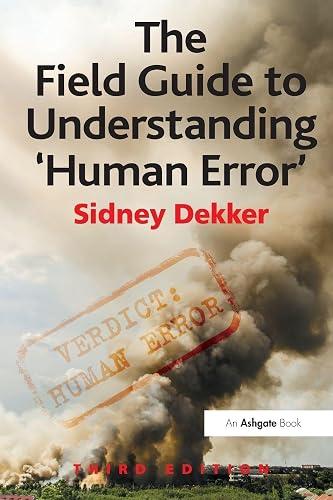
On February 2, 2010, a regional airline flight from Nashville to Atlanta crashed during approach. Investigators found that the captain had failed to maintain airspeed, leading to a stall. The immediate conclusion seemed obvious: pilot error. The captain had made a mistake. He was the problem. But then investigators looked closer. They discovered that the captain had a history of failing check rides. They found that the airline's training program had been inadequate for years. They learned that the first officer, who could have caught the error, was fatigued from a commute that began at 3 a.m. They uncovered a culture where pilots were afraid to speak up about safety concerns because they feared retaliation. The "pilot error" explanation was not wrong. It was just incomplete. And because it was incomplete, it was dangerous. It allowed the airline, the regulator, and the industry to avoid asking harder questions about training, fatigue, scheduling, and culture. This is the central problem Sidney Dekker addresses in The Field Guide to Understanding 'Human Error.' When we blame individuals for failures, we stop investigating too early. We find a culprit and we feel satisfied. We have done something. We have held someone accountable. But we have not made the system safer. Dekker argues that "human error" is not an explanation for failure. It is the starting point for investigation. When someone makes a mistake, the interesting question is not "Who did it?" but "Why did it make sense for them to do what they did?" What was going on in their world that made their actions seem reasonable at the time? This question feels uncomfortable. It seems to let people off the hook. But Dekker insists that understanding why actions made sense is not the same as excusing them. It is the only way to learn from them. If we do not understand why…
Continue reading in the MinuteRead app
Get the complete 30-minute summary of The Field Guide to Understanding 'Human Error'
Get the complete summary in the appHuman error is a symptom, not a cause. Look for the systemic issues that made the error likely.
Ask "Why did this make sense?" instead of "Who is to blame?"
Hindsight bias distorts your understanding of accidents. Reconstruct the situation as it appeared at the time.
People do not come to work intending to fail. They come to work intending to do a good job.
Safety culture emerges from daily interactions. It cannot be imposed from the top.
Safety is not the absence of negative events. It is the presence of positive capacities.
"The Field Guide to Understanding 'Human Error'" is a strong fit if you want practical ideas around psychology, business, management, especially themes like human error is a symptom, not a cause. look for the systemic issues that made the error likely; ask "why did this make sense?" instead of "who is to blame?". The MinuteRead summary distills these concepts into a focused read, whether you're deciding whether to buy the book or applying its lessons at work.
Motivated to help readers with 'Human error' is never at the root of your safety problems, Sidney Dekker wrote “The Field Guide to Understanding 'Human Error'” to package those ideas for a fast, focused read. In “The Field Guide to Understanding 'Human Error'”, Sidney Dekker focuses on 'Human error' is never at the root of your safety problems. Through “The Field Guide to Understanding 'Human Error'”, Sidney Dekker distills the core ideas on psychology into lessons readers can absorb in a single…
Continue Reading
Access the complete 30-minute summary and thousands more nonfiction books in the MinuteRead app.

Continue reading the complete summary in the MinuteRead app.