MinuteRead
30 min
Book summary
by Pat Dorsey
Premium summary · Opens in the app · 30 min read
Every year, millions of people buy stocks with the hope of building wealth. Most of them lose money. Not because they are unintelligent or because the market is rigged against them, but because they approach investing without a coherent framework for evaluating businesses. They buy stocks the way they buy lottery tickets: hoping for a big payoff without understanding the odds.
**Author:** Pat Dorsey
**Estimated Reading Time:** 45 minutes
**What You'll Learn:**
- Why economic moats matter more than growth stories - How to read financial statements like a professional analyst - The accounting tricks that hide deteriorating businesses - How to value a company without complex spreadsheets - The sector-specific dynamics that shape investment outcomes - A disciplined framework for long-term investing success
**Who This Book Is For:**
This book is for individual investors who want to move beyond stock tips and market noise. Whether you are a beginner trying to build a foundation or an experienced investor looking to sharpen your analytical skills, the principles here will help you think clearly about what makes a business worth owning. If you have ever wondered why some companies prosper for decades while others flame out, this book provides the answers.
Every year, millions of people buy stocks with the hope of building wealth. Most of them lose money. Not because they are unintelligent or because the market is rigged against them, but because they approach investing without a coherent framework for evaluating businesses. They buy stocks the way they buy lottery tickets: hoping for a big payoff without understanding the odds. The stock market is the only market where the goods go on sale and everyone runs out of the store screaming. When prices fall, investors panic. When prices rise, they pile in. This behavior is backwards, yet it repeats itself in every market cycle. The reason is simple: most people have no way to determine what a stock is actually worth. Without that anchor, they are blown around by emotion, headlines, and the opinions of strangers on the internet. Pat Dorsey spent years as the Director of Equity Research at Morningstar, where he and his team analyzed thousands of companies. In that time, he noticed something important. The best investments were almost never the most exciting companies. They were not the hot startups or the companies making headlines. They were, more often than not, boring businesses with durable competitive advantages. Companies that had figured out how to keep competitors at bay for years, sometimes decades. The central problem this book addresses is straightforward: how do you identify companies that will still be profitable ten or twenty years from now? How do you separate businesses with lasting power from those that are merely enjoying a temporary tailwind? And once you find those businesses, how do you know what price to pay for them? Dorsey's approach is built on a simple but powerful idea borrowed from Warren Buffett: the concept of an economic moat. In medieval times, castles were protected by moats filled with water. The wider the moat, the harder it…
Continue reading in the MinuteRead app
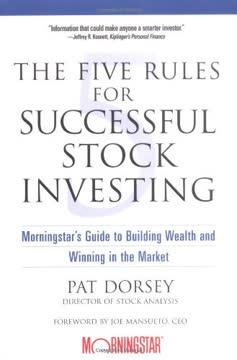
Get the complete 30-minute summary of The Five Rules for Successful Stock Investing
Get the complete summary in the appEconomic moats are structural advantages that protect profitability.
The four moat sources are intangible assets, switching costs, network effects, and cost advantages.
Cash flow, not earnings, is the true measure of financial performance.
Avoiding mistakes is more important than finding winners.
Intrinsic value is the present value of future cash flows.
Always demand a margin of safety.
"The Five Rules for Successful Stock Investing" is a strong fit if you want practical ideas around finance, business, money, especially themes like economic moats are structural advantages that protect profitability; the four moat sources are intangible assets, switching costs, network effects, and cost advantages. The MinuteRead summary distills these concepts into a focused read, whether you're deciding whether to buy the book or applying its lessons at work.
Pat Dorsey is a respected figure in the investment world, known for his work at Morningstar as the Director of Equity Research. His expertise lies in fundamental analysis and identifying companies with strong competitive advantages, or "economic moats." Dorsey's approach to investing emphasizes thorough research, valuation, and long-term thinking. His writing style is praised for being clear and accessible, making complex financial concepts understandable to both novice and experienced investors…
View all summaries by Pat DorseyContinue Reading
Access the complete 30-minute summary and thousands more nonfiction books in the MinuteRead app.

Continue reading the complete summary in the MinuteRead app.