MinuteRead
30 min
Book summary
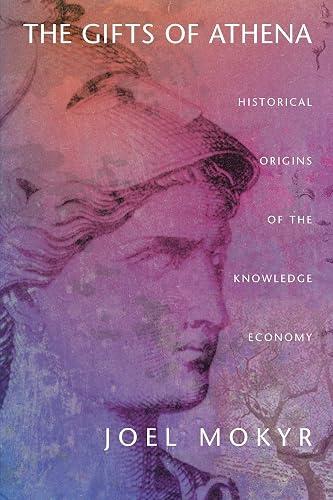
by Joel Mokyr
Premium summary · Opens in the app · 30 min read
Every society in human history has possessed knowledge. Farmers knew when to plant. Blacksmiths knew how to forge iron. Sailors knew how to read the stars. Yet for thousands of years, this knowledge produced lives that were, by modern standards, unimaginably poor. Most people lived close to starvation. Disease carried away children with cruel regularity. The material conditions of life changed so slowly that a person born in 1500 BCE and a person born in 1500 CE would have recognized the same wo
**Author:** Joel Mokyr
**Estimated Reading Time:** 45 minutes
**What You'll Learn:** How knowledge, not capital or labor, became the true engine of economic growth. You will discover why some societies innovate while others stagnate, how the factory system emerged from the division of knowledge, and why the Industrial Revolution was fundamentally an intellectual transformation before it was an economic one.
**Who This Book Is For:** Readers who want to understand the deep historical forces behind modern prosperity. This book is for anyone curious about why the world changed so dramatically after 1750, how science and technology actually interact, and what institutions make sustained progress possible.
Every society in human history has possessed knowledge. Farmers knew when to plant. Blacksmiths knew how to forge iron. Sailors knew how to read the stars. Yet for thousands of years, this knowledge produced lives that were, by modern standards, unimaginably poor. Most people lived close to starvation. Disease carried away children with cruel regularity. The material conditions of life changed so slowly that a person born in 1500 BCE and a person born in 1500 CE would have recognized the same world. Then, something extraordinary happened. Beginning in the eighteenth century, and accelerating dramatically in the nineteenth, the material conditions of human life began to improve at a rate unprecedented in history. Life expectancy rose. Incomes grew. Technologies that would have seemed like magic to previous generations became commonplace. The world transformed from one where economic growth was barely perceptible to one where growth became the expected norm. What changed? The standard answers point to capital accumulation, the rise of markets, the expansion of trade, or the exploitation of natural resources. Joel Mokyr offers a different answer. What changed was knowledge itself. Not just the amount of knowledge, but its character, its organization, and its relationship to production. Mokyr argues that the key to understanding modern economic growth lies in what he calls "useful knowledge." This is knowledge that humans can deploy to manipulate nature for their own benefit. It comes in two forms: propositional knowledge, which is understanding how the world works, and prescriptive knowledge, which is knowing how to do things. The relationship between these two forms of knowledge, and the institutions that govern their creation and diffusion, holds the key to explaining why the world changed when it did and where it did. The problem this book addresses is profound. Why did the Industrial Revolution happen in Britain rather than China, which had been technologically advanced for centuries? Why did earlier bursts of innovation, in ancient Greece, medieval China, or the Islamic Golden Age, eventually fizzle out? Why did the Scientific Revolution of the seventeenth century eventually translate into the technological…
Continue reading in the MinuteRead app
Get the complete 30-minute summary of The Gifts of Athena
Get the complete summary in the appEconomic growth is driven by the expansion of useful knowledge, not just capital or labor.
Useful knowledge comes in two forms: propositional knowledge (understanding) and prescriptive knowledge (techniques).
Techniques rest on epistemic bases. Wide bases enable systematic improvement. Narrow bases do not.
The relationship between propositional and prescriptive knowledge is mutually reinforcing, creating a positive feedback
The Industrial Enlightenment applied scientific methods to production, creating the conditions for sustained innovation.
The factory emerged as a solution to the problem of coordinating specialized knowledge.
"The Gifts of Athena" is a strong fit if you want practical ideas around economics, history, science, especially themes like economic growth is driven by the expansion of useful knowledge, not just capital or labor; useful knowledge comes in two forms: propositional knowledge (understanding) and prescriptive knowledge (techniques). The MinuteRead summary distills these concepts into a focused read, whether you're deciding whether to buy the book or applying its lessons at work.
Motivated to help readers with the growth of human knowledge is one of the deepest and most elusive elements in history, Joel Mokyr wrote “The Gifts of Athena” to package those ideas for a fast, focused read. In “The Gifts of Athena”, Joel Mokyr focuses on the growth of human knowledge is one of the deepest and most elusive elements in history. Through “The Gifts of Athena”, Joel Mokyr distills the core ideas on economics into lessons readers can absorb in a single short sitting. Readers turn to…
Continue Reading
Access the complete 30-minute summary and thousands more nonfiction books in the MinuteRead app.

Continue reading the complete summary in the MinuteRead app.