MinuteRead
30 min
Something has gone deeply wrong with the American economy. For decades after World War II, the country experienced broadly shared prosperity. Wages rose alongside productivity. A single earner could support a family. Children could expect to do better than their parents. The American dream was not a guarantee, but it was a reasonable expectation.
**Author:** Joseph E. Stiglitz
**Estimated Reading Time:** 45 minutes
**What You'll Learn:**
Why the gap between rich and poor has grown so dramatically, how specific policy choices created this divide, what inequality does to democracy and economic stability, and which proven alternatives exist for building a fairer society.
**Who This Book Is For:**
Anyone who has wondered why the economy no longer seems to work for ordinary people. Anyone concerned about the future of democracy. Anyone looking for a clear explanation of how we got here and what can be done about it.
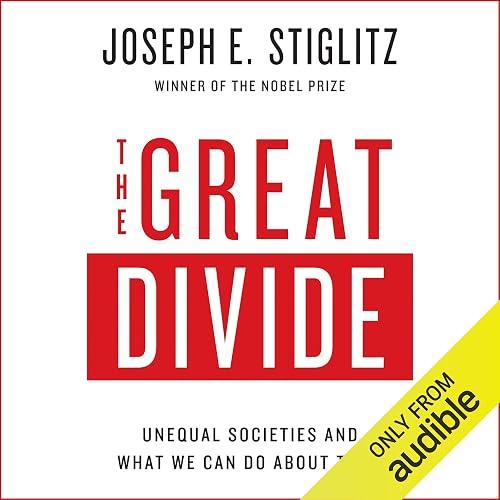
Something has gone deeply wrong with the American economy. For decades after World War II, the country experienced broadly shared prosperity. Wages rose alongside productivity. A single earner could support a family. Children could expect to do better than their parents. The American dream was not a guarantee, but it was a reasonable expectation. That world has vanished. Today, the United States has the highest level of inequality among advanced economies. The top one percent captures a staggering share of national income. The middle class is shrinking. Social mobility has fallen below that of many European countries. A child born into poverty in America now has less chance of escaping it than a child born in Canada, Denmark, or even France. The standard explanation for this transformation is that it was inevitable. Globalization, technological change, and the natural workings of the market supposedly made rising inequality unavoidable. We are told that these forces are beyond our control, that any attempt to interfere would slow growth and hurt everyone. Joseph Stiglitz, a Nobel Prize-winning economist, rejects this story. He argues that inequality is not an unstoppable force of nature. It is the result of choices. Specific policies, enacted over decades, tilted the playing field toward the wealthy and away from everyone else. Deregulation of finance, tax cuts for the rich, weakened labor protections, trade agreements written by and for corporations: these were decisions, not destiny. The consequences of these choices extend far beyond economics. Extreme inequality distorts politics, as concentrated wealth buys concentrated influence. It undermines trust in institutions. It erodes the sense of shared fate that holds a society together. It turns democracy into a contest where the wealthy start with overwhelming advantages. Stiglitz wrote The Great Divide as a collection of essays examining this crisis from multiple angles. The book explores how inequality grew, what it has done to the economy and society, and what can be done to reverse it. The essays draw on his decades of research, his experience as chief economist at the World Bank, and his observations of countries that have chosen different paths. The central message is both sobering and hopeful.…
Continue reading in the MinuteRead app
Get the complete 30-minute summary of The Great Divide
Get the complete summary in the appInequality in America is the result of policy choices, not economic inevitability.
The financial sector's growth has exacerbated inequality and economic instability.
Globalization has been mismanaged, benefiting the wealthy at the expense of workers.
The tax system disproportionately benefits the wealthy through lower rates on capital gains, loopholes, and corporate av
Unequal access to education and healthcare perpetuates inequality across generations.
Money in politics creates a feedback loop where economic inequality produces political inequality and vice versa.
"The Great Divide" is a strong fit if you want practical ideas around economics, politics, sociology, especially themes like inequality in america is the result of policy choices, not economic inevitability; the financial sector's growth has exacerbated inequality and economic instability. The MinuteRead summary distills these concepts into a focused read, whether you're deciding whether to buy the book or applying its lessons at work.
Motivated to help readers with we need not just a new war on poverty but a war to protect the middle class, Joseph E. Stiglitz wrote “The Great Divide” to package those ideas for a fast, focused read. In “The Great Divide”, Joseph E. Stiglitz focuses on we need not just a new war on poverty but a war to protect the middle class. Through “The Great Divide”, Joseph E. Stiglitz distills the core ideas on economics into lessons readers can absorb in a single short sitting. Readers turn to this work …
View all summaries by Joseph E. StiglitzContinue Reading
Access the complete 30-minute summary and thousands more nonfiction books in the MinuteRead app.

Continue reading the complete summary in the MinuteRead app.