MinuteRead
30 min
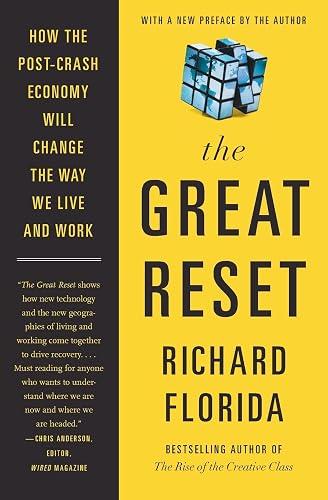
Book summary
by Richard Florida
Premium summary · Opens in the app · 30 min read
Every few generations, the world undergoes a transformation so profound that the rules of economic life change entirely. The way people work, where they live, how they move, what they buy, and what they value all shift in ways that would have been unimaginable just decades earlier. These transformations do not happen gradually. They are triggered by crises that expose the weaknesses of the existing order and create space for something new to emerge.
**Author:** Richard Florida
**Estimated Reading Time:** 45 minutes
**What You'll Learn:**
- How economic crises historically trigger fundamental transformations in society - Why the current shift from manufacturing to creative work mirrors past economic revolutions - What megaregions are and why they are becoming the new engines of prosperity - How infrastructure choices shape economic futures for decades - Why rethinking home ownership, education, and service work is essential for the new economy - What role government should play in enabling rather than resisting economic transformation
**Who This Book Is For:**
This book is for anyone trying to understand why the economy feels fundamentally different than it did a generation ago. It is for professionals navigating career uncertainty, policymakers seeking frameworks for economic development, urban planners thinking about the future of cities, and curious readers who sense that we are living through a historic transition but lack the language to describe it. If you have wondered whether the American Dream needs updating, whether your city is positioned for future growth, or whether creative work will define the next economy, this book provides the historical context and forward-looking analysis you need.
Every few generations, the world undergoes a transformation so profound that the rules of economic life change entirely. The way people work, where they live, how they move, what they buy, and what they value all shift in ways that would have been unimaginable just decades earlier. These transformations do not happen gradually. They are triggered by crises that expose the weaknesses of the existing order and create space for something new to emerge. Richard Florida calls these transformations Great Resets. They are not merely recessions or financial panics, though those often serve as catalysts. A Great Reset is a complete reordering of the economic and social landscape. It reshapes cities, rewires infrastructure, redefines work, and reorganizes daily life. The last Great Reset began with the Great Depression and unfolded over roughly three decades, producing the suburban, automobile-dependent, manufacturing-based economy that defined postwar America. That model has now exhausted itself. The financial crisis of 2008 was not just a housing bubble bursting. It was the signal that the economic order built after the 1930s had reached its limits. The manufacturing base that once provided stable middle-class jobs has eroded. The suburban development pattern that once represented progress now burdens families with long commutes and expensive infrastructure. The educational system designed to produce factory workers no longer prepares people for the work that actually exists. The housing market that once built wealth now traps people in place. Florida argues that we are now living through the early stages of a third Great Reset. The first reset, in the late nineteenth century,…
Continue reading in the MinuteRead app
Get the complete 30-minute summary of The Great Reset
Get the complete summary in the appWe are living through a Great Reset, a fundamental transformation of the economic and social order comparable to the shi
The new economy is based on creativity, knowledge, and ideas rather than physical production.
Megaregions, large networks of metropolitan areas, are becoming the primary units of economic competition.
High-speed rail is the most important infrastructure investment for the creative economy.
Service jobs need to be upgraded to become better, higher-paying jobs.
Home ownership is not always the best choice. Renting can provide the flexibility needed in a rapidly changing economy.
"The Great Reset" is a strong fit if you want practical ideas around economics, history, business, especially themes like we are living through a great reset, a fundamental transformation of the economic and social order comparable to the shi; the new economy is based on creativity, knowledge, and ideas rather than physical production. The MinuteRead summary distills these concepts into a focused read, whether you're deciding whether to buy the book or applying its lessons at work.
Motivated to help readers with the economic incentives which have driven American society in the past, Richard Florida wrote “The Great Reset” as a practical guide drawn from years of experience and research. In “The Great Reset”, Richard Florida focuses on great Resets are broad and fundamental transformations of the economic and social order and involve much more. Through “The Great Reset”, Richard Florida distills the core ideas on economics into lessons readers can absorb in a single short s…
Continue Reading
Access the complete 30-minute summary and thousands more nonfiction books in the MinuteRead app.

Continue reading the complete summary in the MinuteRead app.