MinuteRead
30 min
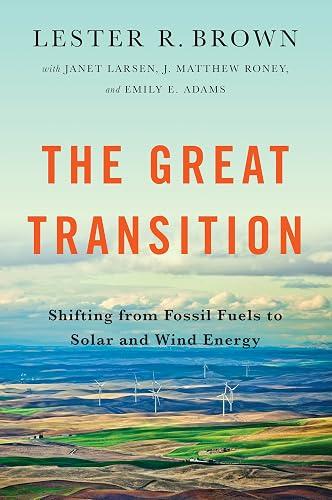
Book summary
by Lester R. Brown
Premium summary · Opens in the app · 30 min read
For most of human history, energy came from the sun in real time. People burned wood for heat, used wind to sail ships and turn mills, and relied on animals for transport and farm work. The sun grew the crops that fed both people and livestock. Energy was immediate, local, and renewable.
**Author:** Lester R. Brown
**Estimated Reading Time:** 45 minutes
**What You'll Learn:**
- Why the global energy system is transforming faster than most people realize - How solar and wind power became cheaper than coal, oil, and nuclear energy - What the decline of fossil fuels means for economies, communities, and daily life - How electric vehicles and energy storage are accelerating the transition - What individuals, businesses, and governments can do to participate in the shift
**Who This Book Is For:**
This book is for anyone who wants to understand the most important economic and environmental story of our time. Whether you are a business leader planning for the future, a policymaker shaping energy decisions, a student studying sustainability, or simply a curious reader wondering what comes after the age of oil, this book will give you a clear picture of the forces reshaping our world.
For most of human history, energy came from the sun in real time. People burned wood for heat, used wind to sail ships and turn mills, and relied on animals for transport and farm work. The sun grew the crops that fed both people and livestock. Energy was immediate, local, and renewable. Then something changed. Beginning in the eighteenth century, humanity discovered that buried beneath the earth lay concentrated stores of ancient sunlight: coal, oil, and natural gas. These fossil fuels packed enormous energy into small volumes. They could be transported, stored, and burned on demand. They powered the Industrial Revolution, transformed agriculture, enabled mass production, and created the modern world. But fossil fuels came with a hidden cost. Burning them releases carbon dioxide and other pollutants into the atmosphere. The air in many cities became dangerous to breathe. The planet began to warm. And because fossil fuels are finite, extracting them became increasingly difficult and expensive. The easy oil was pumped first. What remains requires deep-water drilling, tar sands processing, and hydraulic fracturing. Each new source costs more, both financially and environmentally. We are now at the beginning of a great transition. The energy system that has dominated for two centuries is giving way to something cleaner, cheaper, and more sustainable. Solar panels and wind turbines are replacing coal plants and gas generators. Electric vehicles are replacing gasoline-powered cars. Buildings are being designed to use less energy and generate their own power. This transition is not happening because of ideology. It is happening because of economics. The cost of solar power has fallen by more than 99 percent since the 1970s. Wind power is now the cheapest source of new electricity in many parts of the world. Battery costs have dropped dramatically, making electric vehicles increasingly affordable. When clean energy becomes cheaper…
Continue reading in the MinuteRead app
Get the complete 30-minute summary of The Great Transition
Get the complete summary in the appSolar power costs have fallen by 99 percent since the 1970s, making it the cheapest electricity source in most of the wo
Wind power is now a major electricity source, providing over a third of Denmark's electricity.
Coal is in structural decline due to health impacts, environmental damage, and competition from cheaper alternatives.
Nuclear power is struggling economically, with its global electricity share falling from 17 percent to 10 percent.
Battery costs have fallen by nearly 90 percent in a decade, enabling electric vehicles and grid storage.
Electric vehicles are approaching cost parity with gasoline cars and are being adopted rapidly in leading markets.
"The Great Transition" is a strong fit if you want practical ideas around science, environment, climate change, especially themes like solar power costs have fallen by 99 percent since the 1970s, making it the cheapest electricity source in most of the wo; wind power is now a major electricity source, providing over a third of denmark's electricity. The MinuteRead summary distills these concepts into a focused read, whether you're deciding whether to buy the book or applying its lessons at work.
Motivated to help readers with 1) The global energy transition from fossil fuels to renewables is accelerating 2) Solar power is, Lester R. Brown wrote “The Great Transition” to package those ideas for a fast, focused read. In “The Great Transition”, Lester R. Brown focuses on 1) The global energy transition from fossil fuels to renewables is accelerating 2) Solar power is. Through “The Great Transition”, Lester R. Brown distills the core ideas on science into lessons readers can absorb in a sin…
Continue Reading
Access the complete 30-minute summary and thousands more nonfiction books in the MinuteRead app.

Continue reading the complete summary in the MinuteRead app.