MinuteRead
30 min
Book summary
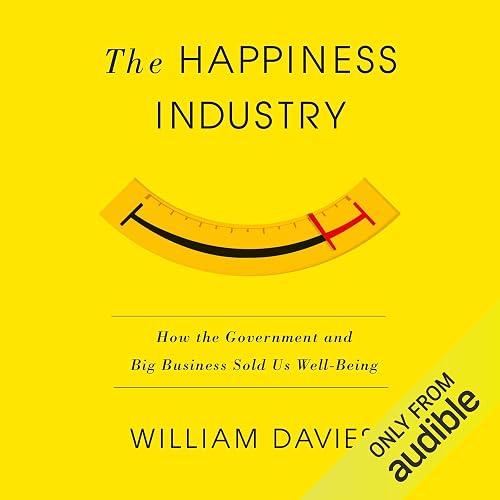
by William Davies
Premium summary · Opens in the app · 30 min read
In 2014, the World Economic Forum held its annual meeting in Davos, Switzerland. For decades, this gathering had been the ultimate symbol of global capitalism: bankers, heads of state, and corporate titans meeting in the snow to discuss trade flows, currency markets, and growth rates. But that year, something strange happened. More than twenty-five sessions were devoted to happiness, wellness, and mindfulness. Buddhist monks sat alongside neuroscientists. Meditation experts shared panels with he
By William Davies
**Estimated Reading Time:** 42 minutes
**What You'll Learn:**
- Why happiness became a measurable economic and political target - How corporations and governments use psychological data to shape behavior - The hidden history connecting utilitarianism, behaviorism, and modern wellness culture - Why the medicalization of sadness serves powerful interests - How to think critically about the multi-billion-dollar happiness economy
**Who This Book Is For:**
Anyone who has ever wondered why employers now care about your emotional state, why governments measure national well-being, or why your phone seems designed to capture your mood. This book is for readers who sense that the modern obsession with happiness is not as innocent as it appears.
In 2014, the World Economic Forum held its annual meeting in Davos, Switzerland. For decades, this gathering had been the ultimate symbol of global capitalism: bankers, heads of state, and corporate titans meeting in the snow to discuss trade flows, currency markets, and growth rates. But that year, something strange happened. More than twenty-five sessions were devoted to happiness, wellness, and mindfulness. Buddhist monks sat alongside neuroscientists. Meditation experts shared panels with hedge fund managers. The language of inner peace had entered the temple of global finance. This was not a passing fad. It was the visible peak of a transformation that had been building for decades. Happiness, once the concern of philosophers and poets, had become a measurable, manageable, and marketable commodity. Governments had begun publishing national well-being indicators. Corporations had appointed chief happiness officers. Smartphone apps promised to track your moods and improve your emotional state. The pursuit of happiness, once enshrined as an inalienable right, had become an industry. William Davies wrote *The Happiness Industry* to explain how this happened and why it matters. His argument is both simple and unsettling: the modern obsession with happiness is not primarily about making people feel better. It is about something far more ambitious and far more troubling. It is about using psychological science to manage populations, optimize workers, and create new forms of profit. The happiness industry promises liberation, but it delivers surveillance. It speaks the language of care, but it operates through control. The roots of this phenomenon stretch back further than most people realize. In the late eighteenth century, the philosopher Jeremy Bentham proposed that all human behavior could be understood as the pursuit of pleasure and the avoidance of pain. He believed that if we could measure these sensations, we could build a scientific politics. Governments could calculate the greatest happiness for the greatest number and govern accordingly. Bentham's vision was radical, and in many ways, it failed. But his dream never died. It simply waited for the technology to catch…
Continue reading in the MinuteRead app
Get the complete 30-minute summary of The Happiness Industry
Get the complete summary in the appThe happiness industry treats happiness as a measurable, manageable, and marketable commodity, not as a complex human ex
Jeremy Bentham's utilitarianism established the intellectual foundation for measuring and managing happiness.
John B. Watson's behaviorism provided the scientific justification for treating human beings as objects to be managed.
The calculating hedonist model reduces all human behavior to the pursuit of pleasure and the avoidance of pain.
The Hawthorne effect shows that the appearance of care can improve performance, even when nothing has actually changed.
Social media and digital technology enable unprecedented psychological surveillance, turning emotions into data.
"The Happiness Industry" is a strong fit if you want practical ideas around psychology, politics, economics, especially themes like the happiness industry treats happiness as a measurable, manageable, and marketable commodity, not as a complex human ex; jeremy bentham's utilitarianism established the intellectual foundation for measuring and managing happiness. The MinuteRead summary distills these concepts into a focused read, whether you're deciding whether to buy the book or applying its lessons at work.
Motivated to help readers with since the World Economic Forum (WEF) was founded in 1971, William Davies wrote “The Happiness Industry” to package those ideas for a fast, focused read. In “The Happiness Industry”, William Davies focuses on since the World Economic Forum (WEF) was founded in 1971. Through “The Happiness Industry”, William Davies distills the core ideas on psychology into lessons readers can absorb in a single short sitting. Readers turn to this work when they want William Davies's…
Continue Reading
Access the complete 30-minute summary and thousands more nonfiction books in the MinuteRead app.

Continue reading the complete summary in the MinuteRead app.