MinuteRead
30 min
Book summary
by Dan Ariely
Premium summary · Opens in the app · 30 min read
We want to believe we are honest. We want to look in the mirror and see someone honorable, someone who does the right thing even when nobody is watching. This desire is not trivial. It sits at the core of our identity. Psychologists call it ego motivation, and it shapes our behavior in ways we rarely recognize.
**How We Lie to Everyone: Especially Ourselves**
By Dan Ariely
**Estimated Reading Time:** 45 minutes
**What You'll Learn**
Why honest people cheat. How we rationalize small dishonest acts while maintaining a positive self-image. What psychological forces shape ethical behavior. Why creativity makes cheating easier. How dishonesty spreads through groups. And what we can actually do to build more honest lives, organizations, and societies.
**Who This Book Is For**
Anyone who has ever exaggerated an expense report, taken office supplies home, failed to correct a cashier's mistake, or told a small lie while still believing they are a fundamentally good person. Which is to say: nearly everyone.
We want to believe we are honest. We want to look in the mirror and see someone honorable, someone who does the right thing even when nobody is watching. This desire is not trivial. It sits at the core of our identity. Psychologists call it ego motivation, and it shapes our behavior in ways we rarely recognize. Yet dishonesty is everywhere. It shows up in corporate scandals that make headlines, but far more often it appears in small, everyday acts. The expense report padded by a few dollars. The tax return that omits a bit of freelance income. The office supplies that somehow end up at home. The student who peeks at a neighbor's answer during an exam. These are not the acts of hardened criminals. They are the acts of ordinary people who, in most respects, consider themselves ethical. This creates a puzzle. How can people cheat and still feel good about themselves? How do we reconcile our dishonest actions with our honest self-image? Dan Ariely, a behavioral economist at Duke University, has spent years investigating this question through a series of ingenious experiments. What he discovered challenges much of what we assume about dishonesty. We tend to think cheating follows a rational calculation: people weigh the potential benefit against the likelihood of getting caught and the severity of punishment. If that were true, we would expect more cheating when the rewards are higher and less cheating when the risk of detection increases. But that is not what happens. Ariely's research reveals that the decision to cheat is far less rational than we imagine. Most people cheat only a little, regardless of the potential payoff or the risk of being caught. We operate within what Ariely calls a "fudge factor," a margin of dishonesty small enough that we can still rationalize our behavior and preserve our self-image as good people. This book is not about the Bernie Madoffs of the world. It is about the rest of us. It explores the hidden psychological forces that shape our ethical choices, the environmental factors that…
Continue reading in the MinuteRead app
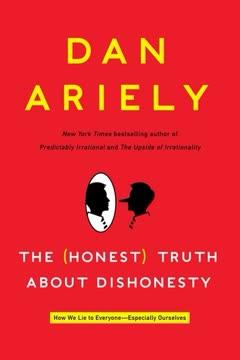
Get the complete 30-minute summary of The Honest Truth About Dishonesty
Get the complete summary in the appEveryone has a fudge factor. We all cheat a little while maintaining a positive self-image.
The size of the fudge factor depends on our ability to rationalize, not on the size of the reward or the risk of getting
Psychological distance from the dishonest act, tokens instead of cash, digital instead of physical, makes cheating easie
Creativity enables dishonesty by providing better justifications.
Conflicts of interest bias judgment unconsciously, and disclosure does not fix the problem.
Dishonesty spreads socially. Seeing others cheat makes us more likely to cheat.
"The Honest Truth About Dishonesty" is a strong fit if you want practical ideas around psychology, science, economics—especially themes like everyone has a fudge factor. we all cheat a little while maintaining a positive self-image; the size of the fudge factor depends on our ability to rationalize, not on the size of the reward or the risk of getting. The MinuteRead summary distills these concepts into a focused read, whether you're deciding whether to buy the book or applying its lessons at work.
Dan Ariely is a prominent behavioral economist and professor at Duke University. Born in New York and raised in Israel, he overcame severe burns from a teenage accident to pursue a successful academic career. Ariely holds multiple Ph.D.s and has conducted extensive research on decision-making processes, focusing on irrational behaviors. He is best known for his book "Predictably Irrational," which explores how people make choices. Ariely's work aims to understand and measure human decision-makin…
View all summaries by Dan ArielyContinue Reading
Access the complete 30-minute summary and thousands more nonfiction books in the MinuteRead app.

Continue reading the complete summary in the MinuteRead app.