MinuteRead
30 min
Book summary
by Dan Ariely
Premium summary · Opens in the app · 30 min read
We like to believe we are in control. We make decisions based on careful analysis of costs and benefits. We weigh options rationally. We know what we want and we pursue it logically.
### By Dan Ariely
**Estimated Reading Time:** 65 minutes
**What You'll Learn:** Why your decisions are not as rational as you think, how emotions and social norms shape your choices, why high bonuses can backfire, what truly motivates people at work, and how to design environments that help you make better decisions.
**Who This Book Is For:** Anyone who has ever made a decision they later regretted. Managers who want to build motivated teams. Professionals who design incentive systems. And anyone curious about why we keep falling for the same mental traps over and over again.
We like to believe we are in control. We make decisions based on careful analysis of costs and benefits. We weigh options rationally. We know what we want and we pursue it logically. This belief is wrong. Dan Ariely has spent his career proving that humans are not the rational actors that standard economics assumes. We are predictably irrational. We make the same mistakes over and over, in ways that can be anticipated, measured, and sometimes corrected. The problem is not that we are stupid. The problem is that our brains evolved for a world that no longer exists. We make decisions using mental shortcuts that served our ancestors on the savanna but fail us in modern supermarkets, offices, and investment portfolios. We are influenced by forces we barely notice: the way options are presented, the presence of irrelevant alternatives, the social context of a transaction, the immediate emotional state we happen to be in. Ariely's work sits at the intersection of psychology and economics. Through a series of ingenious experiments, he reveals the hidden patterns behind our choices. He shows why we overpay for things we don't need, why we procrastinate even when we desperately want to act, why we cheat just a little bit but not a lot, and why huge bonuses can make smart people perform worse. What makes his approach different is the combination of rigorous experimentation with genuine human storytelling. Ariely does not just theorize about irrationality. He tests it. He creates situations where real people make real decisions with real consequences, and he measures what happens. The results are often surprising, sometimes uncomfortable, and always useful. The central insight is this: our irrational behaviors are not random. They follow predictable patterns. And once we understand those patterns, we can design better systems, make better decisions, and maybe even become slightly less irrational ourselves. This book brings together the most important ideas from Ariely's major works. It explores how incentives actually work, why meaning matters more than money, how dishonesty operates in everyday life, and what we can do to improve our decision-making in a world that constantly exploits…
Continue reading in the MinuteRead app
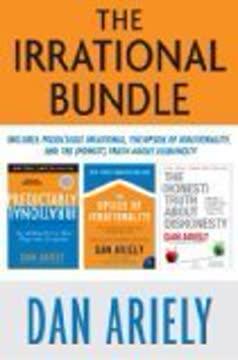
Get the complete 30-minute summary of The Irrational Bundle
Get the complete summary in the appHigh incentives can backfire. When stakes become too large, pressure consumes mental bandwidth and performance declines.
Meaning matters more than money. People will work harder for less if they believe their efforts have purpose and their w
Being ignored is almost as bad as having work destroyed. Even minimal acknowledgment significantly improves motivation.
People prefer to earn rewards rather than receive them freely. The satisfaction of achievement comes from the process of
Meaning is fragile. Small changes that disconnect effort from outcome can have large negative effects on motivation.
We are predictably irrational. Our mistakes follow patterns that can be studied, anticipated, and designed around.
"The Irrational Bundle" is a strong fit if you want practical ideas around psychology, economics, science, especially themes like high incentives can backfire. when stakes become too large, pressure consumes mental bandwidth and performance declines; meaning matters more than money. people will work harder for less if they believe their efforts have purpose and their w. The MinuteRead summary distills these concepts into a focused read, whether you're deciding whether to buy the book or applying its lessons at work.
Dan Ariely is a renowned behavioral economist and professor at Duke University. Born in New York and raised in Israel, he overcame severe burns in his youth to pursue a distinguished academic career. Ariely holds multiple Ph.D.s and has taught at MIT. His research focuses on irrational decision-making processes in everyday life. Ariely is the author of "Predictably Irrational," a bestselling book exploring hidden influences on human choices. He believes understanding irrational behaviors can lea…
View all summaries by Dan ArielyContinue Reading
Access the complete 30-minute summary and thousands more nonfiction books in the MinuteRead app.

Continue reading the complete summary in the MinuteRead app.