MinuteRead
30 min
Book summary
by Ian Bremmer
Premium summary · Opens in the app · 30 min read
Every day, we are confronted with news that seems contradictory. North Korea, a country that cannot feed its own people, remains one of the most durable regimes on earth. China, which has embraced capitalism with extraordinary enthusiasm, still arrests dissidents and censors the internet. Russia, once hailed as an emerging democracy, has retreated into authoritarianism under Vladimir Putin. Meanwhile, countries like Iraq and Afghanistan, which the United States tried to push toward democracy, de
By Ian Bremmer
**Estimated Reading Time:** 42 minutes
**What You'll Learn:**
- Why some of the world's most repressive countries remain remarkably stable - Why opening a closed society often leads to chaos before it leads to freedom - How to predict which countries will survive political and economic shocks - What separates successful transitions from catastrophic failures - How to apply these insights to your understanding of global events
**Who This Book Is For:**
Anyone who wants to understand why countries behave the way they do. Whether you are an investor trying to assess political risk, a policymaker shaping foreign policy, a student of international relations, or simply a curious reader trying to make sense of headlines about North Korea, China, Russia, or Iran, this book provides a powerful lens for seeing the hidden logic behind political stability and instability.
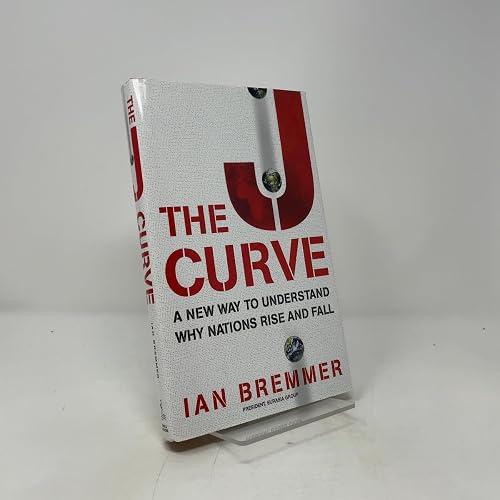
Every day, we are confronted with news that seems contradictory. North Korea, a country that cannot feed its own people, remains one of the most durable regimes on earth. China, which has embraced capitalism with extraordinary enthusiasm, still arrests dissidents and censors the internet. Russia, once hailed as an emerging democracy, has retreated into authoritarianism under Vladimir Putin. Meanwhile, countries like Iraq and Afghanistan, which the United States tried to push toward democracy, descended into violence and chaos. Why do some countries remain stable despite crushing poverty and political repression? Why do others, blessed with natural resources and international support, collapse into civil war? Why do well-intentioned efforts to promote democracy sometimes produce disaster? Ian Bremmer, a political scientist and founder of the Eurasia Group, spent years wrestling with these questions. The answer he developed is deceptively simple but profoundly powerful. It is called the J Curve. The J Curve is a visual model that plots a country's stability against its openness. On the left side of the curve are closed societies: North Korea, Cuba, Burma under the generals. These countries are stable precisely because they are closed. They control information, restrict movement, suppress dissent, and isolate their citizens from outside influences. Their stability is real, but it is brittle. It depends on repression and isolation, and it comes at an enormous human cost. On the right side of the curve are open societies: the United States, Japan, Sweden, Germany. These countries are stable because they are open. They have independent institutions, free media, competitive elections, and vibrant civil societies. Their stability is resilient. They can absorb shocks, change leaders peacefully, and adapt to new circumstances without falling apart. But between these two positions lies the most dangerous territory on the curve: the dip. When a closed society begins to open, it does not move smoothly from left to…
Continue reading in the MinuteRead app
Get the complete 30-minute summary of The J Curve
Get the complete summary in the appThe J Curve plots a country's stability against its openness, revealing a counterintuitive relationship between the two.
Closed societies can be stable, but their stability is brittle and comes at an enormous human cost.
Open societies are stable because they have strong institutions that can absorb shocks.
The transition from closed stability to open stability is the most dangerous journey a nation can undertake.
Elections are not enough; institutions are essential for successful transitions.
Sanctions often strengthen closed regimes by allowing them to blame outside enemies.
"The J Curve" is a strong fit if you want practical ideas around economics, politics, globalization, especially themes like the j curve plots a country's stability against its openness, revealing a counterintuitive relationship between the two; closed societies can be stable, but their stability is brittle and comes at an enormous human cost. The MinuteRead summary distills these concepts into a focused read, whether you're deciding whether to buy the book or applying its lessons at work.
Motivated to help readers with "There is a counterintuitive relationship between a nation's stability and its openness, Ian Bremmer wrote “The J Curve” to package those ideas for a fast, focused read. In “The J Curve”, Ian Bremmer focuses on "There is a counterintuitive relationship between a nation's stability and its openness. Through “The J Curve”, Ian Bremmer distills the core ideas on economics into lessons readers can absorb in a single short sitting. Readers turn to this work when they wa…
Continue Reading
Access the complete 30-minute summary and thousands more nonfiction books in the MinuteRead app.

Continue reading the complete summary in the MinuteRead app.