MinuteRead
30 min
Book summary
by Presh Talwalkar
Premium summary · Opens in the app · 30 min read
Every day you make decisions that depend on what other people will do. You decide whether to merge into a busy lane of traffic based on whether another driver will let you in. You decide how much to bid on an item based on what you think others might bid. You decide whether to speak up in a meeting based on how you expect your colleagues to react.
### An Introduction to Strategic Thinking
**Author:** Presh Talwalkar **Estimated Reading Time:** 45 minutes
**What You'll Learn:**
- Why rational people often make choices that lead to worse outcomes for everyone - How to predict what competitors, colleagues, and even strangers will do - The hidden strategic logic behind everyday situations like gas station locations and product pricing - How to make your threats believable and your promises credible - Why voting systems can never be perfectly fair, and what that means for democracy - How to recognize when you should change the game instead of playing it
**Who This Book Is For:**
This book is for anyone who wants to think more clearly about strategic situations. You do not need a background in mathematics or economics. You only need curiosity about why people make the choices they make, and a willingness to see familiar situations through a new lens. Whether you are a business professional, a student, a parent negotiating with children, or simply someone who enjoys understanding how the world works, the ideas in this book will change how you interpret the decisions happening around you every day.
Every day you make decisions that depend on what other people will do. You decide whether to merge into a busy lane of traffic based on whether another driver will let you in. You decide how much to bid on an item based on what you think others might bid. You decide whether to speak up in a meeting based on how you expect your colleagues to react. These are not isolated choices. They are strategic interactions. Your best move depends on what others will do, and their best moves depend on what they think you will do. Most people navigate these situations using intuition, experience, and guesswork. Sometimes that works well enough. But often it leads to frustration, missed opportunities, and outcomes that leave everyone worse off than they needed to be. Game theory offers a better way. The term "game theory" sounds like it should be about board games, card games, or gambling. And while those activities do provide useful illustrations, the field is far broader. Game theory is the study of strategic decision-making. It is a framework for understanding situations where the outcome of your choice depends not just on what you do, but on what others do in response. The field emerged in the mid-twentieth century through the work of mathematicians and economists like John von Neumann, John Nash, and Thomas Schelling. Their insights transformed economics, political science, evolutionary biology, and eventually everyday business strategy. The ideas they developed help explain why gas stations cluster at the same intersection, why countries build weapons they hope never…
Continue reading in the MinuteRead app
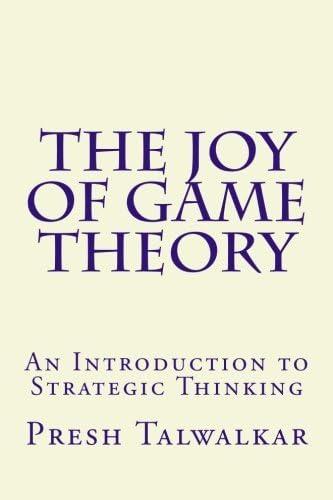
Get the complete 30-minute summary of The Joy of Game Theory
Get the complete summary in the appYour best choice depends on what others will do. Think strategically, not in isolation.
A Nash equilibrium is a stable outcome where no one can improve by changing alone. It is not necessarily good.
The Prisoner's Dilemma shows why rational individuals often produce collectively harmful outcomes. The problem is struct
Focal points allow coordination without communication. Salience is the key.
Credible threats require commitment. Empty threats destroy your influence.
If you are losing the game, change it. The rules are negotiable.
"The Joy of Game Theory" is a strong fit if you want practical ideas around economics, business, psychology, especially themes like your best choice depends on what others will do. think strategically, not in isolation; a nash equilibrium is a stable outcome where no one can improve by changing alone. it is not necessarily good. The MinuteRead summary distills these concepts into a focused read, whether you're deciding whether to buy the book or applying its lessons at work.
Motivated to help readers with game theory is about more than board games and gambling, Presh Talwalkar wrote “The Joy of Game Theory” to package those ideas for a fast, focused read. In “The Joy of Game Theory”, Presh Talwalkar focuses on game theory is about more than board games and gambling. Through “The Joy of Game Theory”, Presh Talwalkar distills the core ideas on economics into lessons readers can absorb in a single short sitting. Readers turn to this work when they want Presh Talwalkar'…
Continue Reading
Access the complete 30-minute summary and thousands more nonfiction books in the MinuteRead app.

Continue reading the complete summary in the MinuteRead app.