MinuteRead
30 min
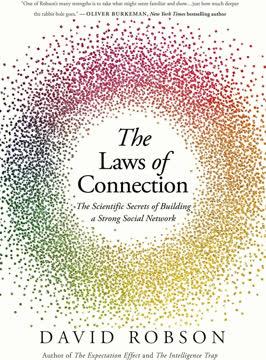
Book summary
by David Robson
Premium summary · Opens in the app · 30 min read
Consider a paradox of modern life. We live in the most connected era in human history. We carry devices in our pockets that allow us to speak to anyone on the planet within seconds. We can broadcast our thoughts to thousands of followers. We can see what our childhood friends ate for breakfast. And yet, across the developed world, people report feeling profoundly disconnected. Loneliness has been declared a public health crisis by multiple governments. Surveys consistently show that a significan
**Author:** David Robson
**Estimated Reading Time:** 45 minutes
The invisible forces that shape every relationship in your life, from casual encounters to lifelong bonds. You will discover why social connection is not merely pleasant but biologically essential, how your brain systematically misjudges other people, and what specific behaviors create or destroy trust. You will learn the practical mechanics of deep conversation, the surprising power of asking for help, the right way to praise, and how to disagree without damaging the relationship.
Anyone who has ever walked away from a conversation wondering what went wrong. Anyone who has felt lonely in a crowded room. Anyone who wants stronger friendships, better professional relationships, or a more connected family life. If you have ever assumed that social skills are fixed traits you either possess or lack, this book will change your understanding fundamentally.
Consider a paradox of modern life. We live in the most connected era in human history. We carry devices in our pockets that allow us to speak to anyone on the planet within seconds. We can broadcast our thoughts to thousands of followers. We can see what our childhood friends ate for breakfast. And yet, across the developed world, people report feeling profoundly disconnected. Loneliness has been declared a public health crisis by multiple governments. Surveys consistently show that a significant portion of adults feel they have no one to confide in. Something has gone wrong. The problem is not that we lack opportunities for connection. The problem is that we have forgotten, or perhaps never learned, how to connect well. We treat social skills as mysterious talents that some people naturally possess while others do not. We assume that charisma is inborn, that deep friendships happen by accident, and that loneliness is simply a matter of circumstance. David Robson's work challenges every one of these assumptions. The research he draws upon tells a different story. Social connection is not a luxury. It is a biological necessity, as important to your health as sleep, nutrition, and physical activity. The evidence is overwhelming. People with strong social ties live longer. They get sick less often. They recover faster when they do fall ill. They experience lower rates of depression, anxiety, and cognitive decline. The quality of your relationships is one of the strongest predictors of your overall wellbeing that science has identified. Yet most of us spend far more time thinking about our diets or our exercise routines than we do about the health of our social lives. We plan our meals. We schedule our workouts. But we rarely stop to consider whether we are connecting well with the people around us. We rarely examine our conversational habits, our assumptions about…
Continue reading in the MinuteRead app
Get the complete 30-minute summary of The Laws of Connection
Get the complete summary in the appSocial connection is a biological necessity, as important to health as diet and exercise.
People like you more than you think. The liking gap is real.
Ask follow-up questions. They are the most powerful tool in conversation.
Be specific in your praise. Specificity signals authenticity.
Vulnerability builds trust. Appropriate disclosure deepens connection.
Ask for help. It strengthens relationships rather than weakening them.
"The Laws of Connection" is a strong fit if you want practical ideas around psychology, self help, relationships, especially themes like social connection is a biological necessity, as important to health as diet and exercise; people like you more than you think. the liking gap is real. The MinuteRead summary distills these concepts into a focused read, whether you're deciding whether to buy the book or applying its lessons at work.
David Robson is an accomplished writer and editor specializing in exploring the extremes of human psychology, physiology, and behavior. His work has garnered awards, and he is known for writing in-depth articles on these subjects. Robson has authored two books: "The Intelligence Trap," which examines why intelligent people make poor decisions, and "The Expectation Effect," which explores how mindset influences various aspects of life, including health and happiness. His writing style aims to mak…
View all summaries by David RobsonContinue Reading
Access the complete 30-minute summary and thousands more nonfiction books in the MinuteRead app.

Continue reading the complete summary in the MinuteRead app.