MinuteRead
30 min
Book summary
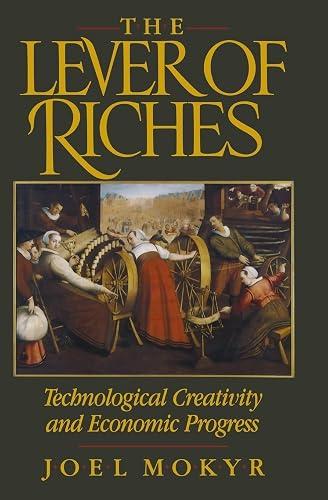
by Joel Mokyr
Premium summary · Opens in the app · 30 min read
Why are some nations rich and others poor? The question has occupied economists, historians, and political thinkers for centuries. Answers have pointed to geography, climate, natural resources, colonial exploitation, cultural values, political institutions, and sheer luck. But Joel Mokyr, one of the most distinguished economic historians of our time, argues that the deepest answer lies elsewhere: in the capacity of societies to generate and adopt technological change.
### By Joel Mokyr
**Estimated Reading Time:** 55 minutes
**What You'll Learn:**
- Why technological progress, not capital or trade, is the true engine of economic growth - The difference between radical breakthroughs and incremental improvements, and why both matter - How cultural values, political institutions, and social structures determine whether a society innovates or stagnates - Why Western Europe pulled ahead of China, India, and the Islamic world after centuries of lagging behind - What the Industrial Revolution really changed, and why its full impact took generations to appear - How to think about technological change as an evolutionary process with its own logic - What threatens technological progress today, and what conditions must exist for it to continue
**Who This Book Is For:**
This book is for anyone who wants to understand why some societies become wealthy while others remain poor, why innovation happens in certain places and times but not others, and what the deep historical forces are that shape the world we live in. It is for readers who sense that technology is not just gadgets and machines but a fundamental human activity with profound economic and cultural consequences. If you have ever wondered why the Industrial Revolution happened in Britain rather than China, or why ancient civilizations with brilliant achievements did not sustain technological momentum, this book will give you the framework to think clearly about those questions.
Why are some nations rich and others poor? The question has occupied economists, historians, and political thinkers for centuries. Answers have pointed to geography, climate, natural resources, colonial exploitation, cultural values, political institutions, and sheer luck. But Joel Mokyr, one of the most distinguished economic historians of our time, argues that the deepest answer lies elsewhere: in the capacity of societies to generate and adopt technological change. The Lever of Riches is not a book about specific inventions. It is a book about invention itself. It asks why technological creativity has been so unevenly distributed across human history, why it flourished in some civilizations and withered in others, and what conditions allow it to become self-sustaining rather than episodic. The central puzzle is stark. For most of human history, economic life was characterized by stagnation. Living standards barely changed from generation to generation. Most people lived close to subsistence, and the occasional gains from new tools or techniques were swallowed by population growth. Then, beginning in Western Europe around the eighteenth century, something changed. Technological progress became continuous, cumulative, and fast enough to outpace population growth. For the first time in history, sustained improvements in living standards became possible. Mokyr's purpose is to explain how this happened and why it happened where it did. His answer is…
Continue reading in the MinuteRead app
Get the complete 30-minute summary of The Lever of Riches
Get the complete summary in the appTechnological change is an attack by an individual on a constraint that everyone else takes as given.
Technological progress is the primary driver of long-term economic growth, not capital accumulation or trade.
Macroinventions are radical breakthroughs; microinventions are incremental improvements. Both are essential.
Technological change is an evolutionary process of variation, selection, and retention.
Cultural values, social structures, and political institutions determine whether a society innovates or stagnates.
Western Europe pulled ahead because of political fragmentation, cultural attitudes, and institutional arrangements that
"The Lever of Riches" is a strong fit if you want practical ideas around economics, history, technology, especially themes like technological change is an attack by an individual on a constraint that everyone else takes as given; technological progress is the primary driver of long-term economic growth, not capital accumulation or trade. The MinuteRead summary distills these concepts into a focused read, whether you're deciding whether to buy the book or applying its lessons at work.
Motivated to help readers with technological change involves an attack by an individual on a constraint that everyone else takes as given, Joel Mokyr wrote “The Lever of Riches” to package those ideas for a fast, focused read. In “The Lever of Riches”, Joel Mokyr focuses on technological change involves an attack by an individual on a constraint that everyone else takes as given. Through “The Lever of Riches”, Joel Mokyr distills the core ideas on economics into lessons readers can absorb in a s…
Continue Reading
Access the complete 30-minute summary and thousands more nonfiction books in the MinuteRead app.

Continue reading the complete summary in the MinuteRead app.