MinuteRead
30 min
Book summary
Premium summary · Opens in the app · 30 min read
Every investor believes they are rational. Every investor believes they make decisions based on facts, analysis, and careful consideration. Every investor is wrong.
**Author:** James Montier
**Estimated Reading Time:** 45 minutes
**What You'll Learn:**
* Why your brain is wired to make poor investment decisions * How to recognize and overcome the psychological traps that destroy returns * Why forecasting is a fool's game and what to do instead * How to build an investment process that protects you from yourself * Why being a contrarian is painful but profitable
**Who This Book Is For:**
This book is for anyone who has ever made an investment decision they later regretted. It is for the individual investor who checks their portfolio too often, the professional who trades too much, and the analyst who believes their forecasts are better than they actually are. It is for anyone who wants to understand why smart people make dumb financial decisions and how to stop doing it.
Every investor believes they are rational. Every investor believes they make decisions based on facts, analysis, and careful consideration. Every investor is wrong. The uncomfortable truth at the heart of behavioral finance is that human beings are not designed to be good investors. Our brains evolved over millions of years to help us survive on the savanna, not to help us allocate capital in financial markets. The mental shortcuts that kept our ancestors alive, the emotional responses that protected them from predators, the social instincts that helped them cooperate in tribes, all of these now conspire against us when we try to make money in markets. James Montier has spent his career studying this collision between human psychology and financial markets. As a strategist at some of the world's largest financial institutions, he has watched intelligent, educated, experienced professionals make the same mistakes over and over again. He has seen fund managers destroy value through excessive trading. He has watched analysts express supreme confidence in forecasts that turned out to be worthless. He has observed entire markets descend into madness during bubbles and panic during crashes. The problem is not a lack of information. Investors today have access to more data than ever before. The problem is not a lack of intelligence. Some of the brightest minds in the world work in finance. The problem is that our brains are not wired for this environment. Consider what happens when you see a stock you own fall 20 percent in a week. Your heart rate increases. Your palms sweat. A part of your brain, the part that evolved to respond to immediate physical threats, screams at you to do something, to sell, to escape the danger. Meanwhile, the logical part of your brain, the part that knows markets fluctuate and that selling now might lock in a loss, is drowned out by…
Continue reading in the MinuteRead app
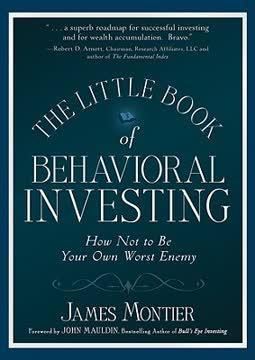
Get the complete 30-minute summary of The Little Book of Behavioral Investing
Get the complete summary in the appYour brain has two systems: the fast, emotional X-system and the slow, logical C-system. The X-system is the default and
Overconfidence is systematic and pervasive. Keep an investment journal to track your predictions and compare them to rea
Financial forecasts are consistently inaccurate. Focus on intrinsic value and margin of safety instead of trying to pred
More information increases confidence without increasing accuracy. Identify the three to five factors that actually matt
Stories are powerful but dangerous. Separate qualitative narratives from quantitative data and seek out evidence that co
Superior performance requires doing something different from the majority. Being a contrarian is painful but necessary.
"The Little Book of Behavioral Investing" is a strong fit if you want practical ideas around finance, business, psychology, especially themes like your brain has two systems: the fast, emotional x-system and the slow, logical c-system. the x-system is the default and; overconfidence is systematic and pervasive. keep an investment journal to track your predictions and compare them to rea. The MinuteRead summary distills these concepts into a focused read, whether you're deciding whether to buy the book or applying its lessons at work.
James Montier is a renowned expert in behavioral finance, known for his insights into how psychological factors influence investment decisions. As a top-rated strategist in the Thomson Reuters Extel survey for five consecutive years, Montier brings a wealth of experience to his writing. He argues that understanding human psychology and historical patterns is crucial for identifying market bubbles. Montier's work emphasizes the importance of recognizing and overcoming cognitive biases in investin…
View all summaries by James MontierContinue Reading
Access the complete 30-minute summary and thousands more nonfiction books in the MinuteRead app.

Continue reading the complete summary in the MinuteRead app.